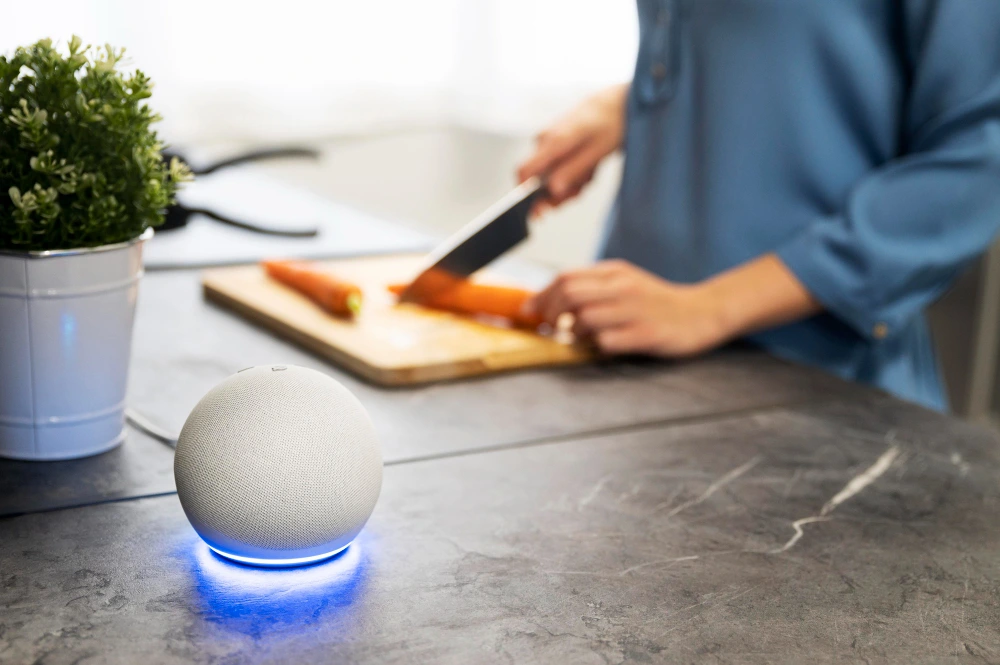
Imagine walking through your front door after a long day with an armful of heavy groceries. Instead of fumbling in the dark for light switches, having a voice-controlled smart home setup means you simply say, “I am home.” Instantly, your hallway illuminates, the thermostat adjusts to your preferred temperature, and your favorite relaxing playlist begins playing softly.
This level of ultimate residential convenience is exactly why this technology is transforming modern living. You no longer need to rely entirely on smartphone apps or physical buttons to manage your household. You simply use your natural voice to command your physical environment effortlessly.
As a CEDIA-certified smart home integrator with over a decade of hands-on installation experience, I have watched this technology evolve rapidly. Today, building a voice-activated smart home is more accessible, affordable, and reliable than ever before. Anyone can turn a standard house into a highly responsive, intelligent living space.
Integrating a reliable smart home system reduces daily friction completely. It allows you to manage security protocols, lower overall energy consumption, and create the perfect ambient lighting instantly. You just need the right hardware and a solid installation strategy.
Expert smart home professionals emphasize that proper planning is the absolute secret to success. You must choose devices that communicate seamlessly with each other on the same network. A fragmented system causes massive frustration, while a unified setup feels like pure magic.
This comprehensive 2026 guide covers everything you need to know from the ground up. We will explore the best ecosystems, top-tier devices, and professional wiring strategies. Let us build your ultimate automated sanctuary today.
What is a voice-controlled smart home setup?
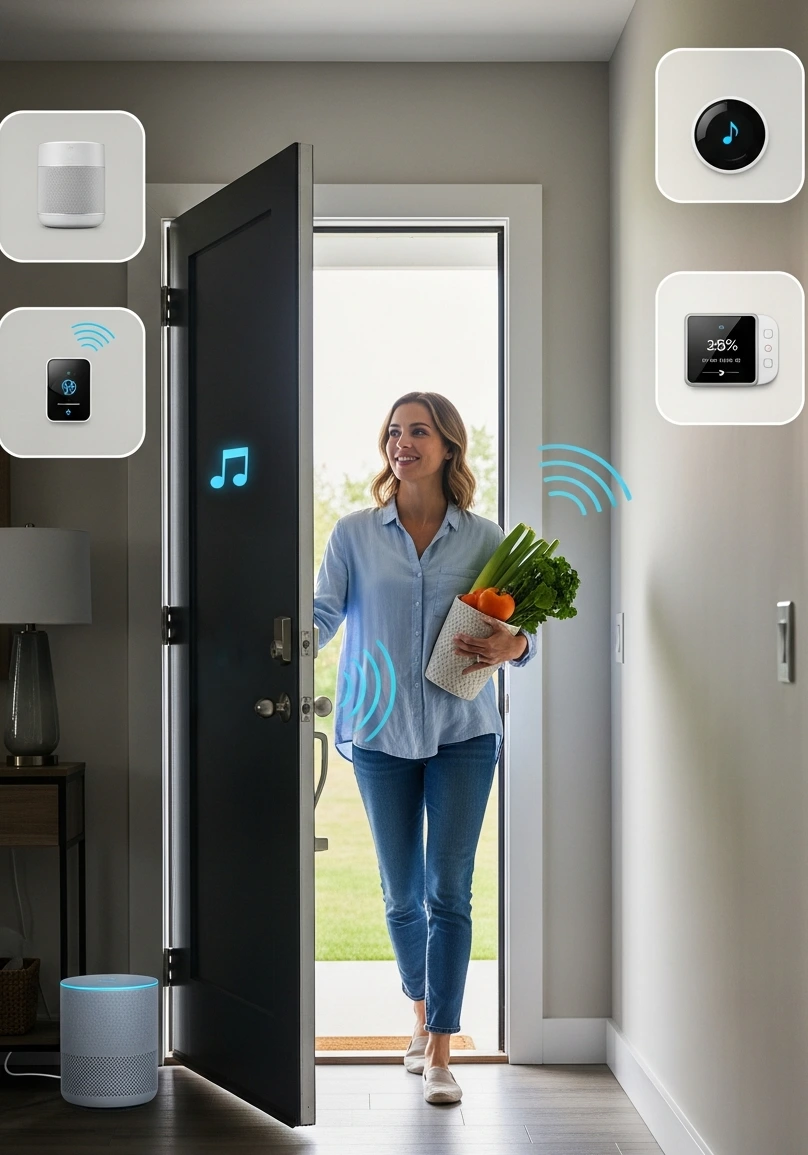
To fully grasp this incredible technology, we must define the core concept clearly. A voice-controlled home automation system is a centralized network of connected devices managed entirely by spoken commands. You speak to a digital assistant, and your house reacts immediately.
This completely replaces the outdated, manual method of walking up to a physical wall switch. A voice-based home automation system utilizes built-in microphones strategically spread throughout your house. These microphones constantly listen for a specific “wake word” like “Alexa” or “Hey Google.”
Once activated, the digital assistant processes your spoken request instantly and executes the command. It sends a digital signal over your Wi-Fi network to the target appliance. Consequently, achieving true home automation with voice control requires a highly stable and fast internet connection.
Most importantly, you must understand the massive difference between traditional remote control and true automation. A basic smart home requires you to open an app and tap a screen to lower the window blinds. This still requires manual, physical effort and immediate access to your phone.
In contrast, voice control removes the physical barrier entirely. You can command your entire house while cooking dinner with messy hands or while holding a sleeping baby. This hands-free capability represents the absolute pinnacle of modern residential technology.
How Voice Control Works in Smart Home Automation
Understanding the technical workflow prevents major troubleshooting headaches later down the road. So, how exactly does a voice control home automation system process your commands? It relies heavily on an intricate combination of advanced cloud computing and local processing.
First, your smart speaker captures your exact audio command using highly sensitive, far-field microphones. This audio file is instantly uploaded to a secure, remote cloud server. The server utilizes advanced artificial intelligence and natural language processing (NLP) to decipher your exact meaning.
Once the AI understands your intent, it triggers the corresponding smart home technology action. It sends a digital signal back down to your local network perfectly and securely. Finally, the target device, such as a smart bulb, executes the specific action immediately.
In 2026, this entire data loop happens in fractions of a second. Because modern smart home automation relies on incredibly fast microprocessors, the delay is virtually unnoticeable. You say, “Turn on the kitchen lights,” and they illuminate the moment you finish speaking.
Furthermore, the newest devices utilize edge computing for basic, everyday commands. This means the built-in AI processes your voice locally on the device itself rather than relying on the cloud. Therefore, you can still control your local lights even if your neighborhood’s internet connection temporarily drops.
Essential Voice-Activated Smart Home Devices
You cannot build a functioning, intelligent network without the proper hardware foundation. Selecting the right hardware for your voice-controlled smart home setup dictates your entire living experience. Let us break down the absolute most critical investments for your modern home.
Smart Speakers and Smart Displays
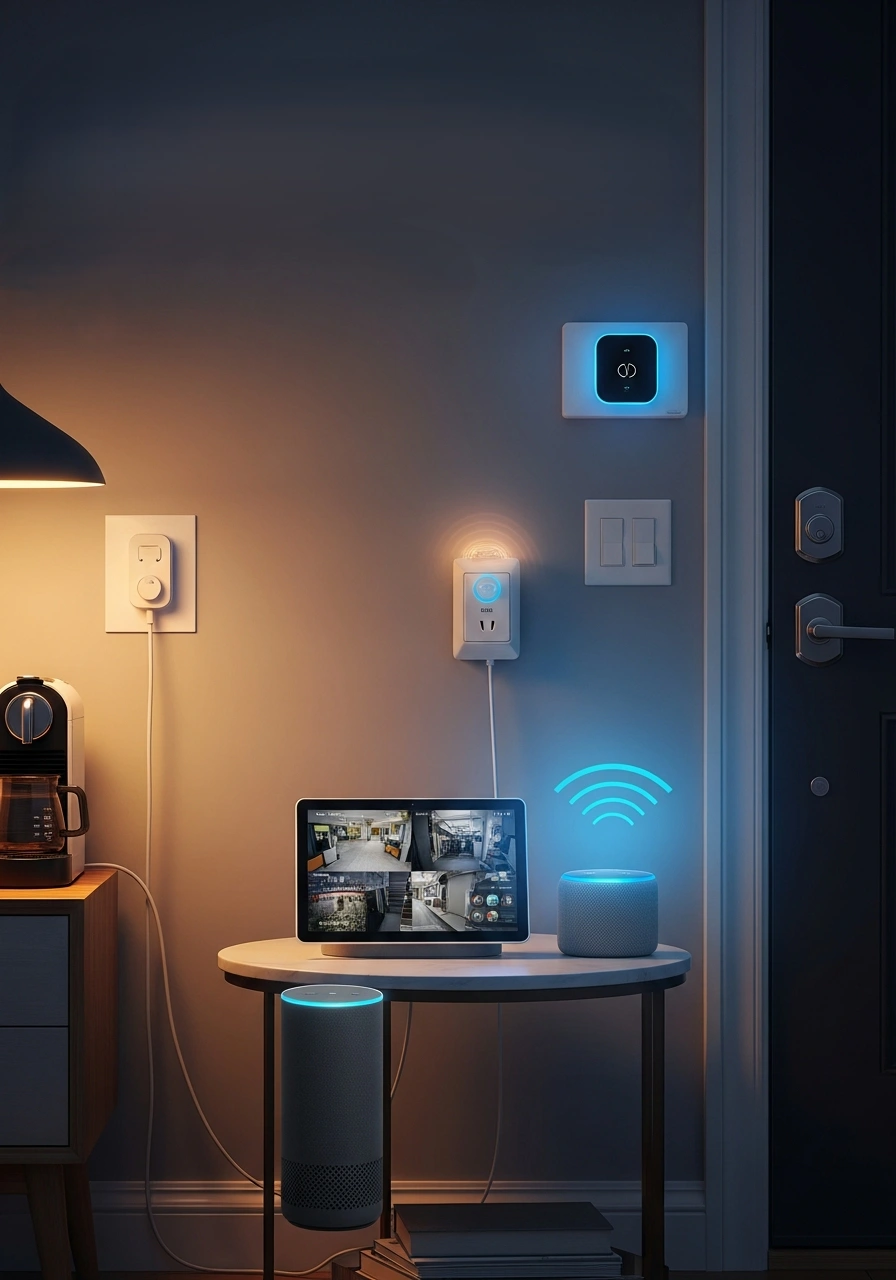
Smart speakers act as the central nervous system and ears of your setup. Devices like the Amazon Echo or Google Nest Hub listen for your commands twenty-four hours a day. Smart displays add a visual element, allowing you to see security camera feeds or recipes instantly.
Intelligent Wi-Fi Lighting Systems
Lighting is universally the best and most impactful starting point for any automation project. You simply replace your existing bulbs with Wi-Fi-connected LED equivalents from brands like Philips Hue. Consequently, you can dim the lights or change their color using simple voice prompts.
Smart Plugs and Electrical Outlets
These are the cheapest and most versatile smart home solutions available on the market today. You plug a “foolish” appliance, like a standard coffee maker or a fan, into a smart plug. Instantly, that basic appliance becomes fully voice-controllable through your central network.
Automated Climate Control Thermostats
Smart thermostats represent the highest and fastest return on your financial investment. You can say, “Make the living room 72 degrees,” without ever leaving your comfortable couch. Furthermore, they learn your schedule and automatically reduce energy usage while you are at work.
Security Cameras and Electronic Deadbolts
Voice-controlled security hardware provides unmatched peace of mind for your family. You can ask your digital assistant to lock the front door before you go to sleep at night. Also, you can view your front porch camera feed directly on your living room television.
Best Smart Home Voice Control Systems
Choosing the correct central ecosystem is your single most critical decision in this process. The best smart home voice control systems dictate exactly which hardware brands you can actually buy and integrate. Let us compare the industry giants dominating the market in 2026.
The Amazon Alexa Ecosystem: Alexa remains the most universally compatible and widely adopted platform in the world today. It supports tens of thousands of third-party gadgets flawlessly right out of the box. If you want maximum hardware choices and incredibly simple setup routines, Alexa is your best option.
The Google Home Platform: Google Assistant utilizes the world’s most powerful search engine to understand conversational context perfectly. It excels at answering complex web queries, translating languages, and managing your daily schedule. Furthermore, it integrates flawlessly with Android smartphones and Google Nest hardware.
Apple HomeKit Platform: Apple heavily prioritizes strict user privacy, data encryption, and local network security above all else. HomeKit devices process commands locally on your network, making them incredibly fast and highly secure. However, hardware choices are more limited because Apple enforces very strict manufacturing certification standards.
Brilliant Smart Home Control Panels: For a more integrated, architectural look, consider installing a brilliant smart home control panel. These touchscreen panels replace your standard, old-fashioned light switches on the wall. They feature built-in microphones, allowing seamless voice control in every single room without bulky countertop speakers.
Xcel Smart Home Energy Platforms: Some users prioritize deep energy management and grid efficiency over basic household convenience. An Xcel smart home setup integrates directly with your local utility providers to strictly monitor grid usage. These systems automatically dim lights and adjust thermostats during peak pricing hours to save you money.
Creating a Voice-Controlled Smart Home Setup
Building a highly reliable automation network requires a structured, incredibly logical approach. Rushing the installation process guarantees frustrating network drops and incompatible hardware. Follow these exact steps for creating a smart home properly from the ground up.
Ecosystem Selection Phase: You must commit to one primary voice assistant before buying a single piece of hardware. Mixing Google, Apple, and Alexa devices blindly causes massive network confusion and overlapping commands. Choose the ecosystem that natively matches your current smartphone platform for the absolute smoothest integration.
Network Infrastructure Upgrade: A seamless voice-controlled smart home setup absolutely requires a rock-solid Wi-Fi network. Standard routers provided by your local internet company easily crash when connected to fifty different light bulbs simultaneously. You must upgrade to a high-capacity Wi-Fi 6 or Wi-Fi 7 mesh network to handle the heavy device traffic.
Hub and Smart Speaker Placement: Place your primary smart speakers strategically throughout your house for maximum audio coverage. You want at least one highly sensitive microphone in every major living area. Avoid placing them directly next to loud televisions, as heavy background noise ruins voice recognition accuracy completely.
Hardware Installation and Pairing: Install your new hardware slowly, utilizing the smart home connect protocols one room at a time. Do not attempt to install thirty light bulbs and three cameras in a single afternoon. Install the kitchen lights, pair them to the application, and test the voice commands thoroughly before moving upstairs.
Building Custom Voice Routines: Software routines are where true, hands-free automation magic actually happens. You can bundle multiple complex actions into one single, simple voice command effortlessly. For example, creating a specific “Goodnight” routine can lock all exterior doors, turn off the interior lights, and lower the thermostat simultaneously.
Optimization and Troubleshooting: Once everything is physically running, monitor the system closely for a few days. If a specific device repeatedly ignores your voice, quickly check its Wi-Fi signal strength in the application. Regularly updating your device firmware guarantees the fastest response times and patches critical security vulnerabilities.
Smart Home Installation & Services
You will eventually face a major decision regarding the actual physical labor of your project. Should you attempt a completely DIY setup, or should you hire professional smart home installation experts? The answer depends entirely on your personal technical skills, available time, and overall budget.
The DIY approach works perfectly for small apartments or simple room upgrades. Basic smart bulbs, countertop speakers, and Wi-Fi plugs require absolutely zero electrical knowledge. You just plug them into the wall, download the manufacturer’s app, and follow the simple on-screen instructions.
However, much larger houses require significantly more complex networking infrastructure. If you want in-wall touch panels, hidden motorized window shades, and hardwired exterior security cameras, you need experts. Professional smart home services guarantee that complex electrical wiring codes are followed safely.
Hiring a certified smart home company removes all the technical stress from your shoulders. They manage the complex back-end networking, configure advanced privacy firewalls, and hide all the ugly wires perfectly. Furthermore, they provide ongoing remote technical support if your main control hub ever goes offline unexpectedly.
While DIY works perfectly for beginners, luxury properties demand absolute technological perfection. Paying an expert integrator ensures your expensive hardware operates flawlessly for years without requiring constant manual rebooting.
Smart Home Solutions for Different Needs
Every family requires slightly different technological approaches to improve their daily routines. You must tailor your hardware purchases to solve your specific household problems rather than buying random gadgets. Let us explore the best smart home solutions tailored strictly to distinct modern lifestyles.
Many users build a voice-controlled smart home setup entirely for robust physical protection and peace of mind. For these homes, voice-controlled security panels and smart deadbolts are absolutely paramount. You can arm your entire property simply by saying, “Secure the house,” as you walk out the front door.
Conversely, sustainability is a massive driving force behind the smart home industry today. Environmentally conscious users heavily prioritize smart thermostats, automated blinds, and smart sprinkler systems. These intelligent devices actively monitor local weather patterns to drastically reduce water and electricity waste.
Finally, some users simply want the ultimate luxury entertainment experience, perfectly optimized. Voice-controlled multi-room audio systems allow you to cast your favorite podcasts to any room instantly. Automated home theaters can dim the lights, drop the projector screen, and close the blackout shades with a single spoken command.
Costs & Budget: What Should You Expect?
Budgeting accurately prevents you from abandoning your ambitious automation project halfway through. Hardware costs vary wildly based on the brand quality and the total square footage of your house. Let us break down the exact financial tiers you should expect in 2026.
An entry-level voice-controlled smart home setup costs roughly $100 to $300 to complete perfectly. This covers a basic smart speaker, two versatile smart plugs, and a few Wi-Fi light bulbs. It is the perfect, risk-free way to test basic voice automation in your main living room.
A mid-range setup typically runs between $500 and $1,500 for a standard house. This includes replacing your old thermostat, installing a high-definition video doorbell, and adding smart lighting to multiple rooms. It provides massive daily convenience without requiring expensive, complex electrical work.
Premium, whole-house automation easily exceeds $2,000 to $5,000+, depending on the hardware. This involves hardwired security cameras, custom motorized window treatments, and professional network installation. You are paying a premium for flawless, invisible integration and absolute system reliability.
How Much Should You Expect to Pay for Smart Door Lock Installation?
If you hire a local professional, a standard smart door lock installation costs between $100 and $250. This labor fee does not include the physical retail price of the electronic lock itself. However, most modern electronic deadbolts are specifically designed for easy DIY installation in under twenty minutes using just a screwdriver.
Related Smart Tech: Are Smart Watches Worth It?
When building a highly connected ecosystem, you must seriously consider integrating wearable technology. Utilizing a smartwatch bridges the physical gap between your body and your home’s central network.
Are Smart Watches Worth It for Fitness Tracking? Yes, they provide incredible daily health metrics and highly accurate cardiovascular tracking. However, their true, hidden power lies in their incredibly deep smart home integration capabilities. You can easily use your Apple Watch or Galaxy Watch as a mobile, wrist-mounted microphone to control your entire house.
If you are outside in the garden away from your smart speakers, you simply lift your wrist. You can speak directly into the watch to quickly unlock the front door for an arriving guest. This wearable integration ensures you always have voice control access, regardless of what room you are in.
Smart Home Connectivity: Hubs & Apps Comparison
Your internet router and your smartphone applications manage all the heavy computational lifting behind the scenes. Choosing the right networking gear and software is absolutely non-negotiable for a highly stable system.
BT Smart Hub vs. BT Home Hub: Which One is Right for You? If you live in the UK, you likely use a standard BT broadband router. The newer BT Smart Hub offers vastly superior Wi-Fi range and handles multiple simultaneous device connections much better than the older BT Home Hub. For a heavy smart home setup, upgrading to the advanced Smart Hub is absolutely mandatory to prevent daily device dropouts.
Comparing the Yi IoT App with Other Smart Home Applications: Which Is Better? Many budget-friendly security cameras strictly use the proprietary Yi IoT app. While functional for basic video streaming, it lacks the deep, complex automation rules found in native apps like Google Home or Apple HomeKit. If you want true, unified voice integration, you are much better off using cameras that pair directly with your primary smart home application instead.
Consolidating your devices into one single, powerful application prevents massive daily user frustration. You want one central, unified dashboard to view your cameras, adjust your lights, and lock your doors perfectly.
Future of Voice-Controlled Smart Homes
Undeniably, the pace of technological innovation in the residential sector is absolutely staggering right now. Consequently, the immediate future of voice automation looks incredibly sleek, invisible, and hyper-intelligent.
For instance, AI-powered voice assistants are becoming much more conversational and incredibly natural. Therefore, you no longer need to use rigid, robotic commands to get a successful response from your speakers. Instead, you can speak naturally, and the advanced AI will understand context, tone, and complex multi-step requests perfectly.
Furthermore, predictive automation will soon eliminate the need for constant voice commands entirely. Specifically, your house will learn your daily routines flawlessly through advanced machine learning algorithms. Ultimately, it will automatically adjust the lighting and climate based on your historical preferences without you ever saying a single word.
Frequently Asked Questions
Will my smart devices still work if the internet goes down?
Typically, older devices rely on external cloud servers and will fail during an outage. However, newer hubs supporting Matter and Edge computing allow for local processing. This ensures your basic lighting and locking controls function perfectly even without an active internet connection.
Where is the best place to put my smart speakers?
Generally, you only need speakers in high-traffic areas like the kitchen or living room. For transitional spaces like hallways, a smartphone or smartwatch serves as an adequate remote.
Pro Tip: Avoid placing speakers near noisy appliances to ensure they can hear your voice commands clearly.
Are smart speakers constantly recording my private conversations?
Crucially, these devices only record and upload audio after they detect their specific wake word locally. While they are always “listening” for that phrase, they do not store or transmit your daily private talk. You can also use the physical hardware switch to mute the microphone for absolute privacy.
Will adding smart gadgets slow down my Wi-Fi for gaming or streaming?
In general, basic gadgets like bulbs and plugs use negligible amounts of bandwidth and won’t affect your 4K streaming or gaming. However, multiple high-definition security cameras uploading continuous footage will require a premium, high-speed internet plan to avoid network congestion.
Can I mix different brands like Apple, Google, and Amazon in one home?
Historically, mixing brands caused massive software conflicts. Fortunately, if your devices feature the Matter logo, they can cross-communicate seamlessly. This allows a single device to be controlled by Google, Apple, and Alexa simultaneously without technical issues.
Conclusion
In summary, we have thoroughly explored the incredible, life-changing potential of modern residential technology today. Consequently, you now have the exact professional blueprint to build a flawless voice-controlled smart home setup.
First, choose your primary voice assistant ecosystem carefully to avoid future compatibility headaches. Next, upgrade your Wi-Fi network to handle the new wireless device traffic flawlessly. Finally, start small with smart lighting and climate control before expanding to complex, hardwired security systems.
Because you now understand the technical foundations, you can avoid costly beginner mistakes entirely. Therefore, embrace the power of modern smart home automation and drastically transform your living space. Ultimately, your highly intelligent, voice-activated future begins right now!
Reference:
- The Best Smart Home Devices of 2026 This comprehensive guide
- 12 Essential Smart Home Gadgets You Should Be Using In 2026
- Tom’s Guide: The Best Smart Home Hubs Tested in 2026 A professional testing resource
- TechRadar: The Best Smart Home Devices 2026
- Adaprox: Best Smart Home Devices 2026 | Expert Reviews & Buying Guide