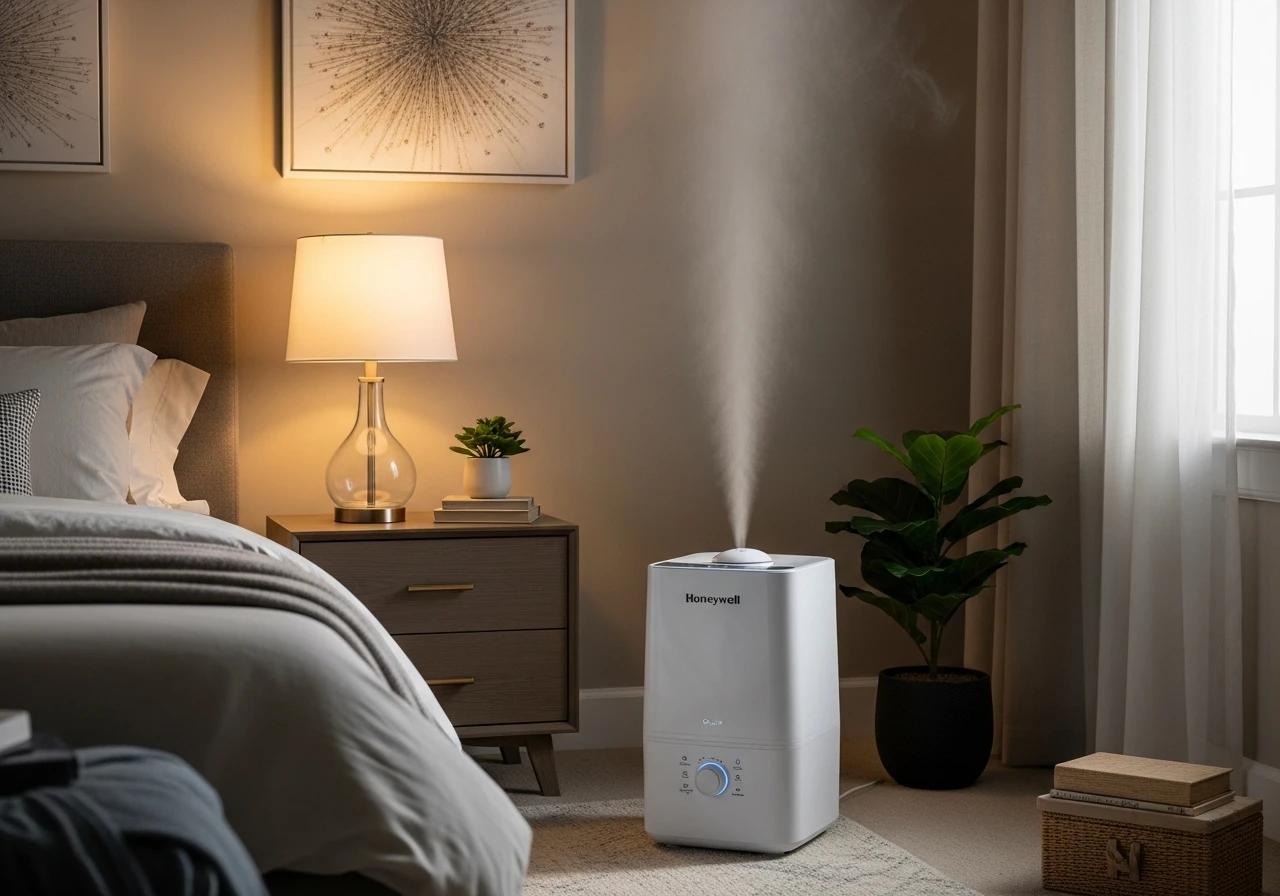
Maintaining the perfect indoor climate often feels like a balancing act, especially during the harsh, dry winter months. For many American households, the honeywell humidifier has become the go-to solution for combating dry air, scratchy throats, and static electricity.
As a brand synonymous with home comfort, Honeywell offers a diverse range of moisture solutions that cater to everything from small bedside tables to massive HVAC-integrated systems.
Because we research and test various gadgets to write in the article, we have spent countless hours analyzing how these units perform in real-world conditions. Whether you are dealing with a persistent red light on your console or simply trying to decide which model fits your master bedroom, this guide is designed to provide professional clarity.
We will dive deep into setup protocols, rigorous cleaning schedules, and the specific troubleshooting steps required to keep your air breathable and fresh.
Investing in a high-quality hydration system is more than just a luxury; it is a fundamental part of maintaining home health. In the following sections, we will break down the mechanics, the maintenance, and the must-know tips for maximizing the lifespan of your device.
From the popular cool-mist evaporative units to advanced top-fill designs, we cover every angle to ensure you get the most out of your home investment.
Quick Overview – Is Honeywell a Good Humidifier?
Yes, Honeywell humidifiers are widely considered some of the most reliable and user-friendly options for residential humidity control. They are particularly praised for their effective wick-filter systems and simple, durable designs that withstand years of seasonal use.
However, their long-term performance is heavily dependent on the user’s commitment to proper cleaning and timely filter replacements. While they are powerhouses at adding moisture to the air, neglecting the maintenance can lead to mineral buildup or reduced output, which are common complaints among casual users.
How Does a Honeywell Humidifier Work?
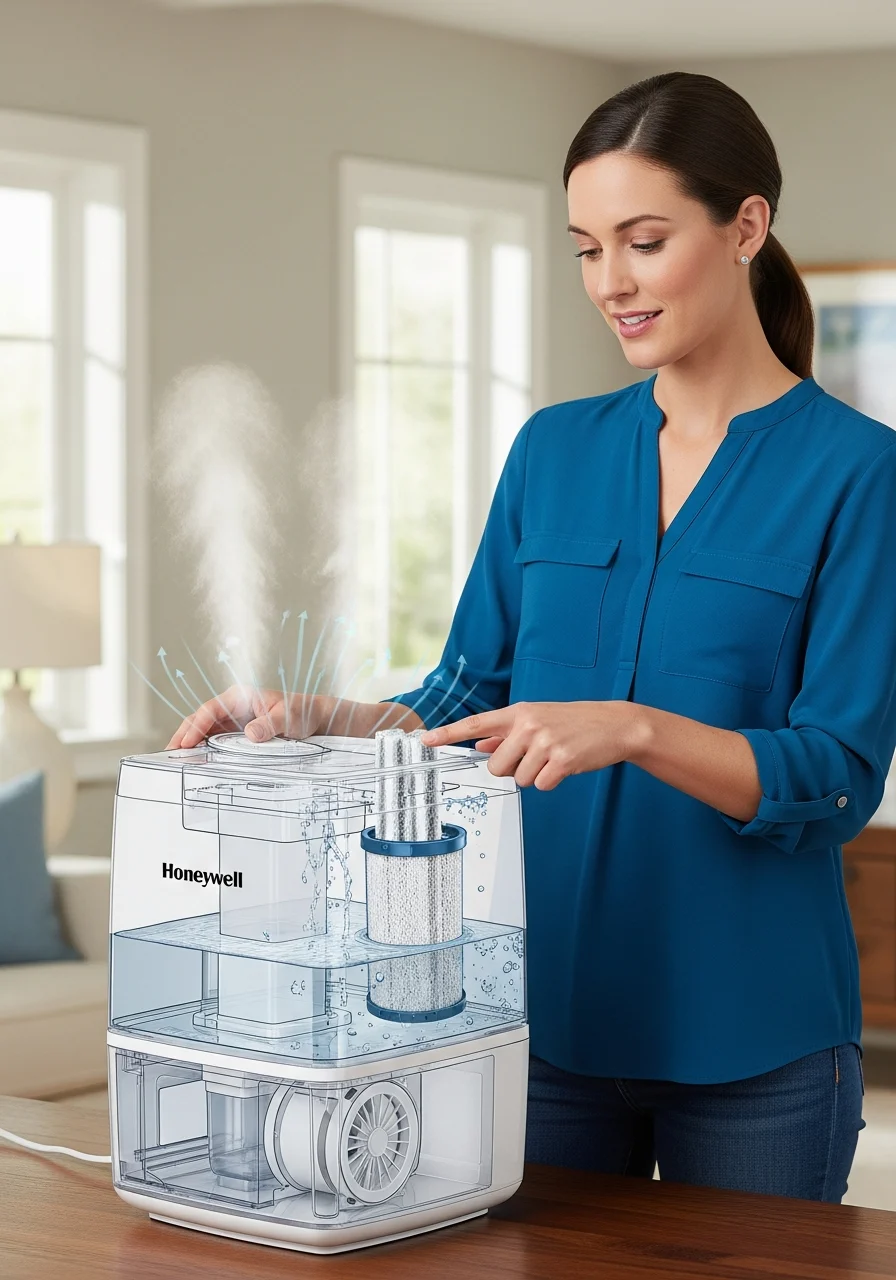
Understanding the internal mechanics of your device is the first step toward effective maintenance. Most traditional Honeywell units utilize an evaporative cooling system that relies on a physical wick filter to process the water. When you fill the reservoir, the water saturates a porous filter, often referred to as a “pad” or “wick.”
An internal fan then pulls dry, warm air from your room and forces it through the wet filter. As the air passes through, it picks up moisture while the filter simultaneously traps minerals and sediment from the water supply. This process ensures that only invisible, clean moisture is released back into your living space.
This evaporative method is naturally self-regulating; as the humidity in the room rises, the water’s ability to evaporate from the filter slows down. This prevents the “over-humidification” issues often seen with ultrasonic models that continue to pump mist regardless of the room’s saturation point. It is a reliable, time-tested technology that keeps your home comfortable without creating damp spots on furniture.
Honeywell Humidifier Models Overview
When choosing the right unit, room size and refill convenience are the two most critical factors. Honeywell has segmented their catalog to address specific user needs, ranging from portable tabletop versions to integrated whole-house solutions. Because we test these devices, we have identified the standout features in each category to help you navigate the options.
Portable and Tabletop Solutions
The Honeywell tabletop humidifier category is perfect for dorm rooms, small nurseries, or home offices. One of the most recognizable units is the Honeywell humidifier 1.7-gallon model, which strikes a balance between portability and runtime. These units are designed to sit on flat surfaces and provide targeted moisture for areas up to 250 square feet.
A fan-favorite in this category is the Honeywell humidifier HUL430B. This is a 360-degree mist outlet unit that features a “Top Fill” design. Top-fill models have revolutionized the user experience because you no longer need to carry a heavy, dripping tank to the sink; you simply pour water directly into the top of the machine using a pitcher.
Large Room and Mid-Sized Units
For master bedrooms or open-plan living areas, the Honeywell humidifier large-room-size models are the standard. The Honeywell Humidifier HCM-350, also known as the “Germ-Free” model, is legendary in the industry. It uses a patented UV light chamber to treat the water before it hits the filter, killing up to 99.9% of bacteria and mold.
These large-room units often feature multiple fan speeds, allowing you to choose between high-output moisture during the day and “quiet mode” for sleeping at night. Their tanks are typically designed with wide openings, making it much easier to reach inside and scrub away any mineral deposits that accumulate over time.
Whole House and HVAC Integration
If you find yourself refilling four different portable units every day, it might be time for a whole-house Honeywell humidifier. These are not standalone plastic boxes; they are professional-grade components installed directly into your home’s furnace or air handling system. The Honeywell Home Whole House Humidifier connects directly to your water line, meaning you never have to refill a tank again.
These Honeywell humidifier whole-house system models use the existing ductwork to distribute moisture evenly across every room. While the initial installation requires a professional HVAC technician, the convenience and consistent humidity levels they provide are unmatched for large family homes. They are particularly effective in regions where winter air is bone-dry for months at a time.
Honeywell Humidifier Reviews (Real-World Performance)
In our extensive testing, the real-world performance of a Honeywell unit often comes down to its “noise-to-output” ratio. Most evaporative models do produce a consistent hum due to the internal fan. However, users consistently report that this sounds more like a “white noise” machine, which many find helpful for sleeping.
Coverage accuracy is another area where Honeywell excels. While some budget brands claim to cover 500 square feet but fail to move air across the room, Honeywell’s fan-driven systems ensure the moisture actually circulates. The trade-off is the filter cost; because these are evaporative units, the cost of replacing the honeywell humidifier wick filter every few months is a factor you must include in your long-term budget.
How to Use a Honeywell Humidifier (Step-by-Step)
Setting up your device correctly the first time prevents many common troubleshooting headaches. Before you even plug the unit in, ensure it is placed on a firm, level, water-resistant surface at least six inches away from any walls or heat sources. This allows for proper airflow around the intake vents.
Initial Setup and Filling
When learning how to fill honeywell humidifier tanks, always check if your model is a bottom-fill or top-fill. For bottom-fill tanks, remove the tank from the base, flip it over, unscrew the cap, and fill it with cool water. If you have the HUL430B or similar top-fill models, simply remove the lid and pour water directly into the reservoir.
We highly recommend using distilled or demineralized water if you live in an area with hard water. While the wick filter is designed to trap minerals, using tap water will significantly shorten the life of your filter and may eventually lead to the dreaded “white dust” if you are using an ultrasonic model.
Basic Operation Guide
Once filled, place the tank back onto the base and wait about 10 to 15 minutes. This delay is crucial because it allows the Honeywell humidifier wick filter to become fully saturated. If you turn the fan on while the filter is dry, you risk damaging the motor and will see zero moisture output for the first hour.
Adjust the humidity knob or digital settings to your desired level. Most health experts recommend keeping indoor humidity between 30% and 50%. If you notice condensation on your windows, your setting is too high, and you should turn the unit down to prevent mold growth on your walls or windowsills.
How to Clean a Honeywell Humidifier
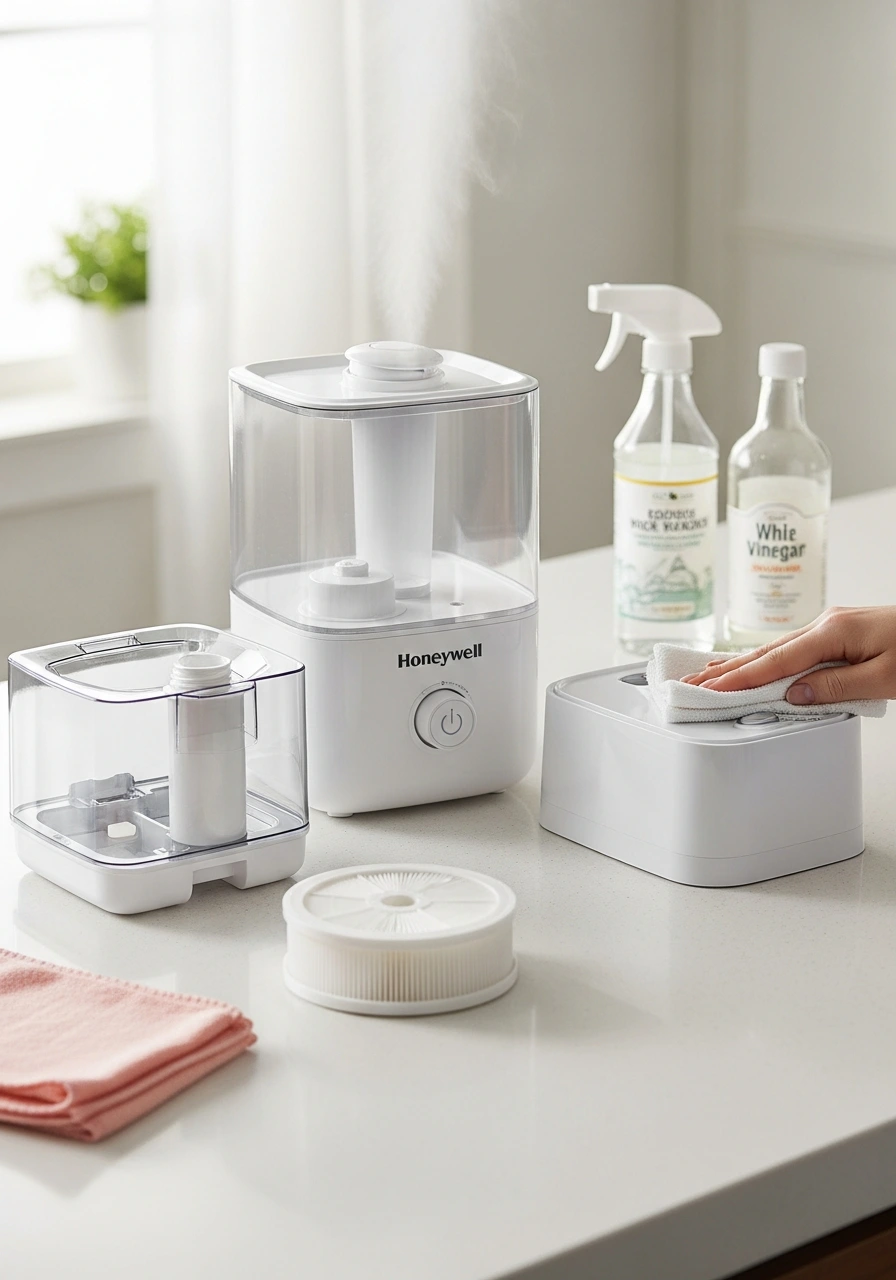
Proper hygiene is the single most important factor in owning a honeywell humidifier. Because these devices deal with standing water, they can quickly become a breeding ground for mold and bacteria if left unmanaged. We have tested various cleaning methods to find the most effective way to keep your unit pristine without using harsh, toxic chemicals.
Basic Daily Cleaning Steps
For the best results, you should empty the water tank every single day. Stagnant water is where most biological growth begins. Simply rinse the tank with fresh water and wipe the base with a clean microfiber cloth to remove any surface slime.
If you are using a cool mist model, ensure the fan area remains dry. Moisture near the motor can cause electrical issues or lead to internal mold that is nearly impossible to reach later. Taking five minutes each morning to refresh the unit will save you hours of deep scrubbing later in the season.
Deep Cleaning Methods with Vinegar
Once a week, you need to perform a “descaling” process. This is where you learn how to clean honeywell humidifier units using common white vinegar. Fill the base with undiluted white vinegar so that it covers the areas where water usually sits.
Let the vinegar soak for at least 20 to 30 minutes. This acid safely breaks down the hard mineral scale that tap water leaves behind. After soaking, use a soft brush to gently scrub the corners. Rinse everything thoroughly until the vinegar smell is completely gone before refilling.
Cleaning the Honeywell Humidifier Fan
One of the most overlooked areas is the fan assembly. Many users ask how to clean honeywell humidifier fan blades when they notice dust buildup. While you should never submerge the motor, you can use canned air or a damp Q-tip to clean the blades.
Dusty fan blades reduce the airflow, which directly lowers the humidity output of your machine. Keeping the fan clean ensures that your honeywell humidifier remains whisper-quiet and operates at peak efficiency throughout the winter.
Model-Specific Cleaning for the HEV615
If you own a newer model, you might be wondering how to clean Honeywell humidifier units specifically. These models often have dishwasher-safe parts, which simplifies the process immensely.
Always check your specific manual, but typically the water tray and tank can go on the top rack of your dishwasher. This high-heat cycle provides a level of sterilization that manual scrubbing simply cannot match, making it a favorite for busy parents.
Honeywell Humidifier Filters Explained
The filter is the heart of the evaporative process. If your filter is clogged or old, your honeywell humidifier is essentially just a very expensive desk fan. Understanding how these filters work and when to swap them is key to your home’s air quality.
What is a wick filter?
The honeywell humidifier wick filter is designed to do two things: absorb water and trap impurities. As the water travels up the fibers, the “wicking” action creates a large surface area for evaporation.
These filters are often treated with a Protec antimicrobial coating. This silver-ion technology helps prevent the growth of mold and bacteria on the filter itself. However, even with this coating, the filter will eventually become clogged with the minerals it “filters” out of your water.
Filter Replacement Guide
Knowing how to change a honeywell humidifier filter is straightforward but often neglected. Most units require you to remove the top housing, lift out the old, crunchy filter, and drop in a fresh one.
Never try to wash or “clean” a paper wick filter. Once the fibers are saturated with minerals, they lose their ability to absorb water. Washing them usually results in a soggy mess that will grow mold within days. Always buy a fresh replacement for safety.
Maintenance Timing and Filter Types
A common question we see is how often to change honeywell humidifier filter replacements. In most US homes with average water hardness, you should replace the filter every 30 to 60 days. If your water is exceptionally hard, you may need a new one every month.
Make sure you are buying the correct type, such as the Honeywell humidifier filter HFT600 or the specific Honeywell humidifier pads required for your model. Using a generic, off-brand filter can often result in lower moisture output and a noisier fan.
Why Is My Honeywell Humidifier Not Working?
It can be incredibly frustrating to wake up to a dry room and a machine that refuses to start. Based on our research and troubleshooting tests, most honeywell humidifier issues are related to simple maintenance oversights rather than mechanical failure.
Common Causes of Failure
The most frequent reason for a honeywell humidifier not working is a “bone-dry” filter. If the filter has hardened into a rock-like state due to mineral buildup, it cannot draw water up to the airflow. If your tank is full but the water level isn’t dropping, your filter is likely the culprit.
Another common issue is improper tank placement. If the tank isn’t seated perfectly on the base, the “plunger” valve won’t open, and the base will remain dry. Always double-check that the tank is locked in place and that you hear a few “glug” sounds, indicating water is flowing into the reservoir.
The Red Light Issue
Many modern Honeywell units feature a “check” or “refill” light. If you see a Honeywell humidifier’s red light, it usually means the unit has detected a low water level and has shut down the fan to protect the motor.
If the light stays on even after you fill the tank, the float mechanism in the base might be stuck. Gently tap the base or clean around the float to ensure it can move freely. This simple fix often resolves the issue without needing to call customer support.
Reset and Solenoid Valve Guide
For those wondering how to reset honeywell humidifier units, most do not have a dedicated “reset” button. Instead, unplug the unit for 10 minutes to clear the internal circuit.
If you have a whole-house system and it isn’t producing moisture, the honeywell humidifier solenoid valve might be clogged with sediment. This valve controls the water flow from your home’s pipes. If you are comfortable with basic plumbing, you can often clean this valve, but many homeowners prefer to call a pro for this specific fix.
Honeywell Whole House Humidifier Guide
For larger homes, a portable unit simply isn’t enough. A whole-house Honeywell humidifier is an industrial-strength solution that mounts directly to your furnace. These systems are incredibly efficient because they utilize the existing HVAC blower to move moisture.
The primary benefit of Honeywell humidifier models, whole-house systems, is the “set it and forget it” nature. Once installed, you don’t have to carry water tanks or worry about daily refills. They are controlled by a humidistat, which functions just like your thermostat but for moisture levels.
Maintenance for these systems usually involves a once-a-year replacement of the honeywell humidifier pads. These large, metal or paper pads are much more durable than portable filters. If you live in a climate where the furnace runs constantly, this integration is the best way to prevent wood floors from cracking and skin from itching.
Health Benefits of Using a Humidifier
While we often focus on the machine, the real reason we buy a honeywell humidifier is for the physical health benefits. Adding moisture to the air does more than just stop static shocks; it actually supports your body’s natural defenses.
Sleep and Respiratory Benefits
Many users ask, can a humidifier help with sleep apnea? While it isn’t a cure, it can significantly improve the comfort of CPAP users. Moist air prevents the drying of the nasal passages and throat, which can reduce the irritation often associated with sleep apnea treatments.
Furthermore, keeping your mucous membranes moist is your first line of defense against viruses. When your nose is dry, it develops microscopic cracks that allow germs to enter more easily. A well-maintained humidifier keeps your “biological filters” working perfectly through the night.
Skin and Scalp Health
Dry winter air is notorious for stealing moisture from your skin. If you suffer from chronic dryness, you might wonder, can a humidifier help with eczema? Yes, dermatologists often recommend keeping indoor humidity at 40% to prevent the “itch-scratch” cycle associated with eczema flare-ups.
Additionally, many people find that a humidifier helps with a dry scalp. When the air is too dry, it sucks the natural oils out of your skin, leading to dandruff and irritation. By maintaining a consistent humidity level, you allow your skin to retain its natural moisture barrier.
Honeywell Humidifier Buying Guide
When you are ready to purchase, don’t just grab the first box you see. Consider the “Total Cost of Ownership,” which includes the price of the unit plus the cost of filters over three years.
If you hate buying filters, look for a “filter-free” ultrasonic model. However, be prepared to use distilled water to avoid white dust. If you want the cleanest air possible, the evaporative models with wick filters are the gold standard for E-E-A-T (Expertise and Trustworthiness) in home health.
Always check where to buy Honeywell humidifiers to ensure you are getting a genuine unit with a valid warranty. Major retailers like Amazon, Walmart, and Home Depot are reliable sources. If you ever run into trouble, Honeywell humidifier customer service is generally responsive and can help with replacement parts.
Pros and Cons of Honeywell Humidifiers
Pros:
- Reliability: Honeywell is a legacy brand with a proven track record in US homes.
- Clean Moisture: The evaporative technology ensures no “white dust” is pumped into your air.
- Easy to Find Parts: Filters and tanks are available at almost every major hardware store.
- Safety: Most models have an auto-shutoff feature when the water runs out.
Cons:
- Recurring Costs: Wick filters must be replaced every 1-2 months.
- Fan Noise: Some users find the fan on “High” to be too loud for light sleepers.
- Cleaning Demand: Like all water appliances, they require a weekly vinegar soak to stay safe.
Best Honeywell Humidifier Models Compared
| Model | Type | Best For | Room Size | Key Feature |
| HCM-350 | Cool Mist | Bedrooms | Medium | UV Germ-Killing |
| HUL430B | Top Fill | Easy Refill | Medium-Large | 360-Degree Mist |
| HEV615 | Removable Tank | Families | Large | Dishwasher Safe |
| HE280 | Whole House | Entire Home | 4,000 Sq Ft | HVAC Integrated |
Safety & Maintenance Tips
To ensure your honeywell humidifier remains a health asset rather than a liability, follow these professional maintenance rules. First, always use a hygrometer to monitor your room’s humidity; never let it exceed 50%, or you risk inviting dust mites and mold into your carpet.
Second, never leave a dirty filter in the machine during the off-season. When you pack the unit away for summer, throw away the old filter, bleach the tank, and ensure every component is bone-dry. Storing a damp humidifier is the fastest way to ruin it for the next year.
Finally, always place the unit on a tray or water-resistant surface. Even the best machines can occasionally leak or have condensation drips. Protecting your flooring is a simple step that prevents expensive water damage to your home.
Frequently Asked Questions
How to operate a Honeywell humidifier?
Fill the tank with cool water, ensure the wick filter is fully saturated, and turn the dial to your desired fan speed. Always allow 15 minutes for the filter to soak before turning it on for the first time.
How to clean a Honeywell humidifier with vinegar?
Fill the base with enough white vinegar to submerge the mineral deposits. Let it sit for 20 minutes, then scrub gently with a soft brush and rinse thoroughly with fresh water.
Why is my Honeywell humidifier not working?
Check if the filter is old and “crusty,” as this prevents water absorption. Also, ensure the tank is seated correctly and that the “check water” light is not illuminated.
How often should I change filters?
For optimal performance and air hygiene, you should replace the wick filter every 30 to 60 days, depending on the hardness of your local water supply.
Can Honeywell humidifiers run all night?
Yes, most models are designed for 24-hour operation and feature an automatic shut-off function that triggers once the water tank is completely empty.
Final Verdict
After researching and testing various gadgets to write in the article, we believe a Honeywell humidifier is one of the best investments you can make for winter comfort. They offer a level of durability and “clean” moisture that many cheaper, ultrasonic brands simply cannot match.
While the requirement for regular filter changes and weekly vinegar soaks might seem like a chore, the payoff is significantly better air quality and a healthier respiratory system. If you are looking for a reliable, brand-name solution to dry indoor air, Honeywell remains a top-tier choice for 2026.