
When a persistent illness ruins your sleep, using a cool mist humidifier for cough relief is one of the most effective natural remedies available. Whether you are battling a dry, hacking cough or heavy chest congestion, your indoor air quality plays a massive role in your overall recovery.
During the winter months or in heavily air-conditioned spaces, indoor humidity drops significantly. This dry air strips your respiratory tract of its natural moisture, worsening cough symptoms and irritating your throat.
A highly effective, natural solution to this problem is adding a cool mist humidifier for cough relief to your bedroom. By reintroducing essential moisture into the air, these devices help soothe inflamed airways and thin stubborn mucus.
This comprehensive guide will explore exactly how these devices work, compare warm vs. cool mist options, and help you find the best humidifier for your specific needs. We will also dive into expert medical recommendations for both babies and adults.
What Is a Cool Mist Humidifier and How Does It Work?
A cool mist humidifier is an electrical device designed to add unheated moisture back into your indoor environment. When you are sick, maintaining an indoor humidity level between 40% and 60% is crucial for respiratory comfort.
Instead of boiling water to create steam, these devices disperse room-temperature water into the air. Understanding how a cool mist humidifier for cough relief requires looking at the two primary technologies powering these devices on the market today.
Ultrasonic Technology Explained
Ultrasonic humidifiers use a small metal or ceramic diaphragm vibrating at an incredibly high frequency. These ultrasonic vibrations break the water into microscopic droplets, which are then propelled into the room by a tiny fan.
Because they do not rely on large fans or heating elements, they are practically silent. This makes them highly preferred for bedroom use when you are trying to sleep off a cold.
Evaporative Technology Explained
Evaporative models take a more natural approach to humidification. They feature a wick filter that sits in a water basin, absorbing the liquid like a sponge.
A built-in fan then blows dry indoor air across the wet filter. As the water evaporates into the moving air, it is pushed out into the room as an invisible, cool mist.
Adding Moisture to Soothe the Throat
Regardless of the technology used, what does a cool mist humidifier do for a cough? It acts as a mechanical lubricant for your respiratory system.
When you inhale the fine, unheated mist, it coats the back of your throat and your nasal passages. This directly combats the scratchy, irritated feeling that triggers a dry cough reflex.
Does a Cool Mist Humidifier Help With a Cough?
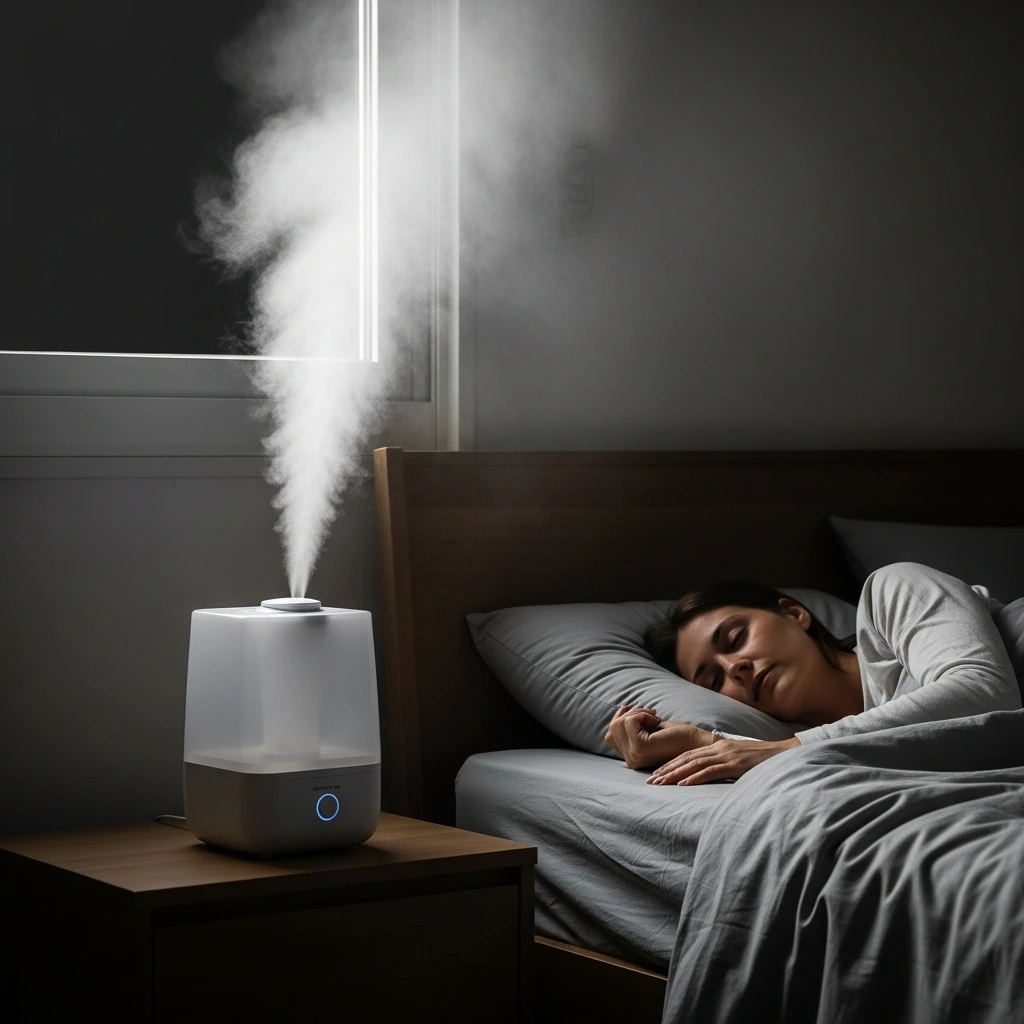
Yes, scientific consensus and medical professionals agree that a humidifier provides significant relief for respiratory ailments. Does a cool mist humidifier help with a cough? Absolutely, by addressing the environmental triggers that make coughing worse.
The human respiratory system relies on a thin layer of mucus to trap dust, viruses, and bacteria. Tiny hair-like structures called cilia then sweep this mucus up and out of the lungs.
When you breathe in dry air, this mucus becomes thick, sticky, and difficult to move. The cilia struggle to sweep it away, leading to a buildup of phlegm and a persistent, hacking cough.
Relief for Dry Cough Symptoms
A dry cough produces no mucus and is often caused by lingering inflammation from a viral infection or allergies. Because the throat is already raw, breathing in dry air feels like swallowing sandpaper.
Introducing a cool mist into the room acts as a soothing balm for the airway. It prevents the throat tissues from drying out further, suppressing the urge to cough continuously.
Relief for Sore Throat and Congestion
If you are wondering, do humidifiers help with congestion? The answer lies in mucus viscosity. Moist air physically thins out thick secretions in your chest and nasal cavity.
Once the mucus is thinned, it becomes much easier to cough up and expel from the body. This is why many doctors consider a properly maintained device to be the best humidifier for sore throat and chest congestion relief.
Warm vs Cool Mist Humidifier for Cough
When shopping for respiratory relief, the most common dilemma is choosing between a warm or cool mist humidifier for cough management. Both machines add moisture to the air, but they do so in entirely different ways.
Understanding the cool mist vs. warm humidifier difference is vital for your safety, your budget, and your specific illness. Let’s break down the major distinctions between these two popular styles.
Temperature Output
The most obvious difference is the temperature of the mist. A warm mist humidifier uses an internal heating element to boil water, releasing a warm, pure steam into the room.
A cool mist humidifier releases water at room temperature. Interestingly, by the time the mist from either machine reaches your lower airways, it is the exact same temperature as your body, providing equal respiratory benefits.
Safety Considerations
Safety is the most critical factor in the warm vs. cool mist humidifier for cough debate, especially in households with children. Warm mist devices contain boiling water inside their reservoirs.
If a toddler accidentally tips over a warm mist machine, it can cause severe, third-degree burns. Because of this hazard, cool mist humidifiers are universally considered the safer option for family homes.
Maintenance and Cleaning Protocols
All humidifiers require strict cleaning, but their maintenance needs differ. Warm mist machines are self-purifying because the boiling process kills waterborne bacteria and mold.
However, they leave behind stubborn mineral deposits on the heating element that require frequent scrubbing with vinegar. Cool mist machines do not have this hard-water buildup on heating elements, but they are highly susceptible to pink mold and bacteria if left uncleaned.
Cold Mist vs Hot Humidifier Comparison Table
Determining the Best Option for Respiratory Relief
So, is a cool- or warm-mist humidifier better for a cough? For a standard dry cough, a cool mist device is highly recommended because it safely adds moisture without making the room uncomfortably stuffy.
If you have severe chest congestion and no children in the house, a warm versus cool mist humidifier comparison might favor the warm mist. The heated steam can sometimes feel more relaxing for severe sinus pressure, much like sitting in a hot shower.
However, for overall versatility, safety, and energy efficiency, the medical community generally leans toward recommending cool mist models for general cough and cold symptoms.
Cool Mist Humidifier for Babies & Kids
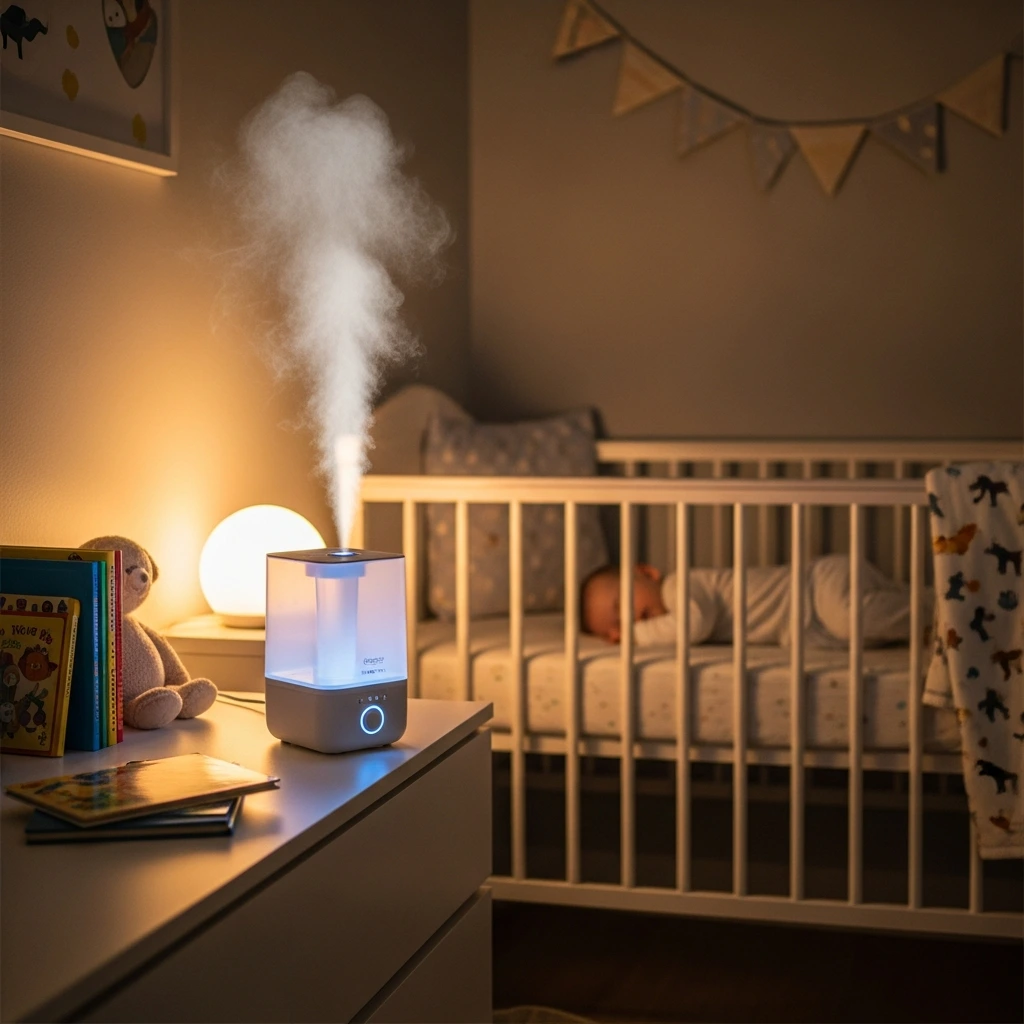
When a child is sick, parents often feel helpless, but maintaining room humidity is a powerful, non-invasive treatment. A cool mist humidifier for baby cough relief is a staple item in any well-stocked nursery.
The American Academy of Pediatrics (AAP) specifically advises against using warm mist vaporizers around infants. The risk of accidental burns from spilled boiling water far outweighs any potential benefit of heated steam.
Pediatric Recommendations
Pediatricians consistently recommend a cool-mist humidifier for cough treatments in kids. Because young children have very narrow airways, even a small amount of dried mucus can cause severe respiratory distress.
Keeping a cool mist device running in their bedroom keeps those tiny airways lubricated. It is particularly effective for treating croup, a viral infection characterized by a harsh, barking cough.
Nighttime Relief for Infants
When using a cool mist humidifier for a cough in babies, it is best utilized during their nighttime sleep cycle. Place the unit across the room from the crib, ensuring the mist does not blow directly onto the infant’s face.
You must also be incredibly diligent about hygiene. Empty the tank completely every morning, dry it out, and refill it with fresh water at night to prevent mold spores from irritating your child’s delicate lungs.
Cool Mist Humidifier for Adults
While often associated with nurseries, a cool mist humidifier for coughing adults is equally vital. Adults frequently suffer from sleep-disrupting coughs triggered by winter heating systems or year-round air conditioning.
A warm or cool mist humidifier for coughing adults can make the difference between a restless night and restorative sleep. For adults using CPAP machines for sleep apnea, ambient room moisture prevents severe morning throat dryness.
Furthermore, adult bedrooms are often larger than nurseries, making high-capacity cool mist ultrasonic models ideal. They provide the best humidifier for coughing at night by running continuously for 12 to 24 hours without needing a refill.
Cool Mist Humidifier for Cough and Congestion
A cough is rarely an isolated symptom; it is usually accompanied by a stuffy nose and a heavy chest. Using a cool mist humidifier for cough and congestion attacks both issues simultaneously.
When your nasal passages are blocked, you are forced to breathe through your mouth. This constant mouth-breathing dries out your throat rapidly, leading to violent coughing fits.
Mucus Viscosity Reduction
Whether you choose a warm or cool mist humidifier for cough and congestion, the goal is to reduce mucus viscosity. Moist air enters the nasal cavity and hydrates the dried, swollen tissues.
This is particularly helpful if you need a cool mist humidifier for a cough with phlegm. By keeping the environment humidified, the phlegm thins out naturally, allowing your body to expel the infection much faster through productive coughing.
What to Put in a Cool Mist Humidifier for a Cough
One of the most common questions regarding maintenance is what to put in a cool mist humidifier for cough treatments. The answer is simple but incredibly important for your lung health.
You should only put clean, pure water into the tank. Distilled water or demineralized water is highly recommended by manufacturers and allergy specialists over standard tap water.
Avoiding Tap Water Issues
Tap water contains minerals like calcium and magnesium. When dispersed by an ultrasonic machine, these minerals turn into a fine white dust that coats your bedroom and can irritate a sensitive cough.
Many people wonder, “Can I put Vicks in a cool mist humidifier?” Unless your specific machine has a dedicated aromatherapy tray or scent pad slot, the answer is strictly no. Adding essential oils or menthol directly to the water tank will degrade the plastic and ruin the machine’s internal components.
Are Cool Mist Humidifiers Safe?
When properly maintained, these devices are incredibly safe and beneficial. However, if you are asking if cool mist humidifiers are safe, you must understand the risks of neglected maintenance.
The primary danger comes from user error, specifically leaving stagnant water in the tank for days. Because the water is not boiled, a dirty tank becomes a breeding ground for mold, mildew, and bacteria.
If this happens, the machine will aerosolize these pathogens and spray them directly into your breathing zone. This is one of the main things. What are the disadvantages of a cool mist humidifier? They require strict, non-negotiable weekly cleaning with white vinegar to remain safe.
Warm Mist Humidifier for Cough (Comparison Section)
While this guide focuses on cool mist, we must acknowledge when a warm mist humidifier for cough is appropriate. Warm mist machines are excellent for adults dealing with severe winter colds in drafty, chilly bedrooms.
Because they boil the water, they actively kill waterborne bacteria, making them slightly safer for people with severely compromised immune systems. If you are deciding between a hot- or cool-mist humidifier for a cough, choose warm mist only if you have no children or pets and you want to slightly raise the ambient temperature of your room.
Best Cool Mist Humidifier for Cough
When shopping for the best cool mist humidifier for cough relief, you need a device that is easy to clean, quiet, and properly sized for your bedroom.
As a general rule, look for models with a “top-fill” design. This allows you to pour water directly into the top of the machine without carrying a heavy, dripping tank to the sink.
Key Features to Look For
You should prioritize machines with a built-in humidistat. This sensor monitors the room’s humidity and automatically turns the machine off when it reaches the ideal 50% mark, preventing your room from turning into a damp swamp.
Many users highly rate the Vicks cool mist humidifier for cough because it allows the use of Vicks VapoPads. These pads safely release soothing menthol vapors into the air alongside the moisture, providing excellent relief for nighttime congestion.
Best Humidifier for Dry Cough at Night
Nighttime is when a dry cough becomes the most aggressive. To create the best humidifier for coughing at night, setup and placement are everything.
Place the unit at least three feet away from your bed, elevated on a nightstand. This prevents the mist from settling directly onto your blankets, which can make you feel damp and cold.
A reliable humidifier for a dry cough at night should have a display shut-off feature. This ensures that bright LED lights do not disrupt your circadian rhythm while the machine runs silently in the background.
Cool Mist vs Vaporizer for Congestion
It is easy to get confused by the terminology used in the respiratory health aisle. When comparing a cool mist device to the best vaporizer for congestion, the difference is simply the heating element.
A vaporizer is just another term for a warm mist humidifier. It vaporizes water through boiling to create steam. While both help with congestion, a cool mist humidifier is generally preferred for its safety profile and lower electricity consumption.
FAQs
Does a cool mist humidifier help with a cough?
Yes, it helps by adding essential moisture to the air. This moisture soothes irritated throat tissues and thins out thick, sticky mucus, making it much easier to cough up and clear your airways.
Can I put Vicks in a cool-mist humidifier?
You cannot put Vicks VapoRub or essential oils directly into the water tank, as it will destroy the plastic. However, you can use Vicks VapoPads if your specific humidifier model features a dedicated scent pad tray.
What are the disadvantages of a cool mist humidifier?
The main disadvantage is that they require rigorous cleaning. Because they do not boil water to kill bacteria, a neglected tank can grow mold and disperse harmful pathogens into your bedroom air.
Will a humidifier help with dry skin?
Absolutely. Just as it hydrates your throat, a humidifier prevents the dry indoor air from evaporating the natural moisture from your skin barrier, significantly reducing winter flakiness and eczema flare-ups.
Is a cool or warm-mist humidifier better for a cough?
Cool mist is universally considered better and safer, especially for households with children, because it poses zero burn risk. Both temperatures provide the exact same respiratory benefits by the time the mist reaches your lungs.
Conclusion
Managing a respiratory illness requires creating a healing environment in your home. A cool mist humidifier is a safe, highly effective, and drug-free way to find relief from persistent coughing and heavy congestion.
Whether you are soothing a toddler with croup or trying to get a full night’s sleep through a winter cold, adding moisture to the air is a proven medical strategy. Remember to choose a model that is easy to clean, use distilled water whenever possible, and keep the unit sanitized to experience the best possible respiratory benefits.
Evidence-Based References: