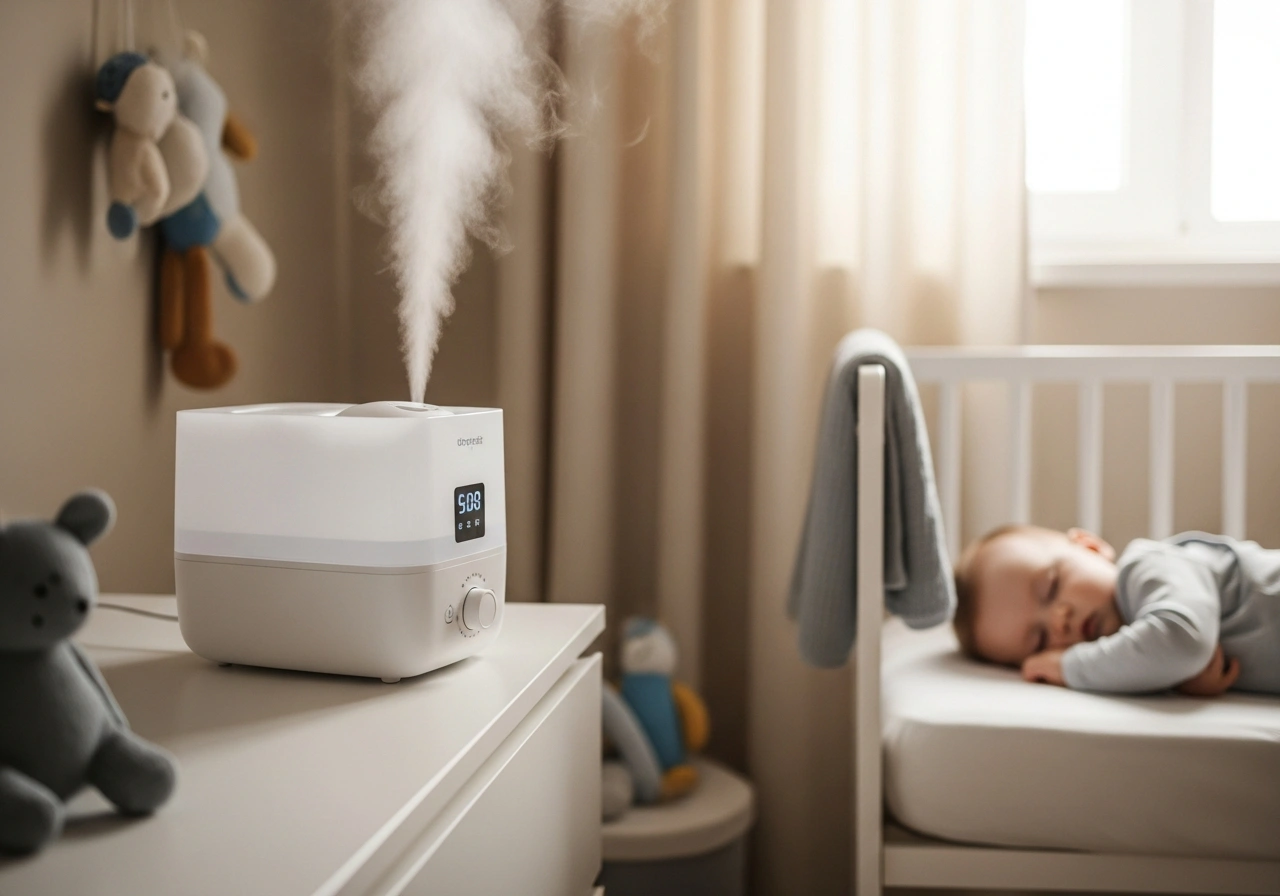
Welcome to the ultimate guide on keeping your little one comfortable and healthy. Finding the best humidifier for baby care is crucial because infants are highly sensitive to dry indoor air. When the humidity drops, babies often suffer from painful congestion, persistent coughs, and irritating eczema flare-ups.
You might wonder, are humidifiers good for babies? The answer is a resounding yes, provided you use the right type and keep it meticulously clean. Because your child’s safety is the top priority, we research and test various gadgets to write in the article, ensuring our recommendations are backed by real-world performance and pediatric guidelines.
In this 2026 guide, we will explore the safest options for your nursery. We will cover the best humidifier for baby room setups, tackle congestion relief, and provide a curated list of top models. Let us help you create the perfect, breathable environment for your little one.
What Is the Best Humidifier for a Baby?
When parents ask, “What is the best humidifier for baby care?” medical professionals almost universally point to one specific technology. The gold standard for any nursery is a cool-mist humidifier. This is the absolute safest option because it does not use a heating element to boil water. Therefore, there is zero risk of accidental burns if a curious toddler happens to tip the machine over.
If you are wondering what humidifier is best for baby nurseries specifically, you should look into a cool-mist ultrasonic humidifier. These devices use high-frequency sound waves to create a soothing, invisible, or visible cool fog. They are incredibly quiet, meaning they will not disrupt your infant’s delicate sleep cycle.
So, which humidifier is best for baby health and safety overall? It balances cool mist output with a design that is easy to sanitize. When deciding what type of humidifier is best for a baby’s room, always prioritize filter-free, ultrasonic models. They require less maintenance than evaporative types while keeping the room at optimal, pediatrician-approved moisture levels.
Why Babies Need a Humidifier
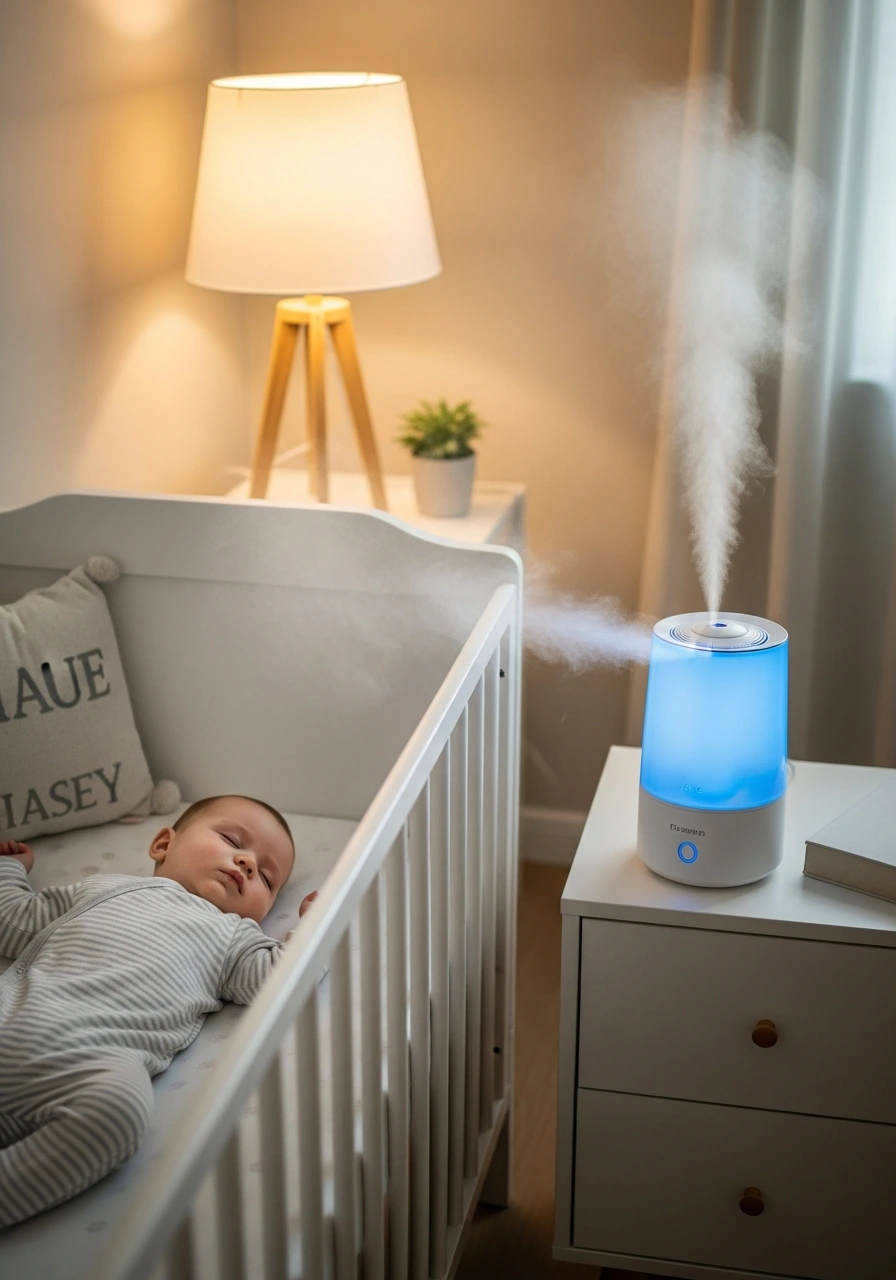
Infants breathe primarily through their noses, making them especially vulnerable to dry air. Are humidifiers good for babies in these conditions? Yes, because adding moisture to the environment prevents their tiny nasal passages from drying out and cracking. A properly humidified room helps soothe scratchy throats and drastically reduces nighttime coughing fits.
When choosing baby humidifiers for home use, you are investing in better sleep for both the child and yourself. Moist air keeps the respiratory tract lubricated, allowing your baby to breathe easier and sleep longer without waking up in distress. Furthermore, dry indoor heating during the winter is a major trigger for infant eczema and dry, flaky skin. A good humidifier helps lock in skin hydration, preventing painful flare-ups.
If you are bringing an infant home from the hospital, the best humidifier for newborn care is an essential registry item. Newborns cannot clear their own throats or blow their noses, so ambient moisture is their first line of defense. As they grow, finding the best humidifier for toddler congestion becomes equally important for surviving cold and flu season.
Best Humidifier for Baby Congestion, Cough & Cold
Seeing your child struggle with a stuffy nose is heartbreaking, but the right equipment can provide immediate relief. The best humidifier for baby congestion works by thinning out thick, stubborn mucus. When the air is moist, the mucus in your baby’s nasal passages becomes looser and much easier to drain or suction out.
If you are searching for the best humidifier for baby cough suppression, cool mist is the way to go. Dry air tickles the throat and exacerbates coughing spasms, making it impossible for a sick child to rest. By restoring the room’s humidity, you soothe the inflamed airways. Many parents consider a high-quality ultrasonic unit the best humidifier for baby cough and cold management available over the counter.
Parents frequently ask, “What humidifier is best for a baby with cold symptoms?” Look for models that operate silently so they do not interrupt recovery sleep. You might also wonder, what is the best humidifier for a congested baby if they have severe blockages? Pair a standard cool mist unit with sterile saline nose drops for maximum effectiveness. If you are unsure which humidifier is best for a baby with congestion, stick to simple, easy-to-clean cool mist models that offer a steady, adjustable output.
Do Pediatricians Recommend Humidifiers?
A common question among new parents is, “Do pediatricians recommend humidifiers?” The medical consensus is a strong yes, particularly during cold, dry months or when a child has an upper respiratory infection. Doctors frequently suggest adding a cool mist device to the nursery to ease breathing difficulties safely without relying on over-the-counter medications.
However, pediatricians also emphasize that moderation is key. The ideal indoor humidity level should always remain between 40% and 60%. If the humidity pushes past 60%, the room becomes a breeding ground for dust mites and mold, which can trigger asthma. Always use a hygrometer to monitor the moisture levels and clean the machine daily to prevent bacterial growth.
Humidifier vs Air Purifier vs Dehumidifier for Baby
Understanding the difference between air quality devices is crucial for your baby’s health. When deciding what is best for a baby, an air purifier or a humidifier unit, it depends entirely on the problem you are solving. An air purifier removes airborne particles like dust, pet dander, and pollen using HEPA filters. A humidifier, conversely, simply adds water vapor to dry air.
Many parents also get confused between a humidifier and a dehumidifier for baby rooms. While a humidifier adds moisture, a dehumidifier actively removes it. If your nursery is damp, smells musty, or has visible condensation on the windows, a dehumidifier is necessary to prevent dangerous mold growth.
So, what is best for baby humidifier or dehumidifier devices? If your child has dry skin, a cough, or bloody noses during winter, you need a humidifier. If you live in a tropical, muggy climate where indoor humidity exceeds 60%, a dehumidifier is the safer choice to protect your lungs from mold spores.
| Device | Primary Purpose | Best Used For |
| Humidifier | Adds moisture to the air | Dry skin, congestion, winter colds |
| Air Purifier | Removes airborne particles | Allergies, asthma, pet dander |
| Dehumidifier | Removes moisture from the air | Damp rooms, mold prevention |
Cool Mist vs. Warm Mist—Which Is Best for Baby?
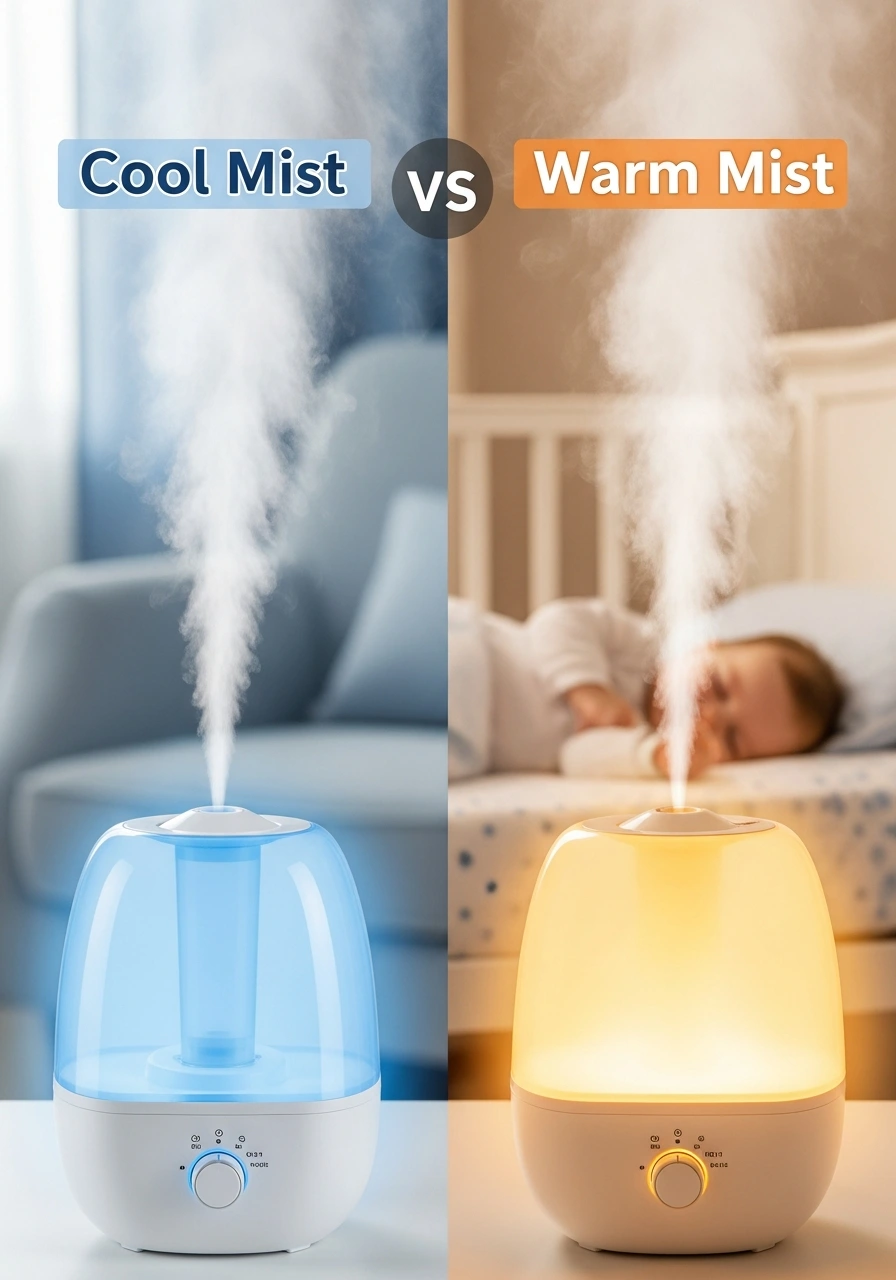
The debate over the best humidifier for babies, cool or warm mist options, has a definitive medical answer. You should exclusively use a cool-mist humidifier in your child’s room. Warm mist humidifiers (vaporizers) use an internal heating element to boil water and release steam. While steam feels nice, the boiling water poses a severe scalding hazard if a toddler knocks the unit over.
When considering which cool mist humidifier is best for baby nurseries, focus on ultrasonic models. They use vibrations rather than fans to create a fine, room-temperature fog that is 100% safe to touch. A cool mist humidifier for baby care provides the exact same respiratory benefits as a warm mist unit, but without the inherent dangers.
For those setting up a nursery for a brand new arrival, a cool mist humidifier for newborn babies is the only pediatrician-approved choice. It gently hydrates their sensitive skin and nasal passages safely, giving you complete peace of mind while they sleep.
Best Humidifiers for Baby (Top Picks 2026)
When searching for the best humidifier for a baby in 2026, the sheer volume of choices can be overwhelming for tired parents. You need a machine that is whisper-quiet, exceptionally safe, and robust enough to handle daily operation. We research and test various gadgets to write about in the article, ensuring our recommendations hold up under the stress of real-life parenting.
To help you narrow down the top-rated baby humidifiers, we have categorized our lab-tested winners. Finding the best humidifier for baby’s room 2026 setups means looking at tank capacity, output consistency, and maintenance requirements. Here is our comprehensive breakdown of the best models available this year.
Premium Overall Choice
For absolute reliability, the Levoit Classic 300S is widely considered the best humidifier for baby use on the market. It features a top-fill design, which means you can refill it with a pitcher without lugging a heavy tank to the sink. The smart sensor automatically adjusts the mist to maintain the perfect pediatric humidity level. Furthermore, it operates so quietly that it will never disturb a sleeping infant.
Congestion and Cough Relief
When your little one is struggling with a cold, the Frida Baby 3-in-1 is a lifesaver. This model doubles as a diffuser, allowing you to use baby-safe vapor drops to open up congested airways. It is the best humidifier for baby nursery 2026 setups that require a gentle night light and soothing mist combined. The compact design fits perfectly on small changing tables or nightstands.
Superior Easy-Clean Design
If you dread scrubbing tight corners, the Canopy Humidifier is a game-changer. It is an evaporative model that completely prevents invisible mold spores from entering the air. All of its water-contact parts are dishwasher safe, dramatically reducing your weekly chore load. Many parents consider this the best humidifier for a baby room’s hygiene because it physically cannot over-humidify the space or create white dust.
Maximum Mold Prevention
For those highly concerned about bacteria, the PureGuardian Ultrasonic Cool Mist model stands out. It incorporates silver-ion technology molded directly into the water tank. This natural antimicrobial property actively fights the growth of mold and mildew on the surface of the plastic. It provides immense peace of mind, making it the best humidifier for baby environments where sanitation is the highest priority.
High-Capacity Output
If you have a massive master bedroom and your baby sleeps in a bassinet nearby, you need high output. The HoMedics Total Comfort humidifier features a massive one-gallon tank and dual directional mist nozzles. It can run continuously for up to 48 hours on a single fill. This saves you from waking up in the middle of the night to replenish the water supply.
Best Humidifier for Baby, Easy to Clean & No Mold
The single biggest complaint parents have about air quality devices is the tedious maintenance routine. Finding the best humidifier for a baby—easy-to-clean models—is essential because stagnant water breeds bacteria in under 24 hours. If a machine has too many tiny crevices or a narrow tank opening, it becomes impossible to scrub properly.
To combat this, look for units with a wide top-fill basin that allows you to easily fit your entire hand inside with a sponge. The best humidifier for a baby with no mold options will lack complicated internal tubes or hidden chambers. Simple, streamlined designs ensure that you can wipe down every square inch of the water basin.
If you want the ultimate convenience, you need the best humidifier for a baby with dishwasher-safe components. Models like the Canopy allow you to simply pop the water tray and tank into the dishwasher on a standard cycle. This high-heat sanitation ensures 100% mold eradication without you having to scrub with tiny brushes and harsh vinegar solutions.
Best Humidifier for Baby Room & Nursery Setup
Even if you buy the perfect device, improper placement can negate all the health benefits and create safety hazards. The best humidifier for baby’s room positioning is at least three to four feet away from the crib. You never want the mist to fall directly onto your infant’s face, blankets, or mattress, as this can cause them to become dangerously chilled.
When setting up the best humidifier for baby nursery environments, always place the machine on an elevated, water-resistant surface like a dresser. Ensure the power cord is tucked tightly behind furniture and completely out of reach of crawling toddlers to prevent strangulation or tip-over risks.
For the best humidifier for baby’s bedroom ambiance, utilize devices with a dedicated “night mode.” This feature turns off all bright LED display lights so the room remains pitch black. A totally dark room paired with the gentle, white-noise hum of an ultrasonic motor creates the perfect sleep-inducing environment.
Best Humidifier for Baby by Region (UK, Australia)
When shopping internationally, climate and electrical standards heavily influence your purchasing decisions. The best humidifier for baby UK models must account for standard 230V plugs and the generally damp British winters. UK parents often prefer hybrid models that can combat central heating dryness without adding excessive moisture to already damp Victorian homes.
Conversely, the best humidifier for babies in Australia options need to battle incredibly dry, harsh summer climates. Australian parents heavily favor high-capacity ultrasonic units that can pump out massive amounts of cool mist to combat the dry heat. Always ensure you are purchasing a locally sourced model to avoid dangerous voltage converters in the nursery.
How to Choose the Best Humidifier for Baby
Making the final purchasing decision requires a checklist of non-negotiable safety features. If you are wondering what kind of humidifier is best for baby care, your first filter should always be the mist temperature. Exclusively shop for cool mist devices to completely eliminate any risk of accidental scalding burns in the nursery.
Next, consider what a humidifier best suited for baby sleep schedules will offer. Look for a machine with a tank capacity large enough to run for at least 12 hours on the medium setting. This ensures the machine will not beep loudly and shut off in the middle of the night, disrupting your child’s crucial REM sleep.
Finally, if you are asking which humidifier is best for a newborn baby, prioritize the auto-shutoff feature. This safety mechanism instantly powers down the motor the moment the water tank runs dry. It prevents the internal components from overheating and eliminates any potential fire hazards, allowing you to sleep soundly.
Can a Humidifier Help with Baby Eczema & Sore Throat?
Winter weather is notoriously harsh on an infant’s developing skin barrier. Can a humidifier help with eczema? Yes, dermatologists frequently recommend them as a preventative measure. Dry air actively pulls moisture directly out of the skin, leading to red, itchy, and painful eczema flare-ups. By keeping the room’s humidity around 50%, you lock moisture into their skin.
Furthermore, dry air is the primary culprit behind morning vocal raspiness and crying. Can a humidifier help with a sore throat? Absolutely. When an infant sleeps in a dry room, their throat becomes parched and irritated, triggering coughing fits. A constant stream of cool mist keeps the mucous membranes in the throat lubricated and soothed.
However, it is important to remember that these devices are supportive tools, not medical cures. If your baby has severe, bleeding eczema or a sore throat accompanied by a high fever, you must consult your pediatrician. A humidifier works best in tandem with prescribed baby lotions and proper medical care.
Best Humidifier for Baby (Reddit & Real User Insights)
When you look past the marketing brochures and browse the best humidifier for babies Reddit threads, a clear consensus emerges among experienced parents. Real users care far less about smart-home WiFi integration and care entirely about cleaning convenience. The most highly praised models are always the ones that take less than five minutes to wash out in the sink.
Reddit users also frequently warn new parents about the “white dust” phenomenon associated with ultrasonic models. Many parents learned the hard way that using standard tap water coats the nursery in a fine mineral residue. The universal advice from real parents is to budget for distilled water or invest in an evaporative model if you have hard tap water.
Frequently Asked Questions
Which humidifier is best for a baby with congestion?
A cool mist ultrasonic humidifier paired with an adjustable mist nozzle is the most effective tool for congestion. By directing the soothing mist toward the center of the room, you help thin out stubborn nasal mucus. This makes it significantly easier for your baby to breathe and clear their airways during a severe cold.
What type of humidifier is best for babies?
The absolute safest type of humidifier for any pediatric environment is a cool mist model. Because they do not contain internal heating elements to boil water, there is zero risk of scalding. Evaporative and ultrasonic cool mist models both provide excellent respiratory benefits without introducing burn hazards into the nursery.
Are humidifiers safe for newborns?
Yes, humidifiers are entirely safe and highly recommended for newborns, provided you maintain them properly. You must use distilled water to prevent mineral dust and clean the water tank daily to stop mold growth. As long as the machine is sanitized and kept out of the crib’s reach, it is a fantastic wellness tool.
How long should a baby use a humidifier?
A baby can safely use a humidifier every day during dry winter months or while recovering from an illness. However, you should monitor the room with a hygrometer to ensure the humidity stays between 40% and 60%. If the room begins to feel damp or windows show condensation, you should turn the machine off temporarily.
Can you run it all night?
You can absolutely run the device all night long to help your baby sleep peacefully. Just ensure the tank is fully filled before bedtime and that the machine features an auto shut-off safety switch. Keep the mist on a low or medium setting to maintain a steady, comfortable moisture level until morning.
Conclusion
Creating a comfortable, breathable environment is one of the best ways to protect your baby’s health during their vulnerable early months. A high-quality cool mist humidifier is an indispensable tool for fighting off dry skin, soothing irritated throats, and providing much-needed relief during cold and flu season. They are safe, quiet, and highly effective when used properly.
Remember that the benefits of these devices are entirely dependent on your commitment to hygiene. Selecting a model that is incredibly easy to clean will save you time and ensure that your baby is never breathing in harmful mold spores. Always prioritize sanitation and safety features over flashy technology.
Whether you choose a top-fill ultrasonic model for pure convenience or an evaporative unit to avoid white dust, correct placement is key. Keep the unit safely out of reach, use distilled water, and monitor the room’s humidity levels. With the right machine and a solid maintenance routine, you and your baby can both enjoy a restful, healthy night’s sleep.