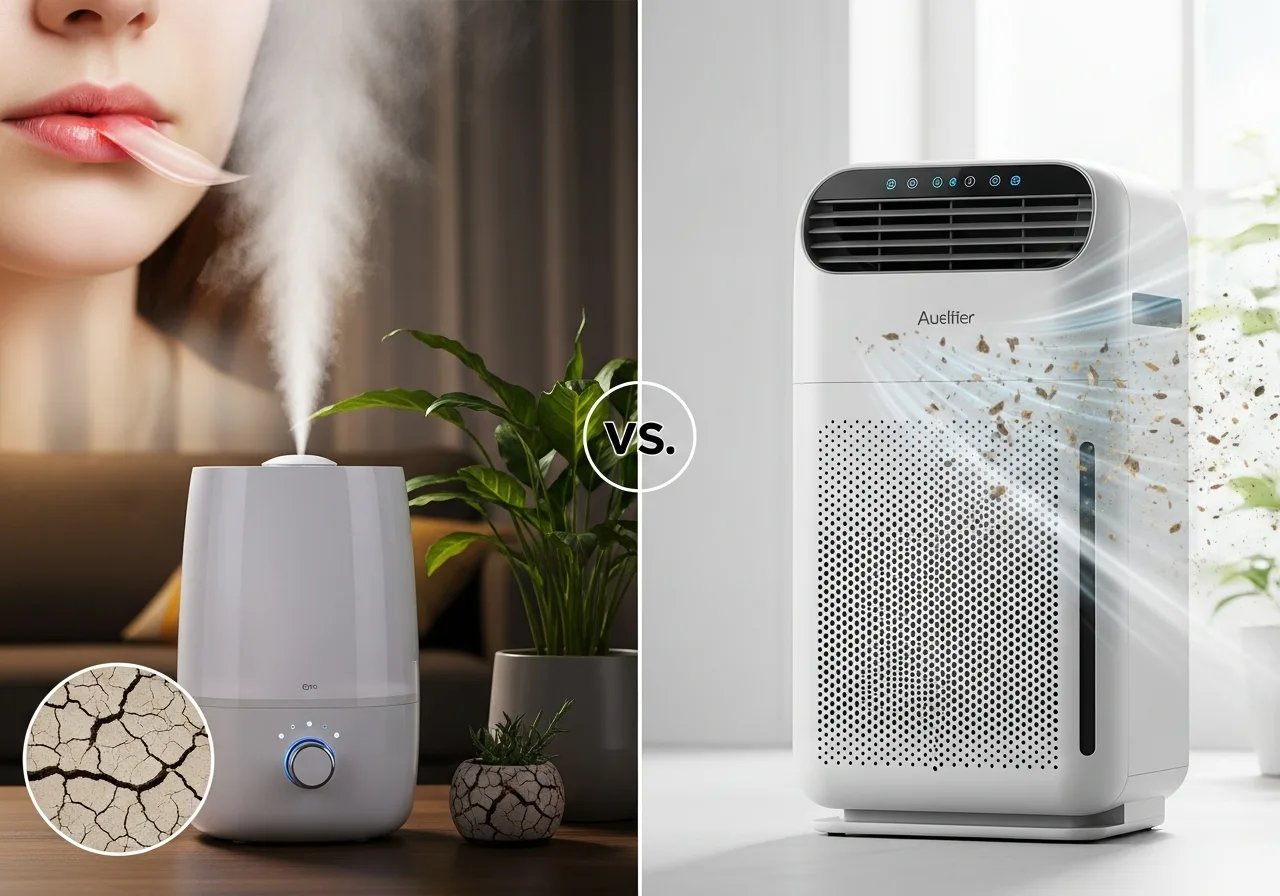
Are you struggling to breathe clearly in your own home? Choosing between an air humidifier vs. a purifier is one of the most common dilemmas for modern homeowners. Because indoor air quality affects everything from your sleep to your skin, making the right choice is vital for your health.
First of all, both devices aim to improve your environment, but they solve completely different problems. One battles dryness while the other hunts down invisible pollutants.
Consequently, buying the wrong one won’t solve your symptoms and might even waste your hard-earned money. In this guide, we will break down the mechanics, benefits, and specific use cases for both. Furthermore, we will help you decide which device deserves a spot on your nightstand today.
TL;DR: The Quick Verdict
- Air Purifier: Best for allergies, asthma, dust, smoke, and pet dander. It cleans the air.
- Humidifier: Best for dry skin, bloody noses, congestion, and winter dryness. It adds moisture.
- The Winner: If you have respiratory sensitivities, choose a purifier. If you have dry physical symptoms, choose a humidifier.
What Is an Air Purifier?
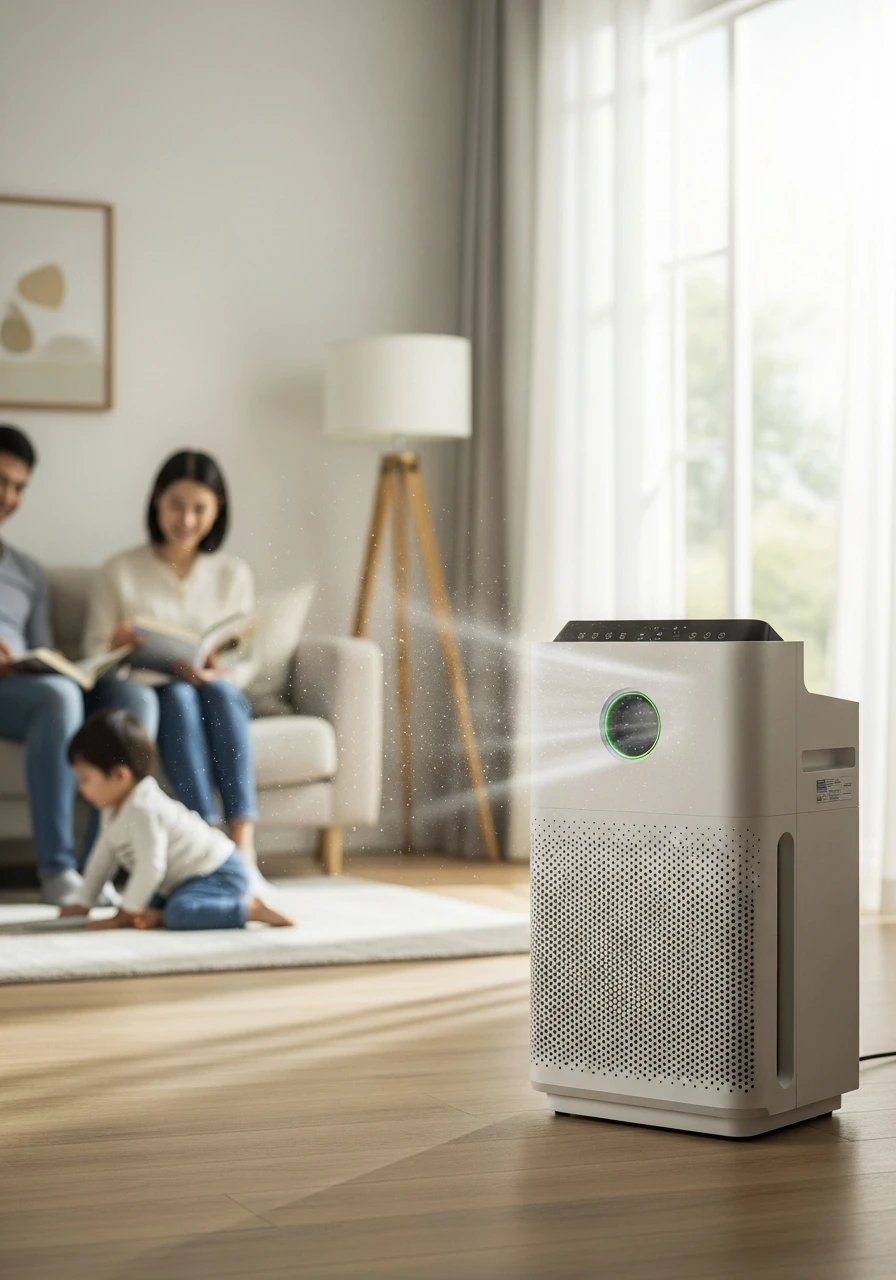
Understanding what air purifier vs. humidifier technology is begins with looking at the air itself. An air purifier is a specialized appliance designed to remove contaminants from the indoor atmosphere. It does not add anything to your room; instead, it acts as a high-tech vacuum for microscopic particles. Most noteworthy, these devices are essential for anyone living in urban areas or homes with pets.
So, what does an air purifier do vs humidifier units? While a humidifier focuses on the water content of the air, a purifier focuses on purity. It cycles the room’s air through several stages of filtration. By doing this, it traps pollutants that are otherwise invisible to the human eye. Modern smart air purifiers now include WiFi connectivity and advanced sensors that adjust fan speeds based on real-time pollution levels.
How Air Purifiers Work
The heart of a high-quality air purifier is the HEPA (High-Efficiency Particulate Air) filter. These filters are rated to trap 99.97% of particles as small as 0.3 microns. To illustrate, this includes dust, pollen, and even some bacteria. Additionally, many units feature an activated carbon filter. This layer is specifically designed to absorb odors, smoke, and volatile organic compounds (VOCs) from paints or cleaning chemicals.
Air Purifier Benefits vs Humidifier
The primary air purifier benefits vs. humidifier advantages revolve around long-term health and hygiene. Purifiers are proactive. They remove the triggers that cause sneezing and long-term lung irritation. Furthermore, they help keep your furniture cleaner by reducing the amount of dust that settles on surfaces. If you live near a busy road or have a smoker in the house, a purifier is your first line of defense.
What Is a Humidifier?
When comparing what an air purifier vs. a humidifier is, the latter is all about comfort and hydration. A humidifier is a device that increases the moisture levels (humidity) in a single room or an entire building. It is the go-to solution for “dry air” problems that typically peak during the winter months or in desert climates.
The battle of humidifier vs. air purifier often comes down to your local weather. When you run a heater or air conditioner, the air loses its natural moisture. This leads to cracked lips and irritated sinuses. A humidifier solves this by releasing a steady stream of water vapor or steam into the environment.
How Humidifiers Work
Humidifiers operate using several different technologies, but the goal is always the same: turn water into mist. Ultrasonic models use high-frequency vibrations to create a cool fog. Evaporative models use a fan to blow air through a wet wick filter. Finally, steam vaporizers boil water to create a warm mist. Each type has its own maintenance needs, but they all serve to raise the relative humidity of your living space.
Key Types of Humidification Systems
- Ultrasonic: Extremely quiet and energy-efficient; uses a metal diaphragm vibrating at high speeds.
- Evaporative: Self-regulating and cannot over-humidify a room; uses a fan and a wick.
- Steam/Warm Mist: Best for killing bacteria in the water; great for winter warming.
- Impeller: Uses a rotating disc to fling water at a diffuser; generally more affordable but louder.
Air Humidifier vs Purifier: Key Differences
The difference between air purifier & humidifier units is fundamentally about the “state” of the air. One is a filter; the other is a mister. Because they serve such distinct roles, they are rarely interchangeable. To help you visualize the air humidifier vs. purifier comparison, we have evaluated them across several performance metrics.
Comparison Table: Feature Breakdown
| Feature | Air Purifier | Humidifier |
| Primary Function | Cleans/Filters Air | Adds Moisture/Humidity |
| Best For | Allergies, Smoke, Dust | Dry Skin, Colds, Congestion |
| Maintenance | Change Filters (6-12 months) | Daily Refills & Weekly Cleaning |
| Noise Level | Constant hum (fan) | Quiet bubbling or silent |
| Safety | Very Safe | Risk of mold or burns (warm mist) |
Air Purifier vs. Humidifier: Which Is Better?
People often ask, “Which one is better, a purifier or a humidifier?” The truth is that “better” is entirely subjective. It depends on your specific health problem, not the device itself. If you are waking up with a bloody nose, the air purifier vs. humidifier debate ends with the humidifier winning.
However, if you are sneezing due to pet hair, the humidifier will do absolutely nothing. In that scenario, the purifier is the clear winner. To make the best choice, you must identify your “pain point” first. If you want a cleaner environment, go for the purifier. If you want a more comfortable, “wetter” environment, buy the humidifier.
When to Use a Humidifier vs. an Air Purifier
Timing is everything when managing your home’s ecosystem. Knowing when to use a humidifier vs. an air purifier can save you from restless nights. Generally, you should consider your seasonal environment and your immediate physical symptoms.
Use an air purifier when you notice dust buildup on your TV or when the local pollen count is high. It is also essential to know when to use an air purifier vs. a humidifier logic if you are cooking or using strong-smelling chemicals. The purifier stays on year-round for most users to maintain a baseline of clean air.
In contrast, you should reach for the humidifier when the outdoor temperature drops and your indoor heater starts running. This is the peak time for dry air symptoms. You might also use it in the summer if your air conditioning makes your throat feel scratchy.
Air Humidifier vs Purifier for Cough
When you are sick, the air humidifier vs. purifier for cough debate becomes a medical priority. If you have a dry, hacking cough caused by irritated membranes, the humidifier is your best friend. The moisture lubricates your throat and helps thin out mucus.
However, if your cough is triggered by asthma or allergens like mold spores, a humidifier might actually make it worse. High humidity can encourage mold growth. In this case, an air purifier with a HEPA filter is much better because it removes the actual irritants causing the cough reflex.
Air Humidifier vs Purifier for Baby
Choosing an air humidifier vs. a purifier for baby nurseries requires a safety-first mindset. Most pediatricians recommend a humidifier to help babies breathe when they have a cold, as their nasal passages are very narrow. It prevents crusty noses and helps them sleep.
But safety is key. For infants, we always recommend a cool-mist humidifier to avoid accidental burns. An air purifier is equally important for babies because their lungs are still developing. It protects them from second-hand smoke or household dust. Maintaining an ideal humidity range of 40–60% while keeping the air filtered is the gold standard for nursery care.
When we look at the question of what is better for allergies, a humidifier or an air purifier, the science points toward the purifier. Allergies are caused by physical particles like pollen, pet dander, and dust mite droppings. A HEPA-rated air purifier physically captures these triggers, removing them from your breathing zone entirely.
In contrast, the air purifier vs. humidifier for dust debate is one-sided. A humidifier does not remove dust. In fact, if you use tap water in an ultrasonic humidifier, it can actually create “white dust” from mineral deposits. Furthermore, if you keep your room too humid (above 60%), you create the perfect breeding ground for dust mites and mold. Therefore, if allergies are your main concern, prioritize a high-quality air purifier.
Should I Sleep with a Humidifier or an Air Purifier?
Many of our lab testers ask, “Should I sleep with a humidifier or air purifier?” The answer depends on how you feel when you wake up. If you wake up with a stuffy nose and dry skin, you should run a humidifier. It keeps your tissues hydrated throughout the night, which can even help reduce snoring.
However, is it good to sleep with a humidifier every night? Only if you monitor the humidity levels. Constant moisture can lead to dampness in your mattress and pillows. Conversely, an air purifier is excellent for nightly use because it provides white noise while ensuring you aren’t breathing in settling dust. Most modern smart purifiers have a “Sleep Mode” that dims the lights and lowers the fan speed for a peaceful rest.
Air Purifier vs Dehumidifier vs Humidifier
To truly master your home environment, you must understand the air purifier and a dehumidifier. While we have focused on adding moisture, a dehumidifier does the exact opposite—it pulls water out of the air. This is crucial for basements or humid coastal climates where mold is a constant threat.
What is the difference between an air purifier, a humidifier, and a dehumidifier? Think of it as a triangle of air quality. One cleans, one adds water, and one removes water. You might actually need all three at different times of the year. For example, a damp basement in the summer needs a dehumidifier and a purifier, while a dry bedroom in the winter needs a humidifier and a purifier.
The Three-Way Comparison
| Device | Action | Best Climate | Key Benefit |
| Air Purifier | Filters particles | Any | Reduces allergy symptoms |
| Humidifier | Adds moisture | Dry/Winter | Soothes skin and throat |
| Dehumidifier | Removes moisture | Humid/Summer | Prevents mold and mildew |
Diffuser vs Humidifier vs Air Purifier
There is often a lot of confusion surrounding the air humidifier vs. purifier/diffuser distinction. An essential oil diffuser is designed to add fragrance to a room using small amounts of water and oils. Most noteworthy, an essential oil diffuser is NOT a humidifier. It does not have the tank capacity or the output power to significantly change the humidity of a room.
If you are looking for health benefits, be careful. Some people find that diffusers irritate their lungs, especially if they have asthma. A humidifier is a tool for health, while a diffuser is a tool for “vibes” and aromatherapy. If you want both, look for a humidifier that includes a specific aroma tray, but never put essential oils directly into a standard humidifier tank, as it can melt the plastic components.
Air Purifier and Humidifier in One
For those who want it all, an air purifier and humidifier in one unit is an attractive option. These combo devices, often called “air washers,” attempt to filter and hydrate simultaneously. This is a great choice for small apartments where floor space is limited.
The best purifier and humidifier combos use a multi-stage process where air is pulled through a HEPA filter before passing through a humidifying element. However, there are pros and cons. The main drawback is maintenance; you have to manage both filter changes and frequent water tank cleaning in a single machine. If one part breaks, you lose both functions. But for convenience and smart home integration, these all-in-one units are becoming very popular in 2026.
What Is the Best Air Purifier for Chemo Patients?
This is a critical YMYL (Your Money or Your Life) topic that requires a medical-grade tone. When someone is undergoing chemotherapy, their immune system is severely compromised. Therefore, the air they breathe must be as sterile as possible.
What is the best air purifier for chemo patients? You must look for a unit that features a “True HEPA” filter (not “HEPA-like”) and a robust activated carbon filter. Furthermore, we strongly recommend a unit with an internal UV-C light. The UV-C light acts as a secondary layer of protection by neutralizing viruses and bacteria that might be trapped on the filter surface. Avoid any purifiers that produce ozone, as ozone is a lung irritant that can be dangerous for recovering patients.
Humidifier vs Air Purifier Reviews
When we look at humidifier vs. air purifier reviews from real-world users on platforms like Reddit, a clear pattern emerges. Users who bought purifiers for “dust” usually report high satisfaction within the first week. They notice less sneezing and cleaner surfaces.
Conversely, humidifier users often report a “love-hate” relationship. They love the physical relief but hate the cleaning. The most common advice from veteran users is to buy a “top-fill” humidifier to make daily maintenance easier. Overall, the consensus is that a purifier is a “set it and forget it” device, while a humidifier is a high-maintenance but necessary health tool for the winter.
Should I Get a Humidifier or Air Purifier?
The final choice of whether you should get a humidifier or an air purifier comes down to a simple diagnostic test. Look at your body and your home environment.
Buy an air purifier if:
- You have a dog or a cat.
- You suffer from seasonal allergies or hay fever.
- Your home smells like cooking or smoke.
- You live in a high-traffic or dusty area.
Buy a humidifier if:
- You wake up with a dry, sore throat.
- Your skin is flaky, itchy, or cracked.
- You experience frequent static electricity shocks.
- You have a dry, unproductive cough.
Get Both if:
- You live in a dry climate and also have allergies. (This is the most common scenario for total comfort).
Frequently Asked Questions
What is the difference between an air purifier and a humidifier?
An air purifier removes pollutants like dust and pollen from the air using filters. A humidifier adds water vapor to the air to increase moisture levels. They solve different problems: one cleans, while the other hydrates.
Which is better for a cough, a humidifier or a purifier?
A humidifier is better for a dry cough caused by cold air or a sore throat. An air purifier is better if your cough is triggered by allergens like dust, pet dander, or smoke.
Can I use both together?
Yes, you can and often should use both together. Just keep them a few feet apart so the humidifier’s moisture doesn’t saturate the air purifier’s filters, which could lead to mold growth on the HEPA material.
Is a humidifier safe for babies?
Yes, but use a cool-mist model. Warm-mist humidifiers use boiling water, which poses a burn risk. Always clean the unit daily to prevent bacteria from being released into the nursery air.
Do air purifiers remove viruses?
High-quality air purifiers with True HEPA filters can trap many viruses, as they are often attached to larger particles like droplets. However, no household purifier can guarantee 100% protection against all airborne illnesses.
Final Verdict: Air Humidifier vs Purifier
In the final analysis, the air humidifier vs purifier debate isn’t about which machine is technically superior. It is about which one fills the gap in your home’s air quality. An air purifier is an investment in long-term health and cleanliness, acting as a silent guardian against invisible threats. A humidifier is an investment in immediate physical comfort, providing the moisture your body craves during the harsh winter months.
We recommend starting with an air purifier if you have year-round respiratory issues. If the winter air makes your life miserable, add a humidifier to your setup. By balancing purity and moisture, you create a sanctuary where you can finally breathe easy.