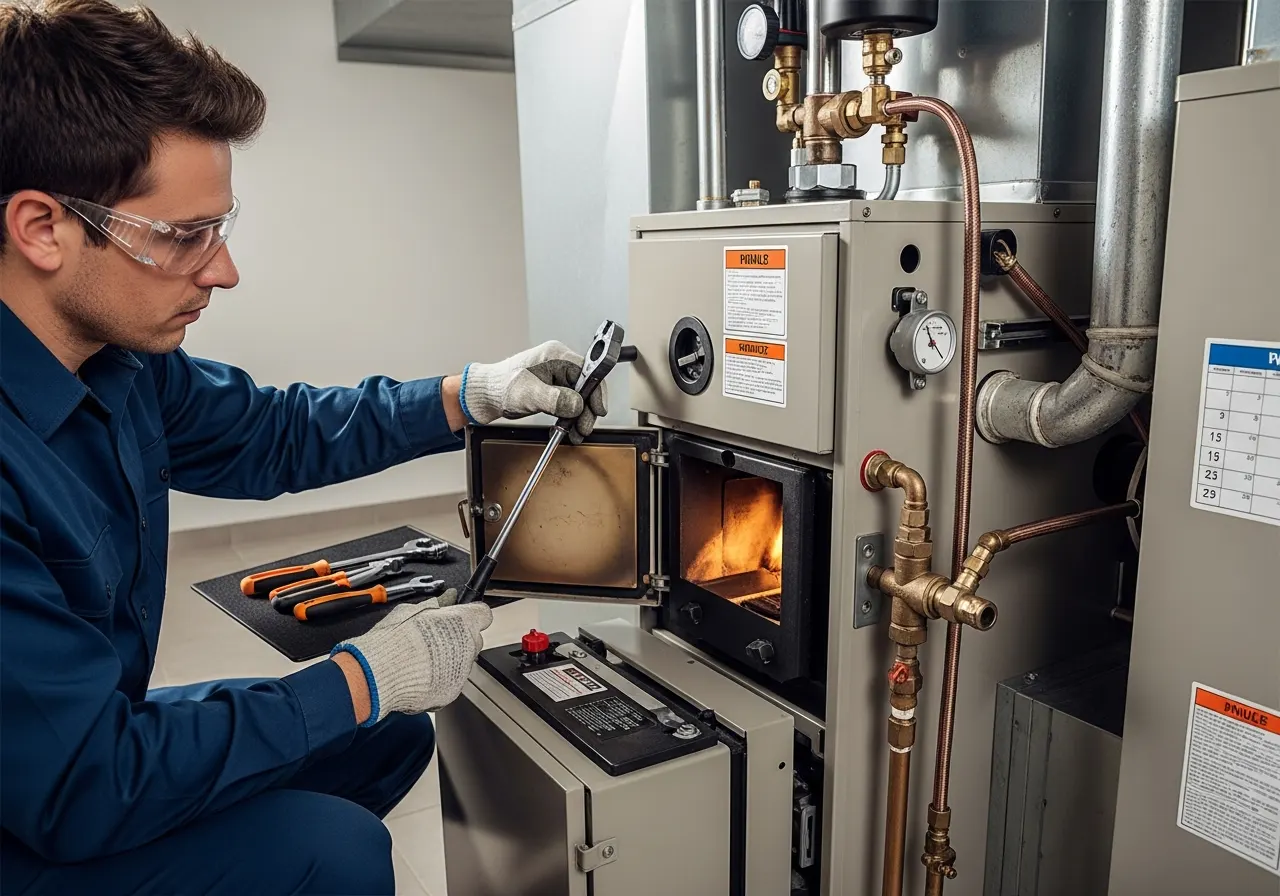
Heating your home safely through the freezing winter requires a system that is operating at peak performance and efficiency. Proper oil furnace maintenance is the absolute best way to ensure your family stays comfortably warm without wasting money on excess fuel. Unlike their gas or electric counterparts, heating oil systems demand a strict, proactive approach to cleaning and servicing to prevent dangerous soot buildup.
If you neglect this crucial routine, you are risking unexpected breakdowns, skyrocketing heating bills, and severe safety hazards. Fuel oil systems burn hotter than natural gas, which means the internal components endure significantly more thermal stress over time. This comprehensive guide will walk you through exactly what needs to be done, what it costs, and what you can safely handle yourself.
Quick Answer – What Maintenance Does an Oil Furnace Need?
Oil furnaces require annual professional servicing to operate safely and efficiently. This essential routine includes cleaning the combustion chamber, replacing the fuel filters, inspecting the heat exchanger for cracks, and tuning the burner. Regular maintenance significantly improves fuel efficiency, prevents sudden winter breakdowns, and ensures safe operation for your home.
Oil Furnace Maintenance Checklist
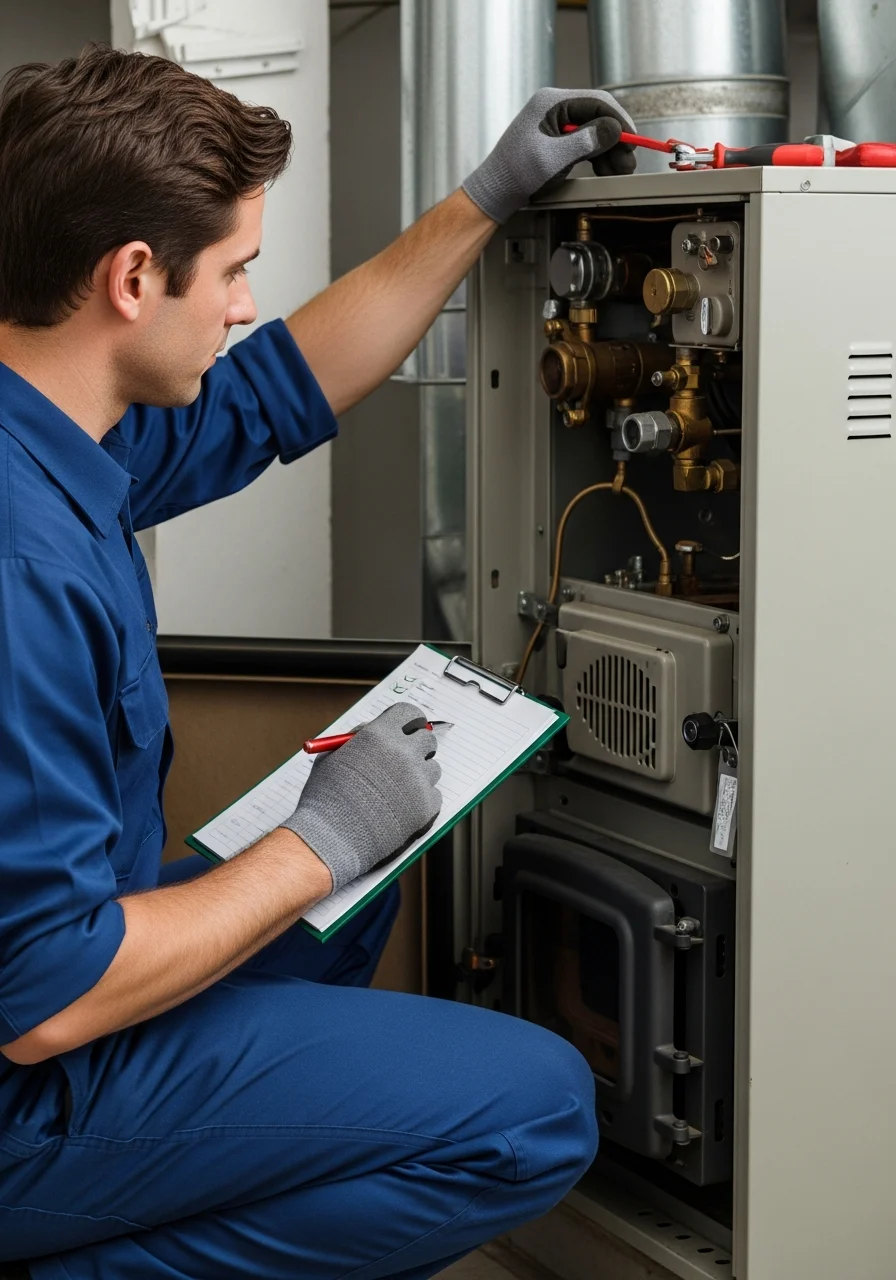
To keep your system running efficiently, professionals follow a very strict oil furnace maintenance checklist every single year. Because we research and test various gadgets to write in the article, we understand how vital these specific steps are for system longevity. Skipping even one of these steps can drastically reduce your unit’s Annual Fuel Utilization Efficiency (AFUE) rating.
This comprehensive oil furnace annual maintenance routine is not something to take lightly. It is a precise sequence of cleaning, testing, and adjusting that requires specialized tools and deep industry knowledge. Below are the most critical components that must be addressed during every single service visit.
Filter Replacements
Replacing the oil furnace filter is the most critical step in your annual maintenance routine. A clogged fuel filter forces the pump to work overtime, which can lead to premature mechanical failure and poor fuel flow. Additionally, the standard air filter needs constant replacement to ensure proper airflow throughout your home’s ductwork.
Combustion Chamber Cleaning
Throughout the winter, soot naturally builds up inside the combustion chamber as the heating oil burns. If left uncleaned, this soot acts as an insulator, preventing the heat from transferring into your home efficiently. A technician will carefully scrape and vacuum this chamber to restore its original thermal transfer capabilities.
Heat Exchanger Inspection
The heat exchanger is the physical barrier between the breathable air in your home and the toxic combustion exhaust gases. Inspecting this component for microscopic cracks is a non-negotiable part of any residential oil furnace maintenance routine. Even a tiny, hairline fracture can leak deadly carbon monoxide directly into your living spaces.
Burner Nozzle Replacement
The burner nozzle vaporizes the liquid heating oil into a fine mist so it can ignite easily and burn cleanly. Over time, impurities in the fuel oil wear down the nozzle opening, altering the spray pattern and reducing efficiency. Technicians replace this inexpensive part annually to guarantee a clean, exceptionally hot burn.
Flue Pipe Assessment
The flue pipe carries dangerous exhaust gases safely out of your home and into the outside atmosphere. During an inspection, professionals check this pipe for rust, holes, or blockages caused by animal nests or debris. Ensuring proper upward draft in the flue pipe is essential for both system efficiency and your family’s safety.
Annual Oil Furnace Maintenance – Why It Matters
Homeowners often wonder if yearly servicing is truly necessary or just an unnecessary upsell from local HVAC contractors. The reality is that annual oil furnace maintenance pays for itself by directly lowering your monthly heating bills. A clean, well-tuned system requires significantly less fuel to reach and maintain your desired thermostat setting.
Furthermore, regular oil furnace yearly maintenance dramatically reduces the likelihood of expensive, freezing emergency repairs. Technicians catch minor issues, like a failing pump or a worn-out fan belt, before they cause a complete system failure in January. Ultimately, this proactive care can extend the lifespan of your expensive heating equipment by several years.
Oil Furnace Maintenance Cost (2026)
Budgeting for your annual oil furnace maintenance cost is a necessary part of owning a home with an oil heating system. On average, homeowners can expect to pay between $150 and $500 per year for a comprehensive, professional tune-up. The final price tag depends heavily on your location, the depth of the service, and the current physical condition of your unit.
If your system hasn’t been serviced in several years, the initial tune-up will likely hit the higher end of that price range. Technicians will need more time to clean out heavy soot buildup and may need to replace multiple degraded internal parts. However, a standard annual oil furnace maintenance cost for a regularly serviced, clean unit usually sits comfortably around $200.
Local Oil Furnace Maintenance Examples
Finding reliable oil furnace maintenance near me requires looking for licensed, insured, and highly reviewed HVAC technicians in your specific area. Local climate plays a huge role in how hard your system works, meaning contractors in colder regions have unique expertise. You want someone who understands the specific heating demands of your exact geographical location.
For example, an oil furnace maintenance technician in Framingham will be deeply familiar with harsh, unpredictable New England winters. Similarly, securing an oil furnace inspection near me in places like Greenwood, IN, or Bremerton means finding pros who handle heavy seasonal usage. Homeowners scheduling oil furnace maintenance in Warrendale, PA, or Lexington Park, MD, should always book early in the fall before the busy season hits.
We see the exact same booking patterns across the country, whether you need oil furnace maintenance in Golden, Portland oil furnace maintenance, or services in Oxford, MA. Even in smaller regional markets, booking oil furnace maintenance in Medfield, MA, or Muskegon, MI, requires verifying the technician’s certifications. Surprisingly, even warmer desert climates occasionally require experts, as seen with niche searches for oil furnace maintenance in Las Vegas, NV.
DIY Oil Furnace Maintenance – What You Can Do Safely
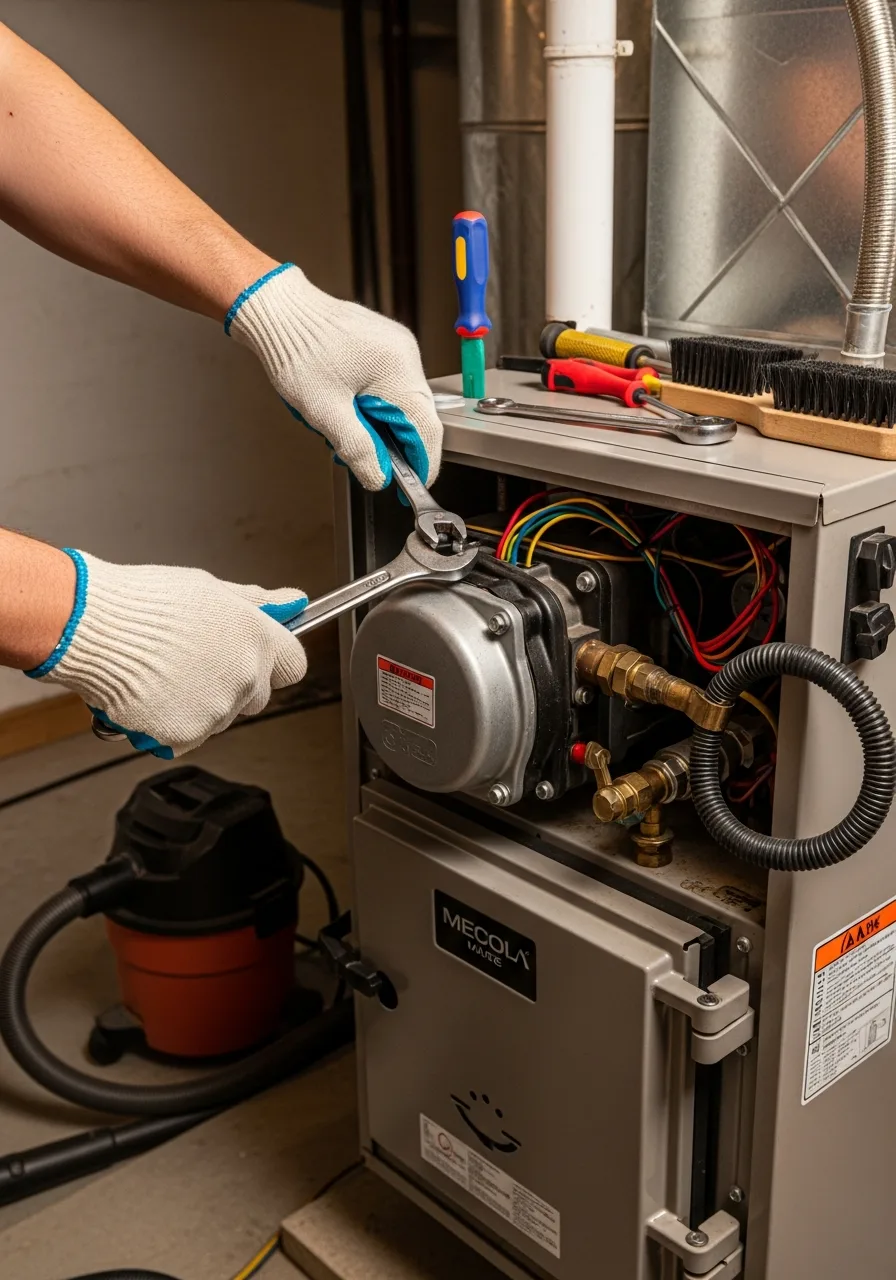
While professional servicing is mandatory, there are several steps you can take to keep your system running smoothly between visits. Engaging in safe DIY oil furnace maintenance helps maintain maximum efficiency and allows you to spot potential warning signs early. However, it is crucial to know your personal limits to avoid causing expensive damage or creating safety hazards.
One of the best ways to learn how to maintain oil furnace components safely is by thoroughly reading your manufacturer’s manual. The manual will outline homeowner-approved tasks that do not require specialized diagnostic tools or advanced mechanical training. Always remember to turn off the power to the unit at the main breaker before attempting any cleaning or physical inspection.
Exterior Cleaning and Clearing
The simplest and most effective task is keeping the area immediately around your furnace completely clean and free of clutter. Vacuum the exterior of the unit to remove dust, and ensure no boxes or flammable materials are stored nearby. Your furnace needs adequate airflow to operate safely, and a cluttered utility room restricts that essential oxygen supply.
Thermostat Calibration Checks
Testing your thermostat before winter hits is a crucial part of your personal oil furnace maintenance guide. Turn the heat up and listen for the furnace to kick on promptly and run smoothly without strange, grinding noises. If the system short-cycles or fails to reach the set temperature, you may need a simple thermostat battery replacement or recalibration.
Visual Oil Tank Inspections
While you shouldn’t open the tank, performing a visual inspection of your home’s oil storage tank is highly recommended. Look for any signs of surface rust, wet spots, or a strong diesel smell near the tank’s base and fuel lines. Catching a minor oil leak early prevents massive environmental cleanup costs and ensures your fuel supply remains uncontaminated.
What NOT to DIY (Safety Warning)
Many budget-conscious homeowners ask: Can I clean my oil furnace myself to save money on annual service calls? The short answer is absolutely no; you should never attempt deep internal cleaning or mechanical adjustments without professional certification. Heating oil systems are incredibly complex and present severe fire and carbon monoxide risks if handled improperly.
Tasks like burner cleaning, adjusting the air-to-fuel ratio, or attempting any heat exchanger repair are strictly off-limits for DIYers. Without an electronic combustion analyzer, it is physically impossible to correctly set the fuel mixture for safe and efficient operation. Tinkering with these critical internal components will instantly void your manufacturer’s warranty and put your entire home in immediate danger.
How to Clean Key Oil Furnace Components
Understanding the internal cleaning process helps homeowners appreciate the value of professional servicing. When experts arrive, they follow a rigorous protocol to remove the stubborn, insulating soot that naturally forms during the heating season. This specialized cleaning process requires industrial-grade vacuums, specialized wire brushes, and a deep understanding of internal airflow dynamics.
Attempting to clean these internal parts with standard household tools will only push toxic soot further into the mechanical components. Because we research and test various HVAC tools to write in the article, we know that professional-grade equipment is mandatory here. Below is a detailed breakdown of how technicians tackle the three dirtiest, most critical areas of your heating system.
Combustion Chamber Cleaning Process
Learning how to clean oil furnace combustion chamber components involves dealing with the heaviest soot deposits in the entire system. The technician first disconnects the power and fuel lines before carefully removing the burner assembly to access the chamber interior. They use a high-powered, HEPA-filtered soot vacuum designed specifically for toxic particles to clear out loose debris safely.
Once the loose soot is removed, the technician uses specialized, long-handled wire brushes to aggressively scrape the chamber’s refractory walls. This scraping process dislodges baked-on carbon deposits that prevent the furnace from efficiently transferring heat. Finally, a secondary vacuuming pass ensures the chamber is completely spotless before the burner is carefully reattached and sealed.
Heat Exchanger Restoration
If you want to know how to clean oil furnace heat exchanger passages, you must understand that this is the most delicate step. The heat exchanger consists of narrow, winding tubes that must be carefully brushed out using flexible, specialized chimney-style brushes. The technician inserts these brushes into the passageways to scrub away the scale and carbon buildup that restricts airflow.
After brushing, the technician performs a critical visual and mechanical inspection of the entire heat exchanger surface. They look for stress fractures, rust spots, or warped metal that could allow exhaust gases to mix with your home’s breathable air. A perfectly clean heat exchanger is absolutely vital for maintaining the system’s maximum Annual Fuel Utilization Efficiency (AFUE) rating.
Burner Pipe Clearing
Figuring out how to clean oil burner pipe pathways requires precision, as this is where the liquid fuel transitions into the combustion zone. Technicians must disassemble the burner drawer assembly to access the blast tube and the delicate ignition electrodes. They carefully wipe away oil residue and carbon crust that could interfere with the electrical spark required for ignition.
The burner pipe must be completely free of any blockages to ensure the fuel-to-air mixture is perfectly balanced. Even a millimeter of soot buildup on the burner head can cause the furnace to misfire, rumble, or produce dangerous black smoke. After cleaning, the technician uses a specialized gauge to ensure the electrodes are gapped to the manufacturer’s exact specifications.
Oil Furnace Filter Replacement Guide
Maintaining proper filtration is the easiest and most cost-effective way to protect your expensive heating equipment. A comprehensive oil furnace filter replacement guide actually involves two completely different types of filters: the air filter and the fuel oil filter. Neglecting either of these filters will rapidly degrade your system’s performance and spike your monthly heating costs.
The standard HVAC air filter, located in the return ductwork, should be checked monthly and replaced every 1 to 3 months. A clogged air filter starves the furnace of oxygen, causing the blower motor to overheat and potentially fail during a cold snap. For the fuel side, the dedicated oil furnace filter (located near the tank or burner) must be replaced annually by a professional to ensure clean oil flows to the pump.
What Components Should Be Replaced Annually?
Homeowners frequently ask, “What components on an oil furnace should be changed annually to guarantee reliable winter heating?” The most critical replacement part is the burner nozzle, which vaporizes the heavy fuel oil into a highly combustible mist. Because oil is naturally thick and contains microscopic impurities, the nozzle orifice wears out and clogs after a single season of heavy use.
Alongside the nozzle, the main fuel oil filter cartridge must be swapped out for a fresh, clean unit during every annual service. Technicians will also typically replace the fuel pump strainer, which acts as a secondary defense against sludge entering the delicate mechanical pump. Replacing these three inexpensive components prevents 90% of the most common, freezing-weather furnace breakdowns.
How Long Should 100 Gallons of Oil Last in Winter?
A very common question for budget-conscious homeowners is, “How long should 100 gallons of oil last in winter?” The answer depends heavily on the square footage of your home, the quality of your insulation, and the severity of the outdoor temperatures. On average, a standard oil furnace burns between 0.8 and 1.7 gallons of heating oil per hour of active operation.
During a mild winter week, 100 gallons might easily last a moderately sized, well-insulated home up to three or four weeks. However, during a severe cold snap with sub-zero temperatures, the furnace will run constantly to maintain indoor warmth. Under those extreme conditions, that same 100 gallons of fuel could be completely depleted in just 10 to 14 days.
Oil Furnace Maintenance Guide (Step-by-Step)
Following a strict oil furnace maintenance guide ensures that no critical safety checks or cleaning procedures are accidentally skipped. This step-by-step workflow is standard across the HVAC industry and is designed to restore the unit to factory specifications. If you ever review an official oil furnace maintenance manual, you will see these exact protocols listed as mandatory for warranty compliance.
First, the technician performs a baseline combustion test to measure the current draft, smoke levels, and carbon dioxide output. Next, they shut off the power and perform the deep internal cleaning of the chamber, heat exchanger, and burner assembly. All disposable components—including the nozzle, oil filter, and pump strainer—are then swapped out for brand-new manufacturer parts.
Once the system is reassembled, the technician primes the fuel pump and restores power to test the ignition sequence. The final and most important step is performing a second electronic combustion test to tune the air-to-fuel ratio perfectly. This final adjustment guarantees that the furnace is burning the oil as cleanly and efficiently as mechanically possible.
Residential Oil Furnace Maintenance Tips
Between your annual professional tune-ups, practicing good residential oil furnace maintenance habits can save you a tremendous amount of money. Always keep your outdoor oil storage tank at least half full during the summer to prevent internal condensation and rust formation. Water in your fuel lines is a leading cause of winter breakdowns, as it freezes and completely blocks the flow of oil.
Additionally, pay close attention to your daily fuel consumption and the sounds your furnace makes during its normal cycles. If you notice a sudden spike in fuel usage or hear unusual rumbling, grinding, or banging noises, do not ignore them. Calling a technician for a minor adjustment early in the season prevents those small issues from turning into catastrophic, expensive system failures.
Special Case – Waste Oil Furnace Maintenance
Commercial garages and agricultural workshops often utilize specialized systems that require a unique approach to clean-burn waste oil furnace maintenance. These heavy-duty units are designed to burn used motor oil, transmission fluid, and hydraulic fluids to generate free heat. Because waste oil is inherently dirty and full of heavy metals, these furnaces require significantly more frequent and aggressive cleaning.
Unlike standard residential units, waste oil furnaces produce a heavy, thick ash that must be vacuumed out every 500 to 1,000 hours of operation. The preheater block, which warms the thick waste oil before it hits the nozzle, must be routinely flushed to prevent carbon blockages. Furthermore, the onboard air compressor, which atomizes the heavy fuel, requires its own dedicated oil changes and filter replacements.
Signs Your Oil Furnace Needs Repair
Recognizing the early warning signs of mechanical failure can prevent a minor oil furnace repair from turning into a full system replacement. One of the most obvious red flags is the sudden presence of black soot around the furnace registers or on your walls. This dangerous soot buildup indicates a severe combustion issue that requires immediate, emergency professional intervention.
Another major warning sign is if your furnace constantly trips the reset button on the primary control module. Pushing the reset button more than once forces raw, unburned oil into the hot combustion chamber, creating a massive explosion hazard. If your system requires frequent resetting, smells strongly of diesel, or blows cold air, shut it down immediately and call a certified technician.
Pros and Cons of Oil Furnace Maintenance
Understanding the pros and cons of oil furnace maintenance helps homeowners justify the annual recurring costs. The biggest advantage is the sheer reliability; a well-maintained oil furnace can easily outlast a gas system, frequently surviving 20 to 25 years. Furthermore, routine maintenance guarantees you are squeezing every ounce of heat out of your expensive fuel, drastically lowering your winter utility bills.
The primary disadvantage is simply the strict requirement for that professional servicing; you cannot skip a year without facing severe consequences. Oil furnace maintenance is undeniably dirtier, more labor-intensive, and slightly more expensive than maintaining a standard natural gas unit. However, considering the intense heat output and longevity of the equipment, most homeowners find the annual investment to be entirely worthwhile.
Frequently Asked Questions
What maintenance does an oil furnace need?
An oil furnace requires an annual professional tune-up that includes replacing the fuel filter, burner nozzle, and pump strainer. The technician must also thoroughly vacuum the combustion chamber, brush the heat exchanger, and electronically tune the burner’s air-to-fuel ratio.
How often should oil furnaces be serviced?
Oil heating systems must be serviced exactly once every year, ideally in the late summer or early fall before the freezing weather arrives. Skipping this annual service leads to heavy soot buildup, which drastically reduces fuel efficiency and increases the risk of winter breakdowns.
Can I clean my oil furnace myself?
No, you cannot safely perform deep internal cleaning on an oil furnace without specialized training and industrial-grade equipment. DIYers should only handle replacing the standard air filter, keeping the surrounding area clean, and visually inspecting the outdoor oil tank for leaks.
How much does oil furnace maintenance cost?
Homeowners should budget between $150 and $500 for a comprehensive annual oil furnace tune-up and cleaning. A system that has been regularly maintained will usually cost around $200, while neglected systems require more labor and replacement parts.
How long does heating oil last?
If stored properly in a sealed, well-maintained tank, standard heating oil can easily last between 18 and 24 months before degrading. However, keeping the tank full during the off-season is crucial to prevent internal condensation, which causes rust and sludge formation.
Final Verdict – Oil Furnace Maintenance Best Practices
In conclusion, adhering to a strict schedule for oil furnace maintenance is the absolute most important responsibility of any heating oil consumer. The upfront cost of hiring a licensed professional for an annual tune-up is minimal compared to the price of emergency repairs or premature system replacement.
By replacing the necessary filters, keeping the internal components spotless, and monitoring your fuel usage, you ensure maximum thermal efficiency. Ultimately, consistent maintenance guarantees that your family will stay safe, warm, and comfortable no matter how harsh the winter weather gets.