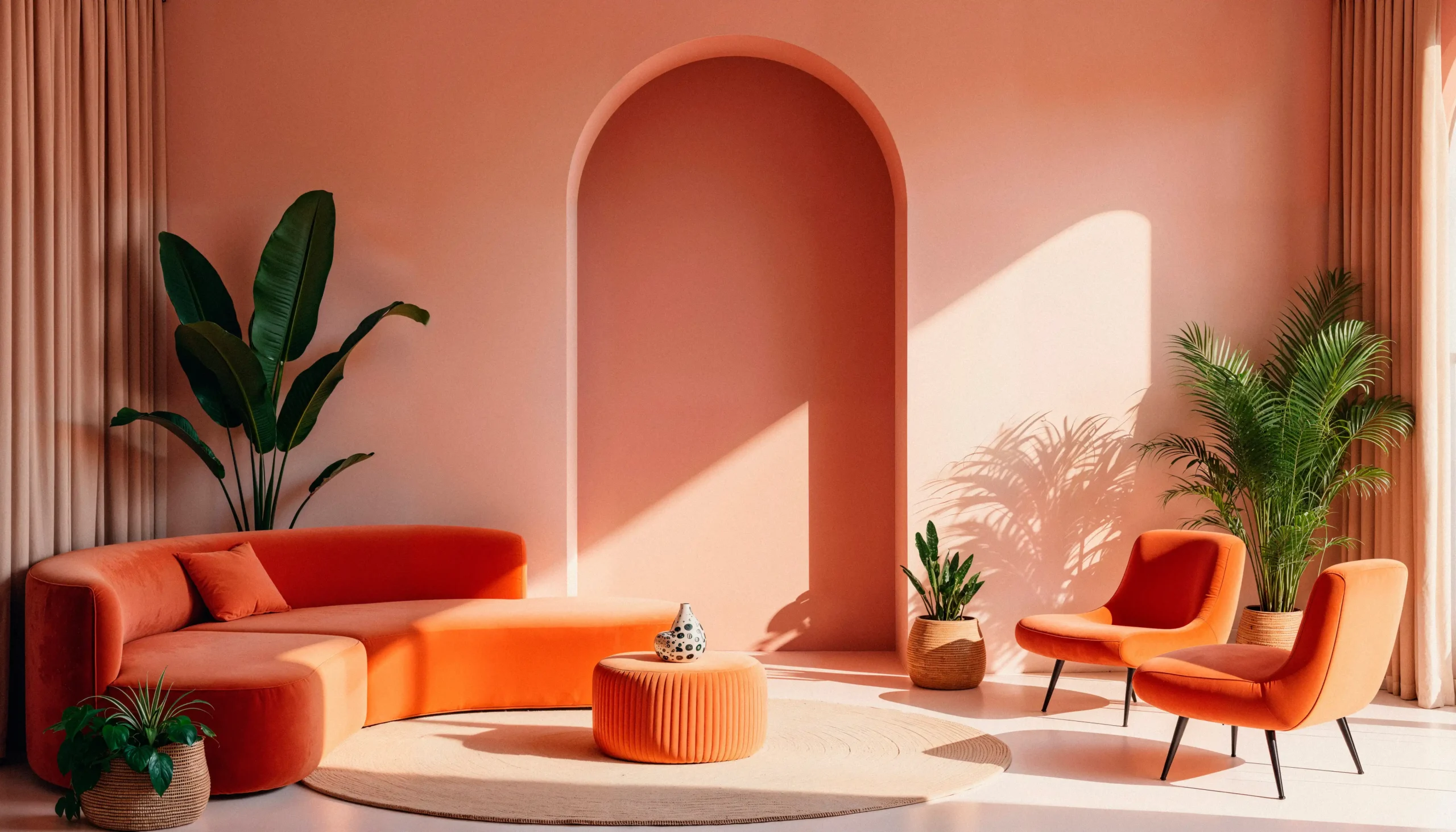
Great living room decor balances four things: a clear design style, a cohesive color palette, well-scaled furniture, and thoughtful accessories. Get those four right and the room feels harmonious instead of assembled; get one wrong and even expensive pieces read as mismatched.
This living room decor guide walks through 2026’s biggest trends:
Thirteen distinct design styles, color strategy, furniture selection, small-space layout, wall decor, accessories, regional influences, budget-friendly ideas, luxury upgrades, common mistakes, and expert styling tips – everything a DIY decorator, apartment renter, or first-time home buyer needs to plan a room from scratch or refresh one that’s stopped working.
One client, a first-time home buyer furnishing an open-concept space on a modest budget, illustrates the point well: she didn’t need more furniture – she needed a plan. A single focal point (the sofa, angled toward a fireplace), one restrained color palette, and a handful of decorative accessories turned a room full of good individual pieces into one that finally felt finished.
What Defines Good Living Room Decor?
Good living room decor comes down to a clear, practical layout; abundant natural light; a mix of textures rather than heavy ornamentation; and visual balance between substantial and delicate pieces.
Every object in the room should earn its place through either functionality or aesthetics – ideally both.
A few core mechanics separate a decorated room from a merely furnished one:
- Open Flow: furniture arranged so people can move through the space without obstruction
- A Clutter-Free Foundation: decluttering before decorating, not after
- The Function-Or-Beauty Rule: if an object does neither, it doesn’t belong in the room
- Intentional Layering: rugs, lighting, and textiles added in sequence rather than all at once
This is the standard every section below builds on.
What Are the Latest Living Room Trends for This Year?
Living room trends for this year lean into curved silhouettes, natural materials, and layered, sculptural lighting, with sustainability and multi-functional furniture continuing to gain ground.
| Trend | Why It’s Popular | Best For |
| Curved Furniture | Softens sharp modern lines, feels more inviting | Living rooms wanting a contemporary, less rigid feel |
| Organic Materials & Earthy Palettes | Brings warmth and texture without clutter | Minimalist and organic modern spaces |
| Layered Lighting | Combines ambient, task, and accent sources for better functionality | Any room lacking natural light |
| Statement & Oversized Lighting | A single chandelier or sculptural floor lamp becomes the room’s centerpiece | Rooms with high ceilings or a strong focal point need |
| Sustainability | Reclaimed wood, natural fibers, and durable materials over disposable pieces | Buyers prioritizing durability |
| Smart Storage Furniture | Ottomans, consoles, and coffee tables with hidden compartments | Space-efficient design in apartments |
| Mixed Metals | Brass, black iron, and brushed nickel combined rather than matched | Adding depth to a neutral color palette |
The common thread: rooms that look considered rather than assembled, using fewer but better pieces.
Living Room Design Styles: Which One Fits Your Space?
Picking one style before shopping prevents mismatched purchases – the single most common reason a living room never feels finished. Below are thirteen styles, each defined in a sentence and then expanded.
Quick-Reference Style Comparison
| Style | Key Materials | Color Palette | Best For |
| Modern | Metal, glass, lacquer | Neutrals with one bold accent | Clean, sophisticated spaces |
| Contemporary | Mixed, ever-updating | Current, often monochrome | Trend-conscious homeowners |
| Minimalist | Wood, matte finishes | Whites, greiges | Small or clutter-free homes |
| Mid-Century Modern | Teak, walnut, tapered legs | Mustard, olive, walnut brown | Vintage-modern blends |
| Organic Modern | Rattan, linen, stone | Warm neutrals, sage | Textural, calm rooms |
| Rustic | Reclaimed wood, iron | Browns, forest green | Cabin-inspired homes |
| Modern Farmhouse | Shiplap, distressed wood | White, black, warm wood tones | Family-oriented rooms |
| Boho | Rattan, macramé, layered textiles | Terracotta, mustard, jewel tones | Eclectic, personal spaces |
| Industrial | Exposed brick, black metal | Charcoal, rust, concrete grey | Lofts and open floor plans |
| Coastal | Light wood, linen, rope | Soft blue, sand, white | Beach or light-filled homes |
| Luxury | Marble, velvet, brass | Deep jewel tones, neutrals | Statement-making rooms |
| Traditional | Wood, damask, brocade | Rich reds, navy, gold accents | Classic, formal interiors |
| Victorian | Carved wood, velvet | Deep burgundy, emerald, gold | Ornate, historic homes |
Modern Living Room Decor
Modern style relies on clean, geometric lines, high contrast, and a restrained material palette – think leather, metal, and glass with almost no ornamentation. Furniture sits low and sleek, and every piece is chosen for both functionality and visual impact.
Contemporary Living Room Design
Contemporary differs from “modern” in that it isn’t tied to one era – it reflects whatever is current right now, meaning the palette, silhouettes, and materials shift over time. Where modern is a fixed aesthetic, contemporary is a moving target that borrows freely from other styles.
Modern vs. Contemporary – The Quick Distinction: Modern refers to a specific mid-20th-century design movement with fixed characteristics. Contemporary simply means “of the moment,” so a contemporary room today looks different than a contemporary room did a decade ago.
Minimalist Living Room Decor
Minimalist decor strips the room down to essentials: a neutral color palette, uncluttered surfaces, and furniture chosen for both purpose and form. Minimalist living room inspiration typically pairs a low-profile sofa with one or two sculptural accents – nothing more.
Mid-Century Modern
Defined by tapered wood legs, organic curves, and a mix of function and retro flair, mid-century modern furniture – think walnut credenzas and egg-shaped chairs – remains one of the most enduring, timeless design choices for living rooms.
Organic Modern
Organic modern softens minimalism with natural materials – linen, rattan, unlacquered wood – creating a room that feels calm and tactile rather than stark.
Rustic Living Room Decor
Rustic (or “rustic modern”) decor pairs raw, natural materials like reclaimed wood and iron with simpler modern silhouettes, avoiding the heavier, more ornate look of traditional rustic cabin style.
Modern Farmhouse / Farmhouse Living Room Decor
Farmhouse style combines shiplap, distressed wood, and black metal accents with a mostly white-and-neutral color palette, creating a look that’s practical for families while staying visually warm.
Boho / Modern Boho Living Room Decor
Boho decor layers throw pillows, textiles, plants, and global-inspired patterns into a space that prioritizes personalization over uniformity – it’s the style most associated with genuine, unfiltered self-expression.
Industrial Living Room Decor
Industrial style leans into exposed brick, black metal fixtures, and unfinished surfaces, working especially well in loft apartments and open floor plans where those elements already exist structurally.
Coastal Living Room Decor
Coastal decor uses light woods, linen upholstery, and a soft blue-and-sand palette to create an airy, relaxed room – a natural fit for apartment dwellers in light-filled units.
Luxury Living Room Design
Luxury design (sometimes split into “modern luxury” and “rich luxury” as two intensity tiers of the same style) relies on marble, velvet, and brass finishes paired with layered, architectural lighting to create a genuinely sophisticated space.
Traditional Living Room Design
Traditional decor uses classic silhouettes, rich wood tones, and formal textiles like damask or brocade, favoring symmetry and a more structured furniture arrangement than contemporary styles.
Victorian / Modern Victorian
Victorian style is ornate by design – carved wood, deep jewel tones, and layered patterns – and “modern Victorian” tones that down with cleaner lines while keeping the rich color story intact.
What Are the Best Color Schemes for a Living Room?
The trending 2026 palette centers on warm neutrals – greige, sand, and warm white – layered with earthy accents like terracotta, olive or sage green, charcoal, and navy. Neutral colors create a timeless style that won’t feel dated in five years, which matters if you’re decorating a home you plan to sell.
Which Color Scheme Should I Choose?
Color choice comes down to two things: light exposure and psychological effect.
- North-Facing Rooms (cooler, less direct light) generally suit warm colors – terracotta, warm white, camel – to offset the coolness.
- South-Facing Rooms (bright, warm light) can carry cooler tones – sage, navy, soft grey – without feeling cold.
- Warm Colors (terracotta, mustard, rust) energize a room and read as inviting.
- Cool Colors (blue, sage, grey) calm a room and support a more sophisticated, restrained mood.
The 60-30-10 Rule
A balanced color palette follows a simple ratio:
- 60% – a dominant neutral (walls, large furniture)
- 30% – a secondary color (rugs, curtains, an accent chair)
- 10% – an accent color (throw pillows, art, small accessories)
| Color Family | Psychological Feeling | Works Best In |
| Warm Neutrals (Greige, Sand) | Grounded, welcoming | Any orientation, any style |
| Terracotta / Rust | Energizing, warm | North-facing rooms |
| Sage / Olive Green | Calming, natural | Organic modern, boho |
| Navy / Charcoal | Sophisticated, moody | Traditional, luxury |
| Soft Blue | Airy, relaxed | Coastal, contemporary |
How Do I Choose the Right Furniture for a Living Room?
Every living room needs the same core pieces: a sofa, a coffee table, seating for guests, and functional storage. Beyond that, selection comes down to scale, durability, and how well each piece coordinates with – not necessarily matches – the rest of the room.
Sofas & Sectionals
The sofa anchors the seating area, so it should be chosen first and sized to the room, not the showroom. A sectional maximizes comfortable seating in larger rooms; a two- or three-seat sofa paired with flexible seating (a bench, ottomans, accent chairs) works better in smaller or space-efficient layouts.
Coffee Tables
A coffee table complements the furniture arrangement and should sit roughly two-thirds the length of the sofa, with 14–18 inches of clearance for walking. Mixing materials – a wood top with a metal base, for instance – adds visual interest without disrupting proportion.
Accent & Living Room Chairs
Accent chairs introduce a secondary silhouette and often a pop of color or texture, giving the seating arrangement versatility for conversation, reading, or extra guest seating.
Storage & Media Consoles
A media console or entertainment center should be scaled to the television and the wall, not oversized for the sake of storage. Storage ottomans maximize space in smaller rooms by doubling as seating, a footrest, and hidden organization all in one piece – a favorite trick among home stagers preparing a property for sale.
What Is the Best Living Room Layout?
How Do You Arrange Furniture in a Small Living Room?
A space-efficient design for a small room follows a short, repeatable sequence:
- Float the sofa off the wall – even six inches of breathing room makes a space feel larger.
- Group seating around a central axis, usually the coffee table or rug, so conversation feels natural.
- Choose furniture scaled to the room – oversized pieces are the single fastest way to make a small room feel smaller.
- Use multi-purpose pieces – storage ottomans, nesting tables, and a media console that also hides clutter.
- Add large mirrors – mirrors reflect light and expand the room visually, doubling the impact of any window or lamp nearby.
- Keep walkways clear – a minimum of 30 inches for proper room flow.
Small Living Room Layout Ideas
Beyond furniture placement, vertical storage – floating shelves rather than floor-standing units – keeps the footprint small while adding display space. Lighter wall colors and a rug that defines the conversation space without overwhelming the floor both help a small living room read as larger than it is.
How Do I Make a Small Living Room Look Bigger?
Combine light, low-profile furniture; a single large rug rather than several small ones; mirrors positioned to reflect a window or lamp; and furniture that floats away from walls to create depth. This is the same practical layout logic interior designers use when staging compact apartments.
How Should I Decorate Living Room Walls?
Accent Walls & Textural Treatments
Wood slats, wallpaper, lime wash, and stone cladding all work as accent walls – a single wall treated differently than the rest establishes an effective focal point without requiring a full room renovation.
Gallery Walls vs. Single Statement Art
A gallery wall (multiple smaller pieces arranged together) suits rooms wanting personalization and visual density, while a single oversized art piece works better as a clean, sophisticated focal point above a sofa or console. Wall art adds personality either way – the choice is about density, not impact.
TV Wall Integration
Frame-style televisions and built-in shelving around the screen integrate the TV into the wall’s design rather than treating it as an afterthought, which matters most in rooms where the television doubles as the room’s primary focal point.
What Accessories Enhance Living Room Decor?
Decorative accessories complete the room – rugs, lighting, textiles, mirrors, plants, and coffee table styling are the layer that turns a furnished room into a personalized, finished one.
Rugs and Mirrors
- Area rugs anchor the seating area – as a rule, at least the front legs of every seating piece should sit on the rug.
- Mirrors reflect natural light and visually expand a room, so position them opposite a window whenever possible.
Lighting
Lighting creates ambiance, and no single fixture can do the job alone.
- Choose the living room lighting by combining ambient (overhead), task (table lamp, floor lamp), and accent (a chandelier or wall sconce) sources rather than relying on one overhead fixture.
- Layered lighting improves functionality by letting you adjust brightness and mood by activity – movie night versus hosting versus reading.
- A side table paired with a table lamp solves the “one dark corner” problem most living rooms have.
- Which lighting works best? – it depends on the room, but a mix of a statement chandelier or pendant, a floor lamp near seating, and a table lamp on a side table covers nearly every layout.
Throw Pillows & Textiles
Accent pillows introduce texture and are the cheapest, lowest-risk way to test a new color or pattern before committing to larger furniture. A throw blanket draped over the sofa or an accent chair adds warmth and softness at minimal cost.
Plants & Coffee-Table Styling
Plants improve indoor aesthetics and air quality simultaneously, and even a single well-placed plant near a window adds life to an otherwise static corner. For coffee table styling, group a tray, a stack of books, and one small decorative object – shelves display decorative accents the same way on a smaller scale.
Regional & Cultural Living Room Decor Ideas
Living room decor varies meaningfully by region, shaped by climate, available materials, and cultural priorities. A few notable approaches:
- Indian-style living rooms often layer rich textiles, brass accents, and warm wood furniture, prioritizing color and pattern over minimalism.
- UK living rooms tend toward cozy, layered lighting and muted, sophisticated palettes suited to lower natural light for much of the year.
- South African living rooms frequently blend natural materials – wood, stone, woven textiles – with bold pattern accents reflecting local craft traditions.
- Bangladesh living rooms commonly balance functional, space-conscious furniture with warm color accents, reflecting both climate and the practical needs of smaller urban homes.
These aren’t rigid rules, but they’re a useful starting point for anyone wanting a room that reflects a specific cultural identity rather than a generic template.
How Can I Decorate on a Budget?
Affordable living room makeover ideas that make a real visual difference without a full furniture budget:
- Repaint one wall or the whole room – the single highest-impact, lowest-cost change available.
- Rearrange existing furniture into a better functional arrangement before buying anything new.
- Source secondhand or thrifted pieces, refinishing where needed.
- Make your own wall art rather than buying it.
- Add slipcovers to refresh a dated sofa instead of replacing it.
- Propagate plants from cuttings rather than buying mature ones.
- Use peel-and-stick wallpaper for an accent wall with no long-term commitment.
Living room decor ideas for every budget don’t require choosing between style and affordability – a clutter-free, well-lit room with two or three good accent pieces often looks more considered than one with more furniture spent unevenly.
Luxury Living Room Decor Ideas
For a genuinely sophisticated, high-end result, focus spending on a small number of materials and finishes rather than more furniture:
- Marble or quartzite surfaces (coffee tables, console tops)
- Velvet or leather upholstery
- Brushed brass or nickel fixtures
- Layered, architectural lighting – a statement chandelier paired with layered lighting underneath
- Custom built-ins for functional storage that reads as intentional, not just practical
Common Living Room Decorating Mistakes to Avoid
- Overcrowding the room or blocking natural traffic flow
- Relying on single-source overhead lighting instead of layered lighting
- Ignoring proportion – oversized furniture or mismatched pairings that break harmonious proportions
- No clear focal point, leaving the eye with nowhere to land
- Choosing the wrong rug size – too small a rug makes the whole furniture arrangement feel disconnected
- Using too many contrasting colors without a governing color palette
Expert Living Room Styling Tips
- Layer textures, not just colors – wood, wool, linen, and metal together read as more considered than any single material alone.
- Use the rule of odds – groupings of three or five decorative objects feel more natural than pairs.
- Vary heights across a shelf, console, or coffee table vignette so nothing sits at a single flat level.
- Coordinate, don’t match – pieces should complement each other’s tone and material without being identical.
Final Thoughts
A living room decor guide is only useful if it ends in a decision, not a longer list of options. Start with one design style, build a balanced color palette around it, choose furniture sized correctly for the room, and add accessories last – never the other way around.
Whether you’re a DIY enthusiast furnishing a first apartment, a real estate agent or home stager preparing a property for sale, or simply refreshing a room that’s stopped feeling right, the same principle holds: fewer, better-chosen pieces arranged with intention will always outperform more furniture arranged without a plan.
Frequently Asked Questions
Modern refers to a fixed design movement from the mid-20th century, while contemporary describes whatever style is currently popular and shifts over time.
Warm neutrals – greige, sand, warm white – paired with earthy accents like terracotta, sage green, charcoal, and navy.
Limit the color palette, keep surfaces clutter-free, and choose furniture that serves a clear purpose rather than adding pieces for decoration alone.
Clean-lined, low-profile pieces in current materials – mixed metals, natural wood, and understated upholstery – that can be updated easily as trends shift.
Float the sofa off the wall, use multi-purpose storage pieces, add mirrors, and keep at least 30 inches of clear walkway space.
Repaint, rearrange existing furniture, add slipcovers, thrift secondhand pieces, and use peel-and-stick wallpaper for an accent wall.
Rugs, layered lighting, throw pillows, mirrors, plants, and a well-styled coffee table vignette.
Use warm tones in north-facing rooms to offset cooler light, and cool tones in south-facing rooms that already receive warm, direct light.
Treat the fireplace as the room’s focal point – angle seating toward it, keep the mantel styling simple, and avoid competing with a second strong focal point elsewhere in the room.
Anchor the room with one or two traditional pieces (a wood console, a patterned rug) and keep the remaining furniture clean-lined and neutral, letting the traditional pieces read as intentional accents rather than a clash.