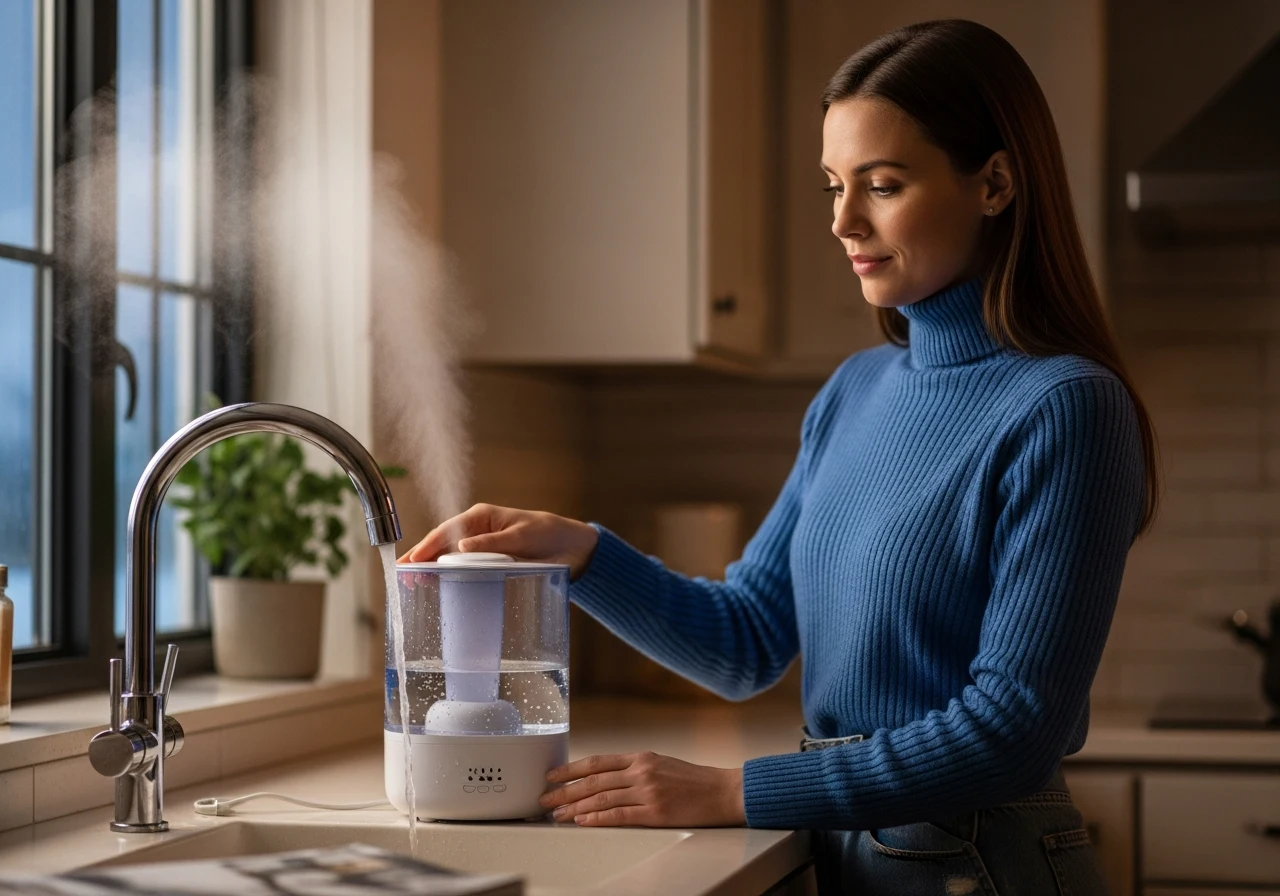
It is a freezing winter night, your throat is scratchy, and you realize you are completely out of pure bottled water. Naturally, you stare at the kitchen sink and wonder, can you use tap water in a humidifier without ruining the machine or harming your health? It is a highly common scenario that forces many homeowners to make a quick, potentially risky decision regarding their indoor environment.
While the faucet is incredibly convenient, the flowing liquid contains hidden minerals and microscopic impurities that drastically affect your indoor air quality. Because we research and test various gadgets to write in the article, we constantly see the immediate, damaging consequences of using the wrong hydration sources.
In this comprehensive safety guide, we will explore exactly what happens to your expensive device and your lungs when you skip the pure stuff. Furthermore, we will provide science-backed solutions and safe alternatives to keep your home comfortable, clean, and perfectly healthy all winter long.
Can You Use Tap Water in a Humidifier?
Yes, you can use regular tap water in a humidifier, but experts strongly advise against it, especially for cool mist and ultrasonic models. Tap water contains heavy dissolved minerals and microscopic organisms that rapidly create airborne white dust.
Furthermore, these impurities promote severe bacterial growth inside the tank and significantly reduce your overall indoor air quality. While evaporative models tolerate hard liquid slightly better, using pure distilled water remains the absolute safest and most effective option for your health.
What Happens If You Use Tap Water in a Humidifier?
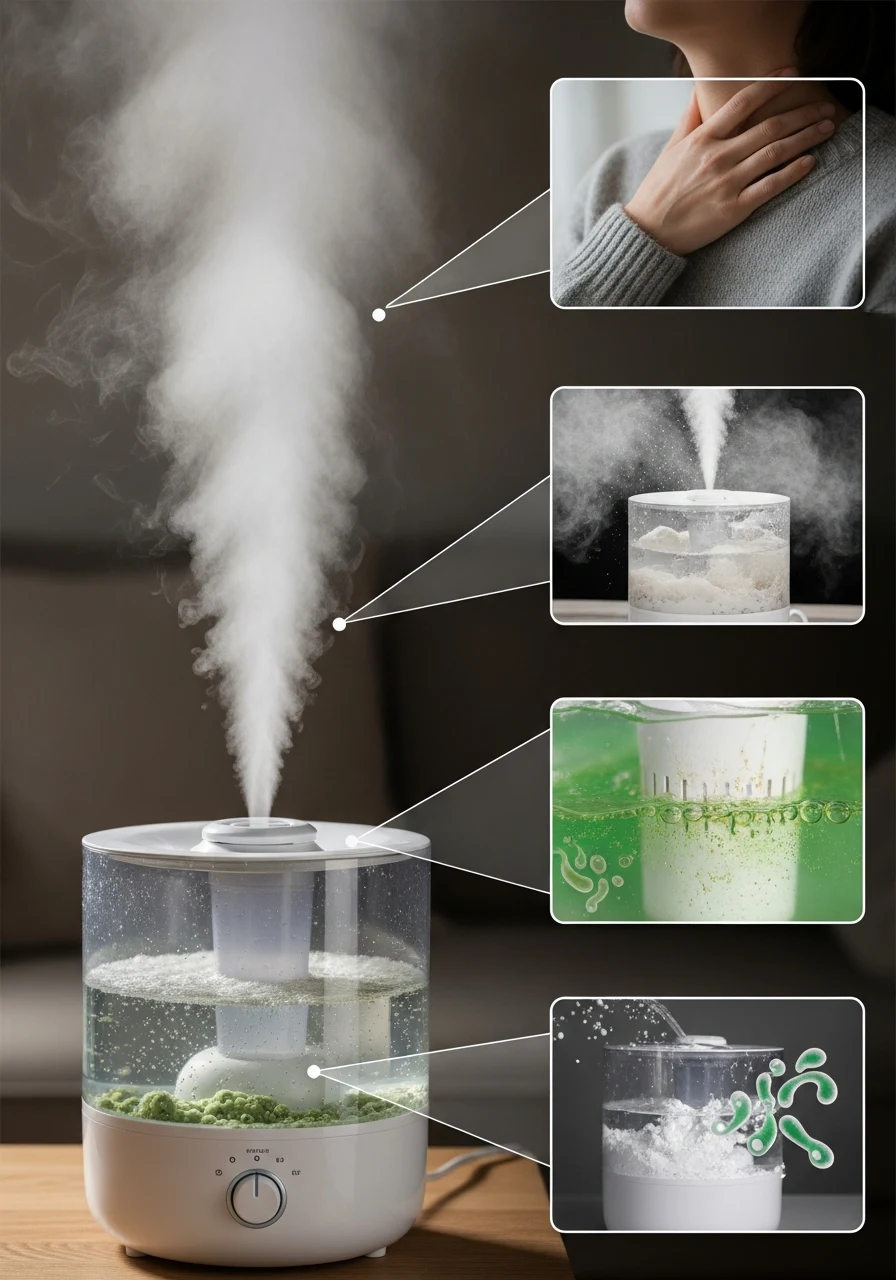
Understanding the immediate consequences of your liquid choice is vital for respiratory health and long-term appliance maintenance. What happens if you use a humidifier with tap water regularly? The results are often messy, frustrating, and potentially harmful to your family.
White Dust and Mineral Residue
The most immediate and visible consequence is the rapid appearance of a fine, chalky powder across your entire room. This annoying white dust consists of aerosolized calcium and magnesium particles pulled directly from your municipal water supply.
When an ultrasonic machine vibrates, it forcefully shatters these heavy minerals into microscopic droplets and ejects them into your bedroom. Consequently, this heavy dust aggressively coats your expensive wooden furniture, television screens, and dark flooring.
Bacteria and Mold Growth
Municipal liquid often contains trace amounts of organic matter that act as a food source for dangerous microscopic invaders. When this liquid sits stagnant inside a warm, dark plastic tank, it creates the ultimate breeding ground for severe bacterial growth.
Furthermore, crusty mineral scale provides a highly textured surface for stubborn mold spores to cling to and multiply rapidly. If you do not clean the tank meticulously, you risk atomizing these harmful pathogens directly into your personal breathing space.
Reduced Indoor Air Quality
Your primary goal in using these devices is to breathe easier, but untreated municipal sources can achieve the exact opposite effect. Can using tap water in a humidifier make you sick? Yes, inhaling aerosolized minerals and airborne bacteria severely degrades your indoor air quality.
These microscopic airborne particles easily penetrate deep into sensitive human lungs, causing unnecessary irritation and respiratory distress. For individuals dealing with asthma or severe seasonal allergies, this drastically reduced air quality can trigger immediate and severe flare-ups.
Device Damage Over Time
Hard minerals do not just pollute your bedroom air; they also aggressively attack the internal components of your expensive machinery. Thick, rock-hard calcium scale rapidly builds up on delicate ultrasonic vibrating plates and internal heating elements.
Because we test these devices rigorously, we frequently inspect internal components destroyed by months of hard water usage. The devastating buildup forces the motor to work significantly harder, leading to inevitable premature failure and costly appliance replacements.
Why Can’t You Use Tap Water in a Humidifier?
Many frustrated homeowners frequently ask, “Why can’t you use tap water in a humidifier if it is perfectly safe to drink?” The answer lies in the massive biological difference between human digestion and human respiration.
Your stomach acid easily breaks down hard calcium and municipal chlorine without causing any major bodily issues. However, your delicate lung tissue is absolutely not designed to inhale and filter out aerosolized rock minerals and airborne cleaning chemicals.
Furthermore, mineral content varies wildly by location, meaning homes with hard water face an exponentially higher risk of internal contamination. Ultrasonic models specifically amplify this dangerous issue because they possess zero internal filters to trap the heavy municipal minerals before they become airborne.
Additionally, municipal water treatment plants use chemical disinfectants, such as chlorine, to keep the supply safe for drinking. When these necessary chemicals are forcefully atomized into your enclosed bedroom, they can create a harsh, irritating odor.
Tap Water vs Distilled Water for Humidifier
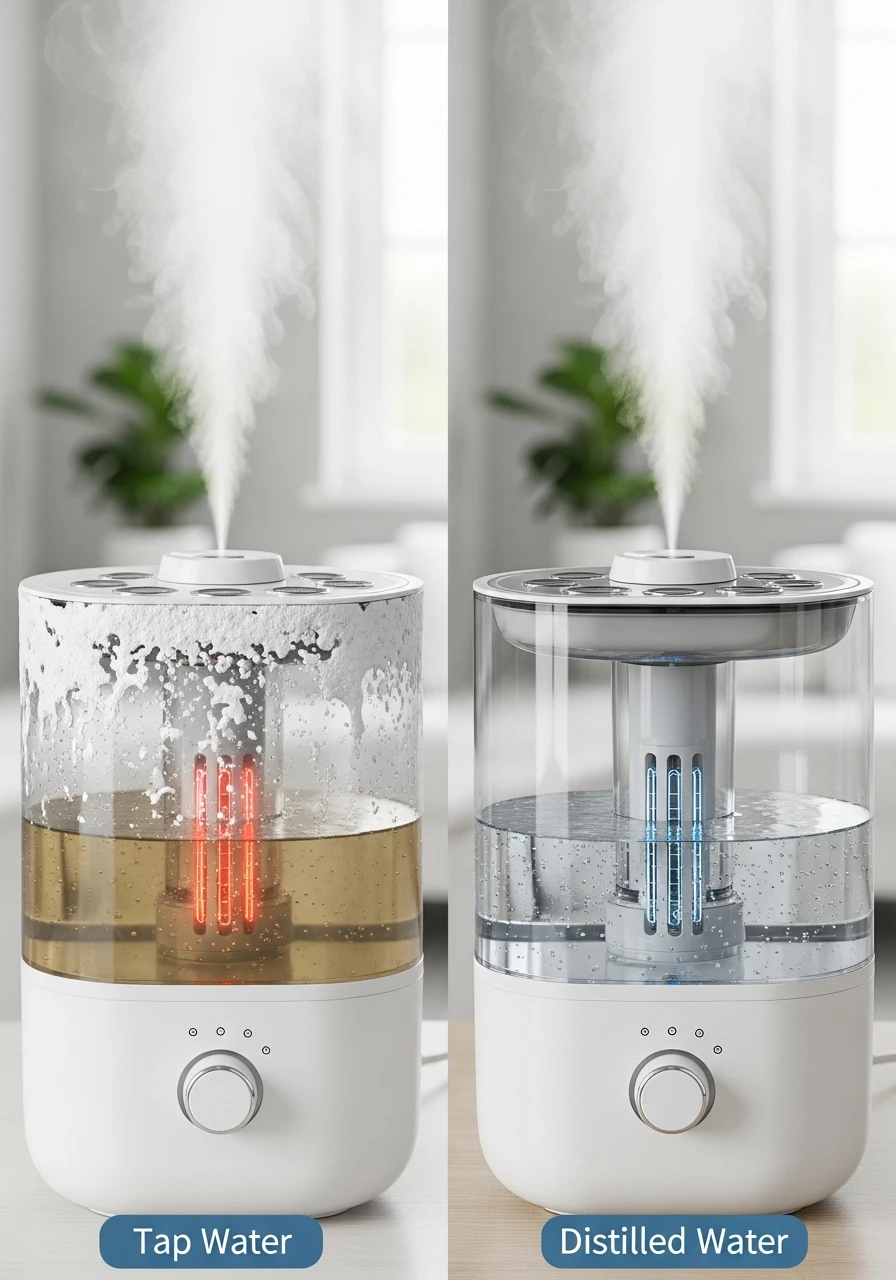
When standing in the appliance aisle, you must clearly understand the chemical differences between your available home hydration choices. Comparing humidifier tap water vs. distilled options reveals exactly why manufacturers strongly prefer absolute purity for their machines.
Distilled liquid undergoes a rigorous boiling and condensation process that aggressively strips away 100% of dissolved solids and municipal chemicals. Conversely, standard faucet liquid retains all its heavy calcium, magnesium, and trace municipal disinfectants.
Why distilled water in humidifier tanks is superior becomes obvious when you evaluate the daily maintenance requirements and health benefits. Pure hydration guarantees zero airborne dust, zero hard scale buildup, and a significantly lower risk of dangerous microbial growth.
| Feature | Regular Tap Water | Pure Distilled Water |
| Heavy Minerals | High concentration | Completely removed |
| White Dust Risk | Highly likely | Zero risk |
| Bacterial Growth | Higher probability | Significantly lower |
| Manufacturer Recommended | ❌ No | ✅ Yes |
Do Humidifiers Need Distilled Water?
Do humidifiers need distilled water to function on a basic mechanical level? No, the machine will physically turn on and produce mist regardless of the liquid you pour inside the removable plastic tank.
However, while it is not strictly mandatory, it is universally recommended by medical professionals and appliance manufacturers alike. Attempting to run a humidifier without distilled water frequently leads to ruined appliances, endless scrubbing, and severe respiratory irritation.
Absolute purity is especially critical for powerful ultrasonic units, sensitive newborn babies, and adults battling chronic respiratory conditions. If you want maximum safety and zero weekly maintenance headaches, providing pure hydration is essentially a non-negotiable requirement.
Can You Use Tap Water for One Night?
Are you currently staring at an empty jug at midnight? Yes, you can occasionally use unpurified liquid for a single emergency night. However, it absolutely must not become a regular daily habit for your household.
If you ask, “Can I use tap water in my humidifier for one night?” the answer is a cautious yes. The key is strict morning-after maintenance. You must empty the tank immediately upon waking and wipe the base completely dry.
Leaving that untreated municipal liquid sitting stagnant for even 24 hours invites rapid microbial growth. Therefore, only use it during desperate late-night emergencies, and scrub the device thoroughly the very next day.
Is Tap Water Safe for Babies in Humidifiers?
Newborn lungs are incredibly fragile and highly susceptible to airborne environmental irritants. Therefore, can you use tap water in a humidifier for baby nurseries safely? Pediatricians strictly advise against it due to the severe risks of aerosolized heavy minerals.
When you wonder what water to use in a humidifier for baby rooms, absolute chemical purity is the only acceptable answer. Pumping microscopic calcium and trace municipal chlorine into a newborn’s breathing space can easily trigger dangerous respiratory distress.
To guarantee your infant sleeps safely and comfortably, always fill their nursery device with 100% pure distilled liquid. Protecting their developing respiratory system from unnecessary airborne pollutants is always worth the minor grocery store hassle.
Can Tap Water in a Humidifier Make You Sick?
Your indoor air quality directly dictates your daily physical health and energy levels. Can using tap water in a humidifier make you sick? Yes, inhaling aerosolized hard minerals and airborne bacterial spores can cause significant physical illness.
When you breathe in calcified white dust, your throat and lungs become severely irritated and inflamed over time. For healthy adults, this might feel like a minor, lingering winter cold or a scratchy morning throat.
However, for individuals battling severe allergies or asthma, this polluted air triggers dangerous and immediate respiratory flare-ups. Ultimately, the impurities found in municipal pipes can easily transform a comforting health device into a harmful illness generator.
Special Health Conditions
Different respiratory illnesses require vastly different approaches to indoor air moisture management. Let us examine how untreated municipal liquid impacts specific medical conditions and sensitive respiratory systems directly.
COPD Care Considerations
Chronic obstructive pulmonary disease makes breathing incredibly difficult during dry winter months. Should I use a humidifier if I have COPD? Yes, moisture helps tremendously, but you must strictly avoid tap water to prevent inhaling irritating mineral dust.
Effective Cough Relief
Dry, hacking winter coughs require immediate soothing moisture to heal irritated throat tissues. So, can you use tap water in a humidifier for cough relief? While the moisture helps, aerosolized minerals might trigger further coughing fits, making pure liquid the smarter choice.
Humidifier Type Matters (Very Important)
Understanding the internal mechanics of your specific machine is crucial for safe daily operation. Not all machines handle municipal liquid the same way. Let us explore why your specific humidifier type dictates your hydration choices.
Ultrasonic Humidifiers
Ultrasonic models are currently the most popular, whisper-quiet devices on the market. They utilize a rapidly vibrating metal or ceramic diaphragm to shatter liquid into a microscopic, cooling fog. Because they lack physical filters, they are the absolute worst models for hard municipal liquid.
When you pour untreated liquid into an ultrasonic tank, 100% of the dissolved solids are violently ejected into your bedroom. This mechanism guarantees a massive white dust problem and rapid internal component calcification. Therefore, these specific units strictly demand absolute liquid purity.
Evaporative Humidifiers
Evaporative models operate using a completely different, highly physical mechanical process. They utilize a submerged paper or cloth wick filter to absorb liquid, while an internal fan blows air across it. Consequently, do evaporative humidifiers use tap water safely?
Yes, evaporative humidifier tap water usage is generally acceptable because the physical wick filter traps the heavy minerals. The heavy calcium stays locked inside the wet filter instead of floating into your breathable air. However, you will need to replace these expensive filters much more frequently.
Cool Mist Humidifiers
The term “cool mist” often covers both ultrasonic and evaporative technologies. Can you use tap water in a cool mist humidifier? It depends entirely on the internal mechanism, but if it lacks a wick filter, you must avoid municipal liquid entirely.
Warm Mist Vaporizers
Warm mist models actually boil the liquid internally to release a pure, soothing steam. Because the boiling process leaves the heavy minerals behind in the heating chamber, they do not create white dust. However, they require intense weekly scrubbing to remove the rock-hard baked-on calcium.
How to Make Tap Water Safer for Humidifier Use
If you absolutely refuse to buy bottled jugs, you must process your municipal liquid at home. Learning how to make tap water safe for humidifier operation involves aggressive filtration techniques.
First of all, boiling is a massive misconception. Boiling only kills live bacteria; it does not remove dissolved solid minerals. Therefore, boiled liquid will still create frustrating white dust and damage your internal components.
The most effective home method is utilizing a high-quality reverse osmosis (RO) under-sink filtration system. These powerful systems force municipal liquid through microscopic membranes, stripping away roughly 98% of all hard minerals and chemical additives.
Best Alternatives to Distilled Water
Are you completely out of jugs and dreading a grocery trip? You must find a reliable backup. What can I use instead of distilled water safely? Reverse osmosis liquid is your absolute best defense against white dust.
Furthermore, you can purchase demineralization drop-in cartridges at most hardware stores. These chemical filters actively neutralize the calcium inside your tank. So, what can I use if I don’t have distilled water? Standard filtered fridge liquid is a poor substitute, as it only removes chlorine, not heavy calcium.
Best Humidifiers for Tap Water (If You Must Use It)
Some homeowners physically cannot carry heavy gallon jugs every week. If you fall into this category, you must purchase a highly specific machine. Finding the best humidifier for tap water requires looking for robust evaporative models.
You need a device featuring a massive, thick-wick filter designed to absorb heavy municipal calcium. The best tap water humidifier will always clearly state “evaporative technology” on the retail box, completely avoiding the word “ultrasonic.”
Reddit & Real User Experiences
We constantly monitor online consumer forums to gauge real-world home appliance struggles. When searching for a “can you use tap water in a humidifier reddit” discussion, the overwhelming consensus is highly negative.
Thousands of frustrated users complain bitterly about impossible cleaning routines and thick white dust ruining their expensive televisions. They frequently admit that trying to save a few dollars on pure hydration ended up destroying their machine entirely.
Because we research and test various gadgets to write in the article, we heavily agree with this online consensus. Skimping on pure hydration always leads to expensive appliance replacements and incredibly frustrating weekly scrubbing sessions.
Common Mistakes to Avoid
Even with the correct liquid, poor user habits can destroy your indoor air quality. First of all, leaving stagnant liquid sitting in the tank overnight is a massive error. Always dump remaining moisture immediately upon powering down.
Furthermore, ignoring weekly deep cleaning routines allows dangerous pink mold to flourish inside the dark plastic base. You must sanitize the entire unit with white vinegar regularly. Finally, using extremely hard well water long-term is guaranteed to burn out the internal motor prematurely.
Safety Guidelines
Maintaining optimal indoor air quality requires following strict, science-backed protocols. First of all, the CDC strongly advises cleaning your indoor moisture devices daily to prevent dangerous microbial buildup.
Furthermore, you must utilize pure distilled hydration whenever mechanically possible to protect your sensitive respiratory system. Additionally, always monitor your indoor moisture levels, keeping the room strictly between 30% and 50% humidity to prevent aggressive black mold growth on your walls.
Frequently Asked Questions
Can you use tap water instead of distilled water in a humidifier?
You can use it occasionally in emergencies, but it is highly discouraged. Regular use will severely damage ultrasonic machines and cover your entire bedroom in microscopic, irritating white dust.
Does tap water break a humidifier?
Yes, over time, the heavy calcium and magnesium will form rock-hard scale on the internal components. This severe calcification forces the motor to overheat, ultimately breaking the appliance prematurely.
Do evaporative humidifiers use tap water?
Yes, evaporative models tolerate hard municipal liquids much better than ultrasonic models. Their internal physical wick filters actively trap the heavy minerals, preventing them from entering your breathable air.
What happens if I use tap water?
You will rapidly experience chalky white dust settling on your furniture and electronics. Furthermore, you risk breathing in aerosolized minerals and airborne bacteria, which can trigger severe asthma and allergy flare-ups.
Can I boil tap water for humidifier use?
No, boiling only kills living microorganisms; it does not eliminate dissolved solids like calcium. Consequently, boiled liquid will still aggressively calcify your machine and cause frustrating white dust issues.
Final Verdict – Should You Use Tap Water?
In conclusion, your choice of hydration directly impacts both your appliance lifespan and your family’s respiratory safety. Occasional, emergency use of municipal liquid is acceptable for a single night, provided you clean the machine the very next morning.
However, long-term use of untreated liquid is simply not recommended. The resulting white dust, severe bacterial risks, and inevitable machine damage make it a terrible long-term strategy.
Ultimately, pure distilled water remains the undisputed champion for indoor moisture devices. It completely protects your expensive machinery, eliminates tedious scrubbing, and guarantees your sensitive lungs breathe the cleanest, safest air possible.