
If you have ever asked yourself exactly how humidifiers work, you are not alone. As an indoor environmental professional with over 15 years of experience testing home climate systems, I hear this question constantly. People know these devices relieve dry winter air, but few understand the mechanics behind them.
Understanding the science of humidification is the secret to choosing the right device for your home and health. Whether you are trying to soothe a child’s midnight cough or protect your expensive hardwood floors, the technology matters.
In this comprehensive 2026 guide, we will dive deep into the mechanics of these machines. From the vibrating plates of ultrasonic models to the heating elements in warm mist units, here is everything you need to know.
How Do Humidifiers Work?
At the most basic level, a humidifier is an appliance engineered to increase the moisture content in your indoor environment. It takes liquid water from a reservoir and transforms it into a breathable vapor or mist.
Once the water is converted into vapor, the machine uses a delivery system, like a fan or natural dispersion, to push it into the room. This process prevents your indoor relative humidity from dropping into uncomfortable and unhealthy ranges.
The ideal indoor humidity balance should always remain between 30% and 50%. By mechanically introducing water vapor into the environment, these devices stop dry air from stripping natural moisture from your skin and respiratory tract.
Actual Moisture Addition Process
Yes, these machines do actually put physical moisture into the air you breathe. When the device releases its mist or steam, the surrounding dry air acts like a sponge, rapidly absorbing the tiny water droplets.
This absorption process turns the visible mist into an invisible, humidified gas that circulates evenly throughout your room. If you were to place a hygrometer (a humidity measuring tool) in the room, you would literally watch the moisture percentage rise.
How Do Humidifiers Make Mist?
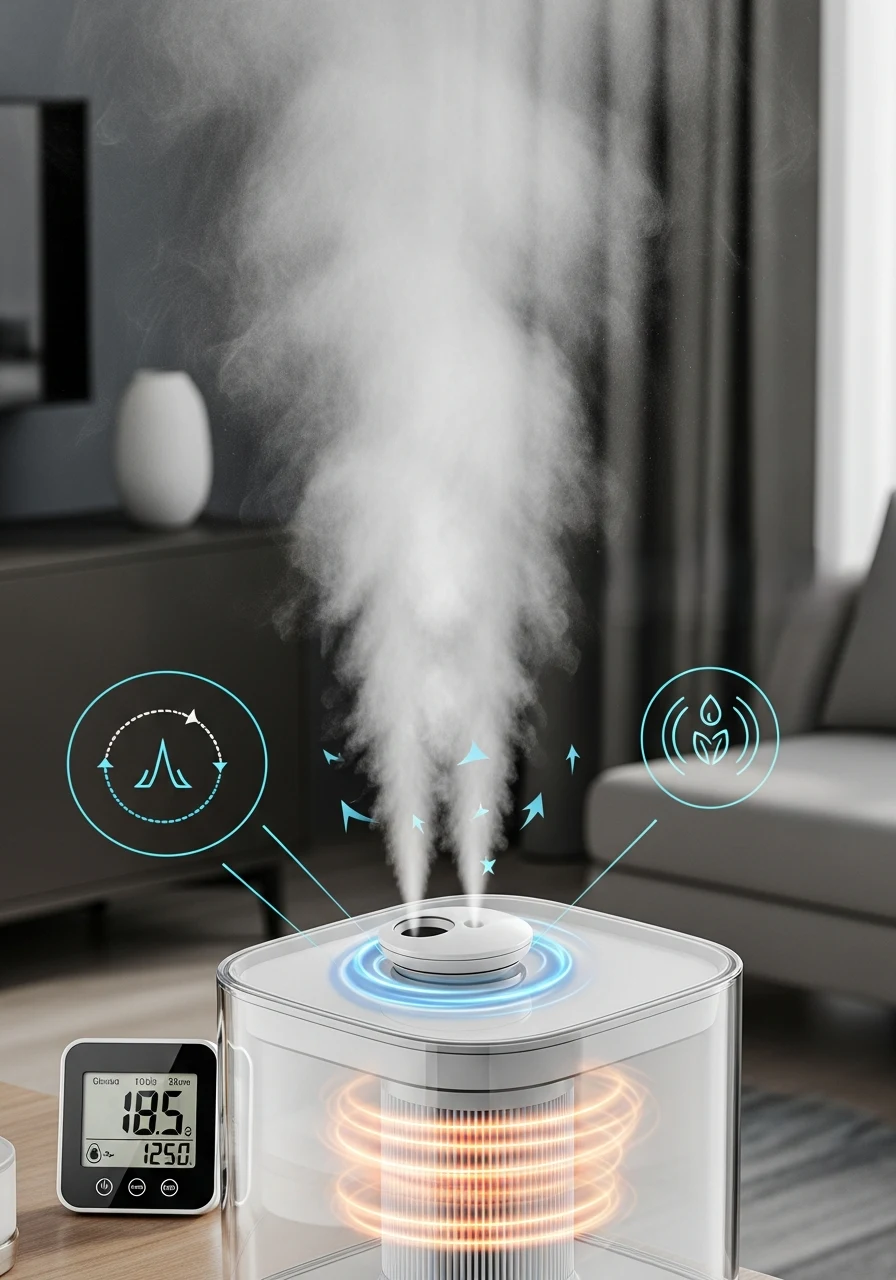
The way a machine makes mist depends entirely on its internal engineering. However, all models share the same goal: breaking down liquid water into particles small enough to float in the air.
Some machines achieve water atomization through rapid, high-frequency vibration that shatters the water’s surface tension. Others rely on traditional thermal dynamics, boiling the water until it naturally transforms into steam.
A third method uses the science of natural evaporation, pulling dry air across a saturated physical filter. Regardless of the method, the end result is a fine, easily breathable mist that seamlessly integrates into your home’s atmosphere.
Types of Humidifiers Explained
To truly understand how humidifiers work, types of explanations are absolutely critical. The market is filled with different technologies, and each one interacts with your home’s air in a unique way.
Choosing the wrong type can lead to excess noise, unwanted white mineral dust, or unnecessary energy costs. Let us break down the specific mechanics of the most common types available today.
Ultrasonic Humidifier
The ultrasonic humidifier is currently the most popular choice for modern bedrooms and nurseries. Instead of using loud fans or boiling water, it relies on high-frequency vibration to create a soothing, incredibly fine mist. At the base of the water tank sits a small metal or ceramic plate called a piezoelectric transducer.
When you turn the machine on, electrical currents cause this plate to vibrate at an ultrasonic frequency—often millions of times per second. This vibration is so rapid and intense that it physically shatters the water droplets resting on top of it. The water’s surface tension breaks down, turning the liquid into a microscopic, cool fog.
Because the droplets are so tiny, they are immediately expelled out of the nozzle and absorbed into the room’s air. The biggest advantage of this technology is its near-silent, quiet operation, making it perfect for light sleepers. Furthermore, since there is no heating element, it consumes very little electricity.
However, this mechanical process atomizes everything in the water reservoir, including natural minerals. If you use standard, hard tap water, the machine will shatter those minerals and leave a fine “white dust” on your furniture. Therefore, using distilled water is highly recommended to keep the mist pure and your room clean.
Evaporative Humidifier
Evaporative models are the self-regulating workhorses of the indoor air quality world. They operate on the simple, natural principle of evaporation, accelerated by mechanical airflow. Inside the unit, there is a porous wicking filter made of paper, cloth, or specialized foam. This wick sits directly in the water reservoir and absorbs the liquid through capillary action until it is completely saturated.
A powerful internal fan then draws dry air from your room and forces it directly through this wet filter. As the dry air passes through the porous material, it naturally absorbs the moisture. The fan then blows this newly humidified, invisible air back into your living space.
The brilliance of how evaporative humidifiers work lies in their self-regulating nature. If your room is extremely dry, the air will absorb a massive amount of water from the wick. As the room’s humidity reaches optimal levels, the air naturally stops absorbing as much moisture, preventing accidental over-humidification.
Additionally, the wicking filter acts as a trap for waterborne impurities. It catches the calcium and magnesium found in tap water, ensuring that only pure, clean moisture enters your lungs. While you do have to replace the filters periodically, you never have to worry about the white mineral dust associated with ultrasonic models.
Warm Mist Humidifier
Warm mist models take a more traditional, thermal approach to humidification. Instead of vibrating or blowing air, these devices physically boil the water to create an active steam vapor. Inside the base of the machine is an electrical heating element, much like the one found in an electric kettle.
Water from the main tank flows into a small heating chamber, where the element rapidly brings it to a rolling boil. As the water boils, it transforms into a pure, warm steam. This steam rises through a cooling chimney, dropping slightly in temperature so it is safe before it gently exits the top nozzle and enters your room.
Understanding how warm mist humidifiers work reveals their incredible health benefits during flu season. Because the water is boiled, the process naturally provides bacteria reduction, killing up to 99% of waterborne germs before they can enter the air. The resulting warm steam feels incredibly soothing on a raw throat and can actually raise the ambient temperature of a chilly bedroom.
The primary drawbacks are safety and efficiency. Because they contain boiling water, they pose a severe burn and tip-over hazard, making them unsuitable for unsupervised children’s rooms. Furthermore, the heating element draws significantly more electricity than a fan or an ultrasonic plate, leading to higher operational costs.
Cool Mist Humidifier
The term “cool mist” is actually an umbrella category rather than a specific mechanical technology. It refers to any humidifier that adds moisture to the air without heating the water first. Both evaporative and ultrasonic models generally fall under the cool mist classification.
Because they do not alter the temperature of the water, the mist they produce is roughly room temperature or slightly cooler. This makes them the universally recommended choice by pediatricians, as they are completely safe for kids and eliminate any risk of accidental burns.
They are also incredibly energy efficient, as they do not require power-hungry heating elements to function. Knowing how cool mist humidifiers work helps you understand why they are the standard choice for year-round comfort and allergy relief.
Whole House Humidifier
Unlike standalone portable units, whole-house models are permanent fixtures integrated directly into your home’s central HVAC (Heating, Ventilation, and Air Conditioning) system. They are designed to deliver perfectly balanced moisture to every single room in your house simultaneously.
These units are physically mounted directly onto your furnace or the return air duct. They are plumbed directly into your home’s main water line, meaning you never have to carry a heavy water tank to a sink for a manual refill again.
When your thermostat detects a drop in humidity, it signals the unit to activate. As your furnace blows heated air through your ductwork, the air passes through the humidifier, absorbs the required moisture, and distributes it through your vents, providing true whole-home coverage.
Furnace Humidifier
A furnace humidifier (often called a bypass humidifier) relies on the pressure dynamics of your HVAC system to function. It is installed in a bypass duct that connects the warm air supply to the cold air return.
Understanding how humidifiers work in furnaces involves a bit of physics. The system uses the natural pressure difference between the supply and return ducts to push heated air through a water-soaked evaporator pad.
As the hot air rushes through the pad, it absorbs a massive amount of moisture. This heavily humidified air is then returned to the furnace blower, mixed with the rest of your home’s air, and seamlessly pushed out into your living spaces.
How Do Humidifiers Work for Cough, Cold & Congestion?
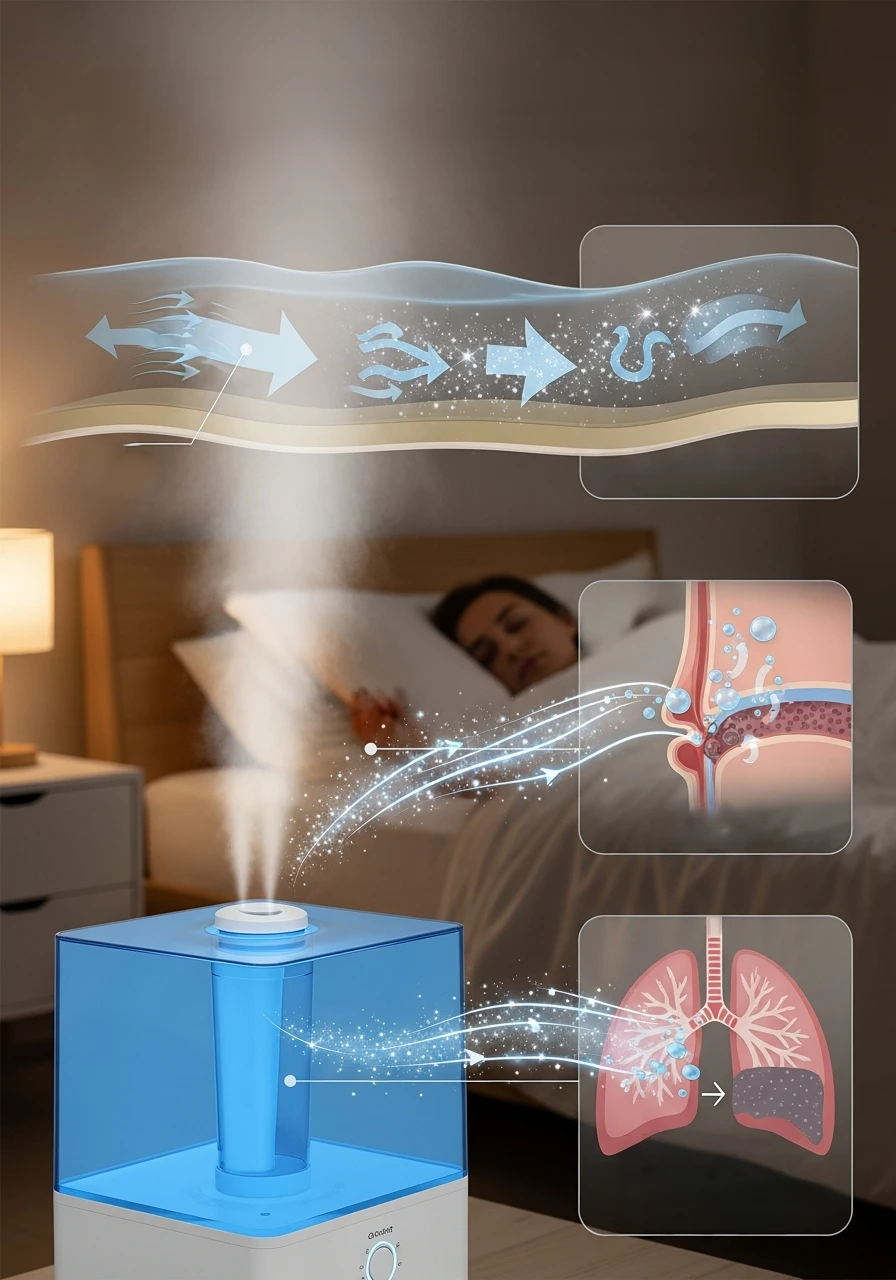
When winter illness strikes, a humidifier becomes a powerful, non-pharmacological medical tool. Dry air is notorious for aggravating an already inflamed respiratory tract, leading to harsh, non-stop coughing.
By pushing a steady stream of moisture into the room, the machine helps perform vital mucus thinning. Thick, sticky mucus in your lungs and nasal passages absorbs the humidified air, becoming liquid and manageable.
This airway hydration allows your body’s natural cilia (tiny hairs in your throat) to sweep the loosened mucus away. It transforms a dry, painful hack into a productive cough, helping you expel the illness faster.
Stuffy Nose and Sinus Relief
For a stuffy nose, the moisture acts as a natural anti-inflammatory agent for your sinus cavities. Swollen, dry nasal tissues naturally shrink and relax when exposed to properly humidified air, opening up your breathing passages almost immediately.
Respiratory Support When Sick
When you are sick, your body loses fluids rapidly. Running a humidifier ensures your respiratory system isn’t losing additional moisture to the dry room air, preventing the severe morning throat pain associated with a nasty cold.
How Do Humidifiers Work for Babies?
Pediatricians constantly recommend humidifiers because babies have incredibly narrow nasal passages that block easily. By adding moisture to the nursery, the machine prevents dry, crusty mucus from obstructing their tiny airways.
When choosing a model for a nursery, safety is the number one priority. You must only use cool mist models; warm mist vaporizers contain boiling water that presents a lethal burn hazard if a toddler pulls the cord.
To maintain safe humidity levels, keep the nursery between 40% and 50% relative humidity. Never point the mist nozzle directly at the crib, as this can make the baby’s bedding damp and lower their body temperature.
How Fast Do Humidifiers Work?
Clients constantly ask me, “How fast do humidifiers work once turned on?” The answer depends on your room size, the current dryness of the air, and the machine’s output capacity.
In a standard bedroom with the door closed, a high-output ultrasonic machine can provide a noticeable effect in just 15 to 30 minutes. You will physically feel the air soften and your nasal passages begin to clear.
However, if you place a small machine in a massive, open-concept living room, it may take hours or never catch up. The tank size and the specific type of humidifier dictate how quickly the machine can saturate the environment.
Is It Good to Sleep with a Humidifier On?
Yes, it is incredibly beneficial to sleep with a humidifier running throughout the night. It prevents the dreaded “winter wake-up” characterized by a dry mouth, bloody nose, and scratchy throat.
However, you must maintain the ideal humidity range of 30% to 50% while you sleep. If you let a powerful machine run on high all night in a small room, it will create a damp, rainforest-like environment.
For safety, invest in a model with a built-in humidistat that automatically shuts the mist off when the target humidity is reached. This ensures perfect sleep conditions without the risk of over-saturating your walls and bedding.
How Long Should I Run My Humidifier Each Day?
There is no universal rule, but an 8–12-hour guideline is standard for most households, typically overnight while sleeping. The duration entirely depends on how aggressively your home’s heating system is drying out the air.
During a severe cold snap, you might need to run the unit 24 hours a day to maintain baseline comfort. Conversely, during a rainy spring week, you may not need to run it at all.
Always base your runtime on actual indoor humidity levels, not guesswork. Buy an inexpensive digital hygrometer for your nightstand to monitor the exact moisture percentage in the room.
What Are the Disadvantages of Using a Humidifier?
While the benefits are immense, the disadvantages of using a humidifier stem entirely from poor maintenance. If you neglect to clean the tank, stagnant water becomes a breeding ground for dangerous bacteria.
When turned on, a dirty machine aerosolizes this bacterial buildup directly into your breathing space. This can lead to “humidifier fever,” a respiratory illness caused by inhaling contaminated mist.
Another massive disadvantage is the mold growth risk associated with over-humidification. If you consistently push your room’s humidity above 60%, toxic black mold will begin growing on your window sills and inside your mattress.
Benefits of a Humidifier
The daily benefits of humidifier use extend far beyond basic comfort; they actively protect your body’s natural barriers. When your home is properly humidified, you will notice significantly better sleep quality with fewer snoring interruptions.
It provides massive skin hydration, preventing the cracking, flaking, and severe itching associated with winter eczema flare-ups. Your lips will stop chapping, and your eyes will not feel gritty when you wake up.
Furthermore, optimal moisture provides reduced allergies by keeping dust and pollen weighed down. It offers unmatched respiratory relief by keeping your vocal cords lubricated and your sinus cavities clear.
How Well Do Humidifiers Work?
When sized correctly for the room and maintained properly, humidifiers work exceptionally well. They provide real-world effectiveness that you can feel on your skin and in your lungs within an hour of operation.
However, they do have distinct limitations. A portable unit cannot fix the dry air in an entire multi-story house, and placing a machine too close to a highly porous surface can cause localized water damage.
Humidifier vs Dehumidifier
It is easy to confuse a humidifier with a dehumidifier, but they serve exactly opposite purposes. A humidifier adds water to dry air, while a dehumidifier extracts excess water from damp air.
Understanding this distinction is critical for your home’s structural integrity. Using the wrong device can completely ruin your indoor air quality and promote massive mold infestations.
Dehumidifier Operating Mechanics
How does a dehumidifier work? It uses a refrigeration cycle to pull moisture out of the air. An internal fan draws damp room air over a series of ice-cold metal coils, causing the airborne moisture to undergo a condensation system phase change.
Primary Functions of a Dehumidifier
What does a dehumidifier do? It forces the condensed water droplets to drip into a collection bucket, effectively removing humidity from the environment. The machine then blows the newly dried air back into the room.
Humidifier vs. Dehumidifier: When to Use Each
Use a humidifier during the winter months when your furnace creates harshly dry air. Use a dehumidifier during sticky summer months, or year-round in damp basements, to pull heavy moisture out of the humid air.
Humidifier vs Air Purifier
Many people ask if they need a humidifier vs. an air purifier. An air purifier focuses strictly on filtration, using HEPA filters to trap solid particles like dust, pet dander, and smoke out of the air.
An air purifier does absolutely nothing to alter the moisture content of the room. Conversely, a standard humidifier adds moisture but does not filter out airborne pollutants or allergens.
Can they work together? Yes, they make an incredible team for ultimate indoor air quality. Just make sure to place them on opposite sides of the room so the purifier’s filter doesn’t absorb the humidifier’s mist.
Do Humidifiers Work Without Heat?
Yes, many modern humidifiers work flawlessly without any heat involved. If you are wondering how humidifiers work without heat, look at ultrasonic and evaporative technologies.
Evaporative models use wind power (a fan) and natural wicking to transition water into a gas. Ultrasonic models use intense physical vibration to shatter the water into a cool mist.
Because neither method requires raising the water’s temperature, they are incredibly safe to touch and highly energy-efficient. They prove that you do not need boiling steam to effectively saturate a room.
Special Use Cases
Different brands and designs serve very specific medical and environmental purposes. Understanding these niche machines ensures you buy the right tool for your specific ailment.
Vicks Medicated Humidifiers
How do Vicks humidifiers work? They operate like standard warm or cool mist units, but feature special compartments for Vicks VapoPads or liquid inhalants. This menthol compatibility allows the machine to distribute a soothing, medicated vapor alongside the moisture for severe congestion relief.
Cold Humidifier Mechanisms
How do cold humidifiers work? This is simply another term for a cool mist ultrasonic or evaporative unit. They disperse room-temperature moisture, making them the superior choice for reducing the swelling of vocal cords during a bout of croup or laryngitis.
Air Humidifier Dynamics
How do air humidifiers work? This generic term applies to any device that regulates your home’s climate by emitting water vapor. Their dynamic goal is always to keep the ambient indoor environment resting comfortably at 45% relative humidity.
Expert Tips for Maximum Efficiency
In my professional experience, how you maintain your machine is just as important as the model you buy. Always use distilled water in ultrasonic units to prevent white mineral dust from coating your electronics and lungs.
You must clean regularly to prevent microbial growth. I recommend emptying the tank every morning, letting it air dry, and doing a deep vinegar soak once a week.
Finally, actively monitor humidity with a standalone digital hygrometer. Never let your room exceed 50% humidity, or you will trade your dry air problems for a severe mold infestation.
Reddit & Real User Insights
When you search “how do humidifiers work reddit,” you see common experiences across thousands of real users. The most frequent revelation is how quickly a quality humidifier cures chronic winter nosebleeds.
However, you also see the mistakes people make, like leaving water in the tank for two weeks and wondering why the room smells like wet gym socks. Real-world expectations show that while humidifiers are life-changing, they require dedicated weekly chores to operate safely.
Users on forums heavily advocate for top-fill designs, as they eliminate the frustrating hassle of carrying a dripping, upside-down water tank back and forth from the bathtub.
Frequently Asked Questions
How do humidifiers work?
They work by taking liquid water from a reservoir and converting it into a breathable vapor. This is achieved through rapid vibration, natural evaporation, or boiling, which is then dispersed into the room to raise the humidity.
Do humidifiers actually add moisture?
Yes, they physically release microscopic water droplets or steam into the air. The dry room air absorbs this vapor, measurably increasing the relative humidity percentage in the space.
Is it good to sleep with one on?
Yes, sleeping with one on prevents dry throat, chapped lips, and nighttime congestion. However, you must use a humidistat to ensure the room does not become overly damp while you sleep.
How fast do humidifiers work?
In a standard closed bedroom, a properly sized unit will begin making the air feel softer and more breathable within 15 to 30 minutes.
What are the disadvantages?
The main disadvantages are the strict cleaning requirements and the risk of over-humidification. If not washed weekly, they will spray harmful bacteria and mold spores directly into your breathing space.
Conclusion
Understanding how humidifiers work is the first step to reclaiming your home’s comfort during the harsh, dry seasons. Whether you utilize the rapid vibration of an ultrasonic unit or the pure steam of a warm mist model, these devices are essential for maintaining your respiratory health.
By keeping your indoor environment balanced between 30% and 50% humidity, you protect your skin, your sleep, and even the structural wood of your home. Remember to prioritize cool mist models for pediatric safety, and never skip your weekly cleaning routine.
If you are tired of waking up with a scratchy throat and irritated sinuses, it is time to take action. Evaluate your room size, choose the technology that fits your lifestyle, and invest in a quality humidifier today.
Evidence-Based References:
- PLOS ONE
- Proceedings of the National Academy of Sciences (PNAS)
- United States Environmental Protection Agency (EPA)
- Cleveland Clinic (Combating Dry Air Effects)