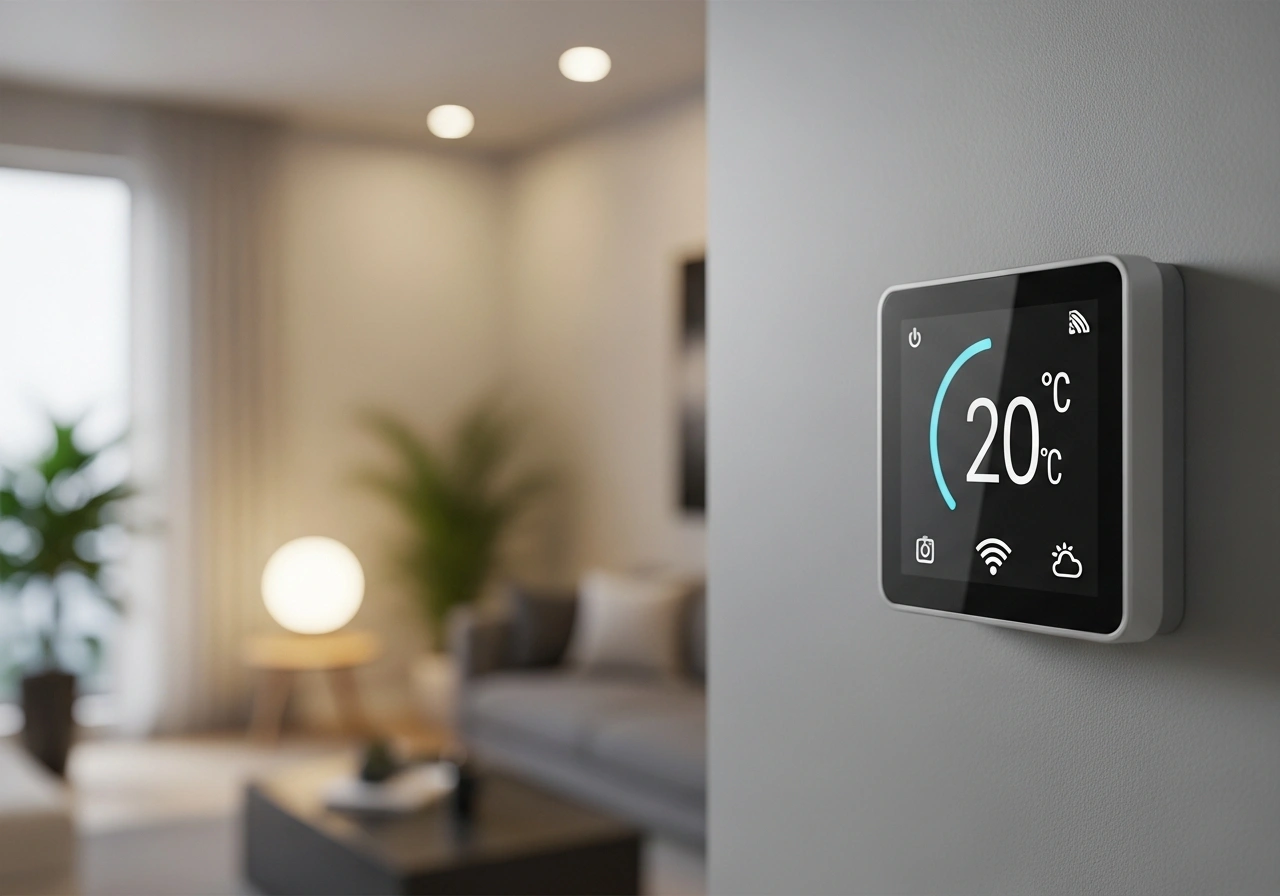
Finding the best smart thermostat in 2026 is about more than just upgrading a wall dial; it is about taking total control of your home’s climate and energy bills. With rising utility costs and increasingly extreme weather, optimizing your heating, ventilation, and air conditioning (HVAC) system is no longer a luxury. It is a fundamental part of modern home management.
Navigating the market can feel overwhelming with terms like “C-wire,” “geofencing,” and “multi-zone algorithms” thrown around constantly. However, upgrading to a smart climate system is one of the few home improvements that actively pays for itself. Whether you want to integrate with your existing smart home devices, monitor indoor air quality, or simply stop heating an empty house, there is a specific model built for your needs.
This comprehensive guide analyzes the market’s leading options based on expert HVAC insights, real-world testing data, and long-term reliability. We will break down everything from budget-friendly picks to premium multi-room systems. Let’s explore how to choose the perfect intelligent climate control system for your living space.
What Is a Smart Thermostat?
If you are wondering what a smart thermostat is, it is essentially a Wi-Fi-connected digital control center for your home’s HVAC system. Unlike traditional programmable models that rely on rigid, manual scheduling, these modern devices use internet connectivity to offer remote access via smartphone apps. This means you can adjust your home’s temperature from anywhere in the world.
Beyond simple remote control, what is the best smart thermostat capable of doing? The true value lies in automated intelligence and machine learning. These devices use built-in sensors, location tracking (geofencing) from your phone, and local weather forecasts to make real-time adjustments to your indoor climate.
By learning your daily routines, they know exactly when to power down to save energy and when to ramp up so you return to a comfortable environment. They provide detailed energy usage reports, integrate seamlessly with voice assistants, and can even alert you to potential HVAC malfunctions before they become expensive breakdowns.
Are Smart Thermostats Effective?
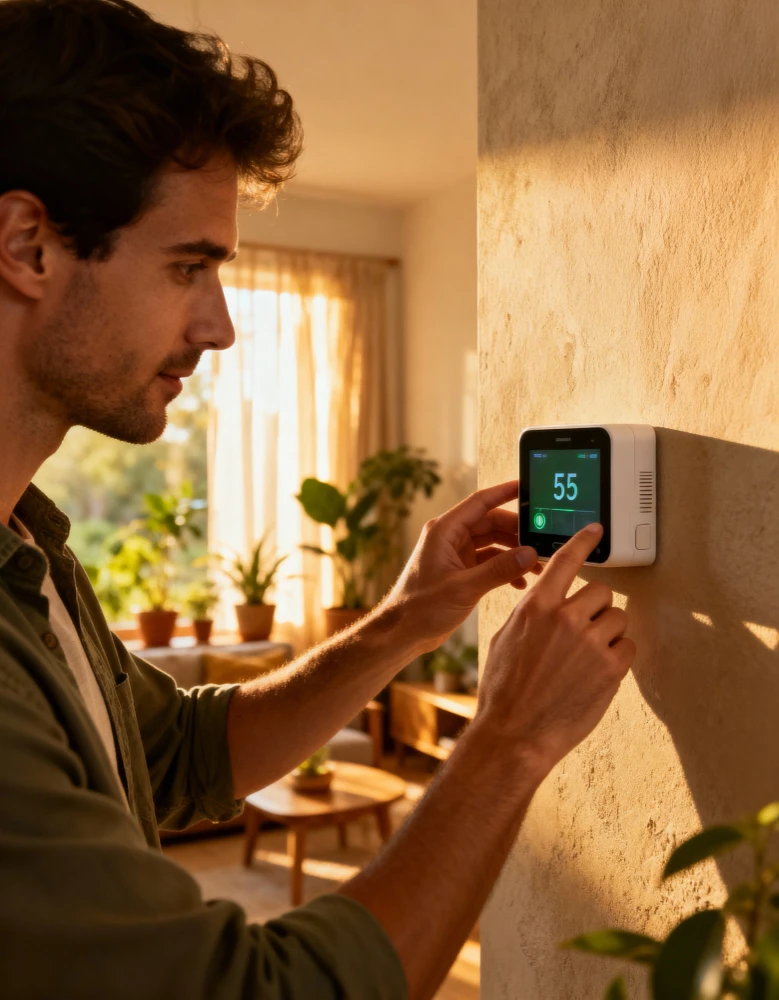
Many homeowners hesitate at the initial price tag, asking, “Are smart thermostats effective enough to justify the cost?” The answer is a resounding yes, supported by extensive data from energy agencies and manufacturers. By eliminating human error—like forgetting to turn down the heat before a vacation—these devices prevent massive amounts of energy waste.
What is the point of a smart thermostat if it doesn’t save you money? Fortunately, industry studies consistently show that automated climate control yields impressive energy savings, typically ranging from 10% to 23% on heating and cooling costs. For the average household, this translates to recouping the initial investment within the first 12 to 24 months of use.
The effectiveness extends beyond pure financial ROI into comfort and convenience. The automation benefits mean you never wake up to a freezing house or walk into a sweltering living room after work. By constantly analyzing the thermal dynamics of your specific home, they operate your furnace and air conditioner with a level of precision that manual adjustments simply cannot match.
What is the top-rated smart thermostat in 2026?
Quick Answer: The Ecobee Smart Thermostat Premium is widely considered the top-rated smart thermostat in 2026. It features a built-in air quality monitor, a sleek zinc-body design, radar occupancy sensing, and an included SmartSensor for balancing temperatures across different rooms. It natively supports Apple HomeKit and Google Assistant and has Amazon Alexa built directly into the unit.
Best Smart Thermostat 2026 (Top Picks)
Selecting the best device requires matching the hardware to your specific lifestyle, technical comfort level, and existing smart home ecosystem. Here is an in-depth breakdown of the most capable models currently dominating the market.
Ecobee Smart Thermostat Premium
When industry experts discuss the pinnacle of climate control, the Ecobee Smart Thermostat Premium consistently dominates the conversation. This flagship device represents a massive leap forward in home automation, moving beyond simple temperature regulation into comprehensive environmental monitoring. It features a stunning glass interface, a premium zinc chassis, and an incredibly intuitive touchscreen that feels as responsive as a modern smartphone.
One of its most defining features is the integrated air quality sensor. The Ecobee Smart Thermostat Premium actively monitors your indoor environment for volatile organic compounds (VOCs) and estimates carbon dioxide levels. If it detects poor air quality, it can alert you via the app or even trigger your HVAC system’s fan to circulate fresh air. This feature is invaluable for allergy sufferers or anyone concerned about the health of their living space.
Additionally, this unit sets itself apart from competitors like the Nest Learning Thermostat by acting as a smart speaker. It has Amazon Alexa and Siri (if you have an Apple Home Hub) built directly into the hardware. You can ask your thermostat to play music, set a timer, or control your smart lights without needing a separate Echo Dot in the hallway. This deep integration streamlines your smart home setup beautifully.
Finally, the inclusion of a remote SmartSensor makes it the undisputed champion of comfort. Instead of only reading the temperature in the hallway where the unit is installed, you can place the sensor in a bedroom or home office. The system then balances the heating and cooling to prioritize the room you are actually occupying, completely eliminating the common problem of hot and cold spots.
Google Nest Learning Thermostat
If your household is already invested in the Google ecosystem, finding the best smart thermostat with Google Home compatibility is simple. The Google Nest Learning Thermostat remains an iconic piece of hardware. Its classic circular design, rotating metal ring, and high-resolution display make it one of the most aesthetically pleasing tech upgrades you can install on your wall.
The core strength of the Nest lies in its proprietary learning algorithm. For the first few weeks, you manually adjust the dial based on your comfort level. The system meticulously tracks these adjustments, noting the time of day and external weather conditions. Soon, it completely takes over, having built a highly optimized, automated schedule that requires zero ongoing input from you.
Its “Farsight” technology is another massive selling point for users. When the device senses you walking into the room from a distance, it lights up the screen to display the temperature, time, or weather in large, readable fonts. For those heavily reliant on Google Assistant routines, the Nest integrates flawlessly, allowing you to control your climate with simple voice commands or seamlessly through the Google Home app.
Amazon Smart Thermostat
Smart climate control does not have to cost hundreds of dollars. The Amazon Smart Thermostat is widely regarded as the best smart thermostat under $100. Developed in partnership with Resideo (the makers of Honeywell Home technology), this device proves that you can achieve significant energy savings without breaking the bank.
Priced around $60, it strips away the flashy color screens and built-in microphones found on premium models, offering a minimalist, clean white interface. It relies on a simple touch display for manual adjustments but unlocks its true potential when paired with the Alexa app. Through the app, you gain access to scheduling, remote control, and energy tracking dashboards.
Its standout automated feature is “Alexa Hunches.” If Alexa suspects you are away from home or asleep based on your interactions with other smart devices, it will automatically adjust the temperature to save energy. However, it is important to note that this model requires a C-wire for installation, so checking your HVAC wiring before purchasing is crucial for a smooth setup.
Ecobee Smart Thermostat Enhanced
For homeowners who want the renowned performance of Ecobee but do not need a built-in voice speaker, the Ecobee Smart Thermostat Enhanced is the perfect middle ground. It retains the beautiful glass design and radar technology of the Premium model but comes at a more accessible price point.
While it does not have the built-in air quality monitor or integrated Alexa speaker, it still utilizes Ecobee’s world-class geofencing and eco+ software. This software actively analyzes your local energy grid and weather to optimize cooling and heating times, maximizing your utility savings. It is a powerhouse of efficiency wrapped in a sleek, modern package.
It is also fully compatible with Ecobee’s SmartSensors, though they must be purchased separately. If you already have dedicated smart speakers in every room and simply want an elegant, highly effective climate controller, the Enhanced model offers incredible value and reliability.
Honeywell Home T9 (Best for Multiple Zones)
When dealing with a larger house, finding the best smart thermostat for multiple zones is critical. The Honeywell Home T9 excels in this specific category. Honeywell has been an industry giant in HVAC for decades, and the T9 leverages that deep mechanical expertise into a robust, highly dependable smart device.
What makes the T9 special is its incredible sensor range and prioritization features. The remote sensors boast an impressive 200-foot range, allowing them to communicate reliably from the furthest corners of a large home. You can prioritize specific rooms at specific times—for instance, telling the system to only care about the master bedroom’s temperature between 10 PM and 6 AM.
The interface is incredibly straightforward, favoring practical usability over flashy learning algorithms. It integrates well with Alexa and Google Assistant and provides robust energy reports. For homeowners who want rock-solid reliability and granular control over different rooms without relying on AI guesswork, make the T9 a superior choice.
Emerson Sensi (Best Without C Wire)
Older homes often present a massive hurdle for smart tech: the lack of a common wire. The Emerson Sensi is frequently recommended by HVAC professionals as the best smart thermostat without C wire requirements. It utilizes standard AA batteries to power its Wi-Fi connection, making it universally compatible with nearly all traditional heating and cooling setups.
Its design intentionally mimics a classic digital thermostat, featuring a simple horizontal footprint and physical buttons. This makes it an incredibly unintimidating upgrade for those who prefer traditional controls over futuristic touchscreens. The real “smart” features live entirely inside the highly rated Sensi mobile app.
Through the app, users get access to 7-day flexible scheduling, geofencing, and remote access. It also provides excellent usage reports and maintenance reminders. If you live in an older property and want to avoid the expense of hiring an electrician to run new wires, the Emerson Sensi is the ultimate problem solver.
Category-Based Buyer Guides
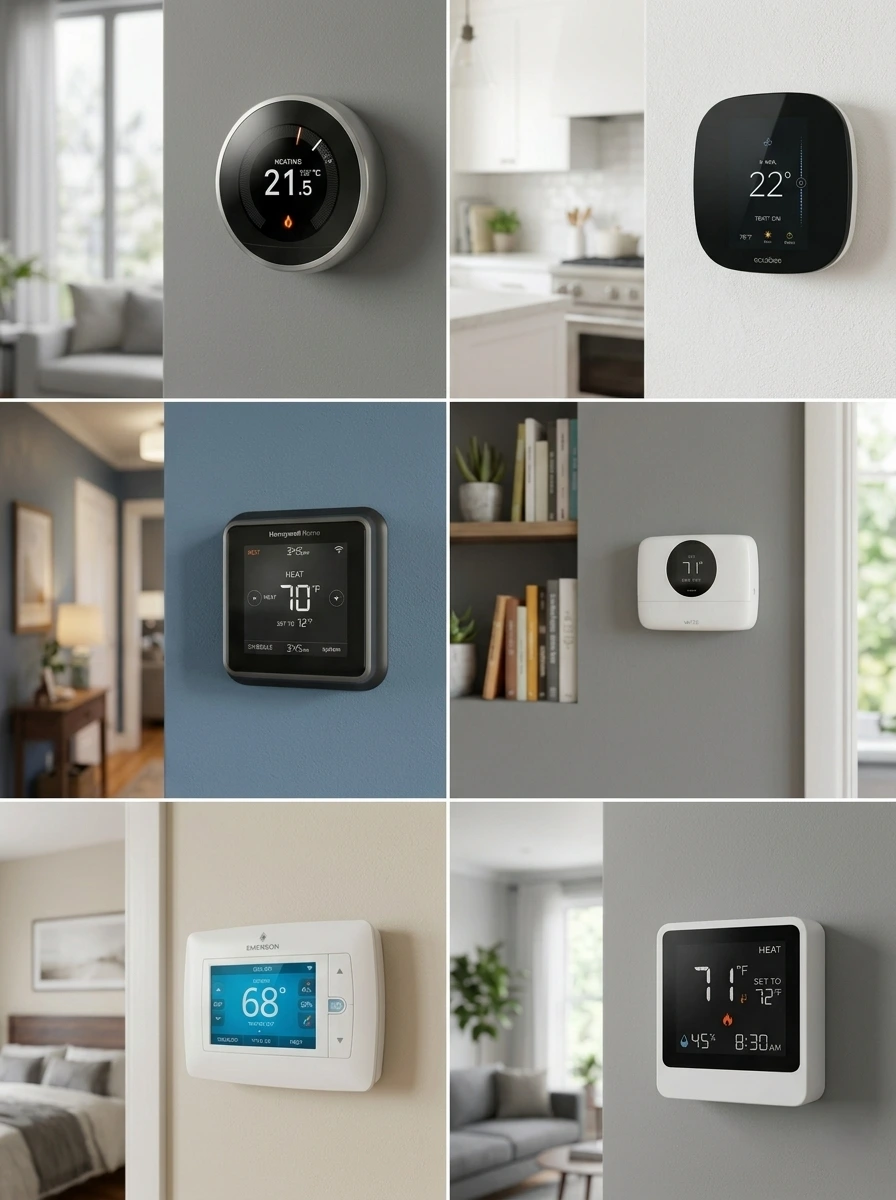
Best Smart Thermostat Under $100
If your primary goal is maximizing your return on investment quickly, the budget category has fantastic options. Finding the best smart thermostat under $100 usually means sacrificing premium materials like glass and metal, but you keep the core energy-saving features.
As mentioned, the Amazon Smart Thermostat is the undisputed leader here, offering immense value for Alexa users. Another highly capable option is the Wyze Thermostat. Wyze is famous for disrupting smart home pricing, and their thermostat offers an intuitive app, a sleek rotary dial, and easy DIY installation, all typically priced well under the $100 mark.
Best Smart Thermostat for older people
Technology should improve lives, not complicate them. The best smart thermostat for older people needs to prioritize visibility, simplicity, and ease of use. A device with a steep learning curve or tiny touch controls will only cause frustration.
The Google Nest Learning Thermostat is highly recommended here due to its large, bright display and the “Farsight” feature, which makes reading the temperature from across the room effortless. Additionally, integrating any thermostat with a voice assistant allows older users to adjust the climate verbally, entirely bypassing the need to navigate a smartphone app or physically reach the wall unit.
Best Smart Thermostat for Multiple Zones
Managing a large property requires devices that understand spatial temperature differences. The best smart thermostat for multiple zones relies on a strong network of remote occupancy sensors to ensure no room is left freezing or boiling.
The Honeywell Home T9 and the Ecobee Premium are the leaders in this space. They allow you to place sensors in various rooms and tell the system to average the temperature across the house or focus solely on occupied rooms. This prevents the HVAC system from running unnecessarily just to heat a hallway where the main unit is installed.
Best Smart Thermostat for Airbnb
Managing short-term rentals presents unique climate control challenges. Hosts need to ensure guest comfort while preventing renters from blasting the AC at 60 degrees with the windows open. The best smart thermostat for Airbnb operations must offer robust remote management.
The Ecobee lineup is widely favored by property managers because of its comprehensive web portal and app. It allows hosts to set strict temperature ranges (e.g., guests can only adjust between 68 and 74 degrees) and use PIN-code lock settings. This guarantees comfort for the guest while protecting the host’s utility bills and HVAC equipment from abuse.
Best Smart Thermostat for Heat Pump Systems
Heat pumps operate differently from standard furnaces, often utilizing auxiliary or emergency heating strips when temperatures plummet. The best smart thermostat for heat pump systems must have sophisticated staging algorithms to prevent these expensive backup heaters from turning on prematurely.
Both Nest and Ecobee handle heat pumps beautifully. Nest’s “Heat Pump Balance” feature lets you choose between maximizing comfort or maximizing savings, managing the auxiliary heat usage automatically. Ensuring your device is properly configured for a heat pump during the initial setup is critical to avoid accidental energy spikes.
Compatibility & Smart Home Integration
Best Smart Thermostat for Alexa
If your home is orchestrated by Amazon’s ecosystem, you want a climate device that speaks the same language natively. When asking which smart thermostat works best with Alexa, the Ecobee Premium is the top-tier choice since the assistant is built right into the hardware.
For those on a budget, the Amazon Smart Thermostat is essentially a first-party device, ensuring seamless “Hunch” integration and flawless voice control. Nearly all major brands offer an Alexa skill, but choosing a device with native integration ensures faster response times and more reliable automation routines.
Best Smart Thermostat for Google Home
Google ecosystem users benefit most from first-party hardware. The Google Nest Learning Thermostat is undeniably the best smart thermostat for Google Home. Because they share the same backend infrastructure, the setup process is nearly instantaneous.
You can view your Nest thermostat directly within the Google Home app dashboard alongside your cameras and lights. It also allows for complex routines, such as triggering an “Away” mode that simultaneously turns off the lights, arms the security system, and sets the thermostat to an energy-saving eco temperature.
Best Smart Thermostat for Home Assistant
For advanced users who prefer local control and deep customization, Home Assistant is the ultimate platform. The best smart thermostat Home Assistant integration requires devices with open APIs or local control capabilities to avoid cloud dependency.
The Ecobee integrates very cleanly with Home Assistant through the HomeKit Controller integration, allowing for entirely local, cloud-free control of your HVAC. Venstar thermostats are also highly praised in the Home Assistant community for their robust local API, allowing power users to write incredibly complex, custom automation scripts.
Smart Thermostat Comparison Table
To help you make a quick decision, here is a breakdown of the most popular smart thermostats and how they compare across key features. These models frequently top Best Smart Thermostat consumer reports lists for reliability.
| Thermostat Model | Average Price | Alexa Support | Google Support | C-Wire Required | Best For |
| Ecobee Premium | $249 | ✔ Built-in | ✔ Yes | ✔ Yes | Ultimate smart home integration & air quality |
| Nest Learning | $249 | ✔ Yes | ✔ Native | ❌ No (Usually) | Google Home users & hands-off automation |
| Amazon Smart | $59 | ✔ Native | ❌ No | ✔ Yes | Budget-conscious buyers & Alexa households |
| Honeywell T9 | $169 | ✔ Yes | ✔ Yes | ✔ Yes | Large homes needing multi-room sensors |
| Emerson Sensi | $129 | ✔ Yes | ✔ Yes | ❌ No | Older homes without C-wires & simple DIY |
Best Smart Thermostat Reddit Reviews
Community forums offer incredibly honest, unfiltered feedback on how these devices perform over years of daily use. When analyzing best smart thermostat Reddit reviews across subreddits like r/smarthome and r/HVAC, clear consensus patterns emerge.
Redditors consistently praise Ecobee for its data transparency and the reliability of its remote sensors. Power users love that Ecobee allows you to download massive spreadsheets of your historical HVAC data. However, some users note the interface can feel slightly cluttered compared to competitors.
The Nest Learning Thermostat is highly praised on Reddit for its unmatched physical UI. The rotating dial is frequently called the most satisfying interface in the smart home space. However, some HVAC technicians on Reddit caution against its “power stealing” method if you don’t have a C-wire, strongly recommending users install a C-wire adapter anyway.
Finally, the Amazon Smart Thermostat is widely recommended on Reddit for renters or budget buyers. The community agrees it is a bare-bones device visually, but functionally punches far above its weight class regarding energy savings and Alexa integration.
Best Smart Thermostat Apps
A smart device is only as good as the software used to control it. You will interact with the mobile application far more than the physical wall unit. Determining the best smart thermostat app comes down to user interface design and feature depth.
The Ecobee app is highly analytical. It perfectly mirrors the display of the wall unit, offering a seamless transition between the two. It excels in data reporting, offering detailed graphs showing exactly how your system ran relative to the outdoor weather.
The Nest app (and its integration into the Google Home app) is beautiful, minimalist, and incredibly intuitive. It focuses on large icons and simple scheduling, making it the most user-friendly option for non-technical homeowners. The Honeywell app is utilitarian and reliable, focusing on straightforward geofencing controls without burying users in overly complex menus.
Best Smart Thermostat: Wired vs Wireless
When shopping, you may encounter the debate of the best smart thermostat: wired vs wireless. It is important to clarify these terms, as they mean different things in the HVAC industry. Almost all smart thermostats require physical low-voltage wires connecting them to your furnace.
“Wireless” typically refers to how the thermostat communicates with remote sensors or the internet, not how it receives power. A fully wireless thermostat usually implies a battery-operated unit communicating via radio frequency to a receiver wired directly to the boiler or furnace.
If you are looking for a true wire-free wall unit, options are limited and usually specific to European boiler systems. For standard forced-air systems, a physically wired connection (specifically a C-wire) ensures the most reliable Wi-Fi connection and prevents sudden battery drain issues during extreme weather.
Best Smart Thermostat UK
Heating infrastructure in the United Kingdom is fundamentally different from that in North America, relying heavily on combi-boilers and radiators rather than forced-air furnaces. Therefore, the best smart thermostat UK models are specifically engineered to handle high-voltage boiler switching and multi-room radiator valves.
Hive is incredibly popular in the UK, backed by British Gas. It offers brilliant integration with hot water control, allowing you to boost your hot water tank remotely before you get home. It features a sleek, minimalist design that fits beautifully into modern British homes.
Tado° is arguably the most powerful system for European homes. It focuses heavily on smart thermostatic radiator valves (TRVs), allowing you to control the exact temperature of every individual room in your house directly from the app. Nest UK models are also available, utilizing a separate “Heat Link” box wired to the boiler to communicate wirelessly with the wall dial.
The Evolution of Smart Thermostats (2020–2026)
Understanding how we arrived at the current technology helps contextualize the features you are buying today. The landscape of climate automation has shifted dramatically over the past few years.
Best Smart Thermostat 2020 & 2021: During this era, the focus was primarily on refining geofencing and establishing basic voice assistant integration. Devices were learning to be reliable, but features like remote room sensors were still considered premium, expensive add-ons.
Best Smart Thermostat 2023 & 2024: The industry saw a massive shift toward ecosystem unification. Devices stopped being standalone gadgets and became integral parts of Google Home and Alexa routines. We also saw the introduction of radar occupancy sensing, replacing older, less reliable passive infrared (PIR) sensors.
Best Smart Thermostat 2025 & 2026: Today, the focus has shifted from mere temperature control to holistic environmental health. The inclusion of indoor air quality monitoring, VOC sensors, and deep integration with smart ventilation systems defines the current cutting-edge. Furthermore, the adoption of the “Matter” smart home protocol is making cross-platform compatibility easier than ever before.
How to Choose the Best Smart Thermostat
With so many excellent options, deciding what smart thermostat is best for your specific living situation requires evaluating a few critical technical and personal factors. Which smart thermostat is best will vary wildly between a studio apartment and a sprawling multi-story house. Here is exactly what to look for when deciding what the best smart thermostat is to buy.
HVAC System Compatibility
Before looking at features, you must ensure the device can actually communicate with your heating and cooling equipment. Most smart devices work with standard 24-volt forced-air systems. However, if you have thick, braided wires (line voltage) for baseboard heaters or a proprietary communicating system from brands like Carrier or Trane, standard smart models may not be compatible without losing advanced efficiency features.
C-Wire Requirement
Remove your current thermostat faceplate and look for a wire connected to the “C” terminal. This common wire provides constant 24V power required by bright screens and Wi-Fi chips. If you do not have one, you must narrow your search to battery-operated models like the Emerson Sensi or be prepared to install a C-wire adapter kit at your furnace control board.
Smart Home Integration
Consider the smart speakers and hubs you already own. If your house is filled with Echo Dots, buying a Nest device will lead to frustration due to limited cross-platform compatibility. Always buy a device that natively supports your primary ecosystem—whether that is Apple HomeKit, Google Home, or Amazon Alexa—to ensure smooth, frustration-free automation.
Budget Considerations
Evaluate your budget against your expected return on investment. If you just want remote app access and basic scheduling, a $60 budget model will perform perfectly. If you want a device that acts as a smart speaker, monitors your air quality, and balances temperatures across four different bedrooms, investing $250+ in a premium model is highly justified by the long-term utility savings.
Frequently Asked Questions
Identifying the best smart thermostat for your home
The best device for your home depends on your wiring and ecosystem. If you have a C-wire and use Alexa, the Ecobee Premium is unmatched. If you prefer a hands-off, self-learning approach and use Google Assistant, the Nest Learning Thermostat is the ideal choice.
Top smart thermostat for the money
The Amazon Smart Thermostat is universally considered the best device for the money. At roughly $60, it provides the core energy-saving algorithms, robust remote app control, and Alexa integration found in devices that cost three times as much, offering the fastest return on investment.
Leading manufacturers of smart thermostats
Three major brands dominate the market: Google (Nest), Ecobee, and Resideo (Honeywell Home). Backed by massive development budgets, they guarantee app stability, actively push security updates, and manufacture hardware built to last.
Alexa compatibility with smart thermostats
Most modern climate devices are compatible with Alexa, but the level of integration varies. Devices like the Amazon Smart Thermostat offer deep, native integration. The Ecobee Premium takes it a step further by actually having an Alexa microphone and speaker built directly into the thermostat housing itself.
Market-leading smart thermostats
As of 2026, the market-leading devices are the Ecobee Smart Thermostat Premium, the Google Nest Learning Thermostat, and the Honeywell Home T9. These models consistently score the highest in expert reviews, user satisfaction, and verifiable energy reduction metrics.
Final Verdict: Which Smart Thermostat Should You Buy in 2026?
Upgrading to a smart thermostat is undeniably one of the most practical investments you can make for your home today. The convenience of remote climate control, paired with verifiable reductions in your monthly utility bills, makes this technology practically pay for itself. It is a rare home improvement project that offers immediate, tangible financial benefits alongside elevated comfort.
If you want the absolute pinnacle of home automation, the Ecobee Smart Thermostat Premium is our definitive top choice for 2026. With its built-in air quality monitoring, including SmartSensor, and native voice assistant integration, it offers unparalleled control over your home’s environment. It represents the perfect blend of modern luxury and high-tech efficiency.
For those heavily invested in the Google ecosystem, the Google Nest Learning Thermostat remains an elegant, hands-off powerhouse. Its iconic design and intelligent machine-learning algorithm make it ideal for homeowners who want their climate managed automatically. It is perfect if you prefer to set your preferences once and let the system handle the rest.
Finally, if you are simply looking for the fastest return on investment, the Amazon Smart Thermostat is unbeatable. It delivers the core energy-saving benefits, geofencing, and robust app control at a fraction of the premium cost. Whichever model you choose, stepping away from outdated manual dials will drastically improve your household’s comfort and energy efficiency.